data center firewall

Cisco Secure Firewall with SASE Cloud

Cisco Secure Firewall with SASE Cloud

In today's digital era, network security is of paramount importance. With the rise of cloud-based services and remote work, businesses require a comprehensive security solution that not only protects their network but also ensures scalability and flexibility. Cisco Secure Firewall with SASE (Secure Access Service Edge) Cloud is a cutting-edge solution that combines the robustness of firewall protection with the agility of cloud-based security services. In this blog post, we will delve into the features and benefits of Cisco Secure Firewall with SASE Cloud.

Cisco Secure Firewall is an advanced network security solution designed to safeguard organizations from cyber threats. Built on industry-leading technology, it provides next-generation firewall capabilities, intrusion prevention, and application control. With granular security policies, deep visibility, and advanced threat intelligence, Cisco Secure Firewall empowers businesses to protect their networks from internal and external threats effectively.

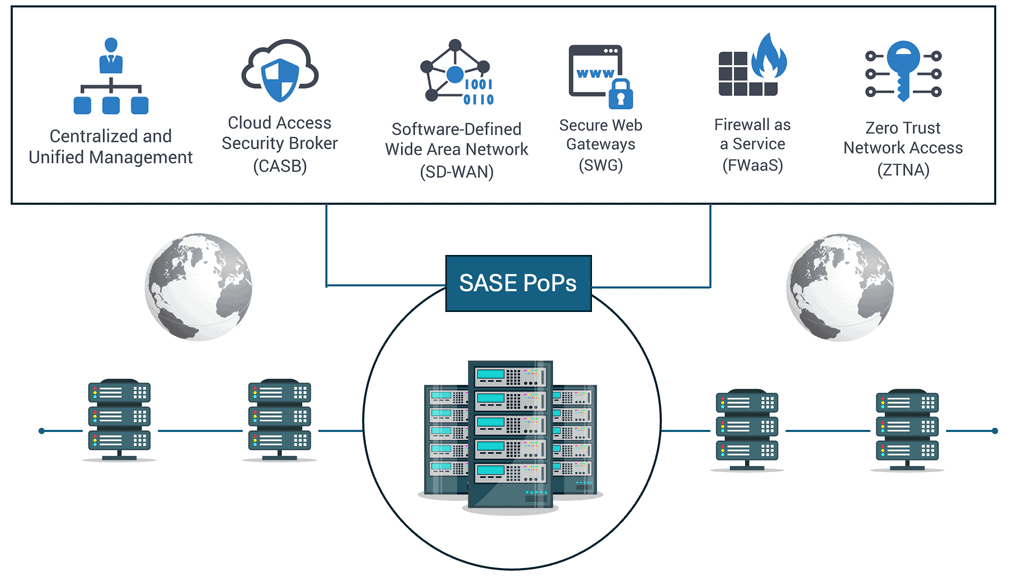
SASE (Secure Access Service Edge) is a transformative approach to network security and connectivity. By converging networking and security functions into a unified cloud-based service, SASE offers organizations scalable and flexible security solutions. Cisco Secure Firewall with SASE Cloud takes advantage of this architecture, providing businesses with integrated security services that are delivered from the cloud. This enables seamless scalability, simplified management, and enhanced protection against evolving threats.

Cloud-Native Firewall: Cisco Secure Firewall with SASE Cloud leverages the power of cloud-native architecture, enabling organizations to easily scale their security infrastructure based on demand. It ensures consistent security policies across various locations and eliminates the need for hardware-based firewalls.

Advanced Threat Protection: With integrated threat intelligence and advanced analytics, Cisco Secure Firewall with SASE Cloud offers robust protection against sophisticated threats. It provides real-time threat detection and prevention, ensuring that businesses stay one step ahead of cybercriminals.

Simplified Management: The centralized management console allows organizations to effortlessly manage their security policies and configurations. From a single interface, administrators can efficiently deploy and enforce security policies, reducing complexity and enhancing operational efficiency.

As organizations continue to embrace digital transformation, the network landscape is constantly evolving. Cisco Secure Firewall with SASE Cloud future-proofs your network by providing a scalable and adaptable security solution. Its cloud-native architecture and integration with SASE enable businesses to stay agile and easily adapt to changing security requirements, ensuring long-term protection and resilience.

Highlights: Cisco Secure Firewall with SASE Cloud

Understanding the Cisco Secure Firewall

Cisco Secure Firewall is a cutting-edge network security appliance that provides advanced threat protection, secure connectivity, and simplified management. It combines next-generation firewall capabilities with intrusion prevention, application visibility and control, and advanced malware protection. With its comprehensive suite of security features, it offers a multi-layered defense against a wide range of cyber threats.

Key Cisco Secure Firewall Features:

– Advanced Threat Protection: The Cisco Secure Firewall employs advanced intelligence to detect and prevent sophisticated attacks, including malware, ransomware, and zero-day exploits. Its integrated security technologies work in tandem to identify and mitigate threats in real-time, ensuring your network infrastructure’s highest level of protection.

– Secure Connectivity: The Cisco Secure Firewall enables secure remote access and site-to-site connectivity with built-in VPN capabilities. It establishes encrypted tunnels, allowing authorized users to access network resources from anywhere while ensuring data confidentiality and integrity.

– Application Visibility and Control: Gaining visibility into network traffic and effectively managing application usage is crucial for optimizing network performance and ensuring security. The Cisco Secure Firewall offers granular application control, allowing administrators to define policies and prioritize critical applications while restricting or blocking unauthorized ones.

**Broken Firewall Rules**

One-third of your firewall rules are broken. You can use the Cisco AI Assistant for Security to identify and report policies, augment troubleshooting, and automate policy lifecycle management with the Cisco AI Assistant for Security. Also, take back control of your encrypted traffic and application environments. Cisco Talos lets you see and detect more across your infrastructure while ensuring security resilience across billions of signals.

**Advanced Clustering & HA**

This enabled you to drive efficiency at scale. Secure Firewall’s advanced clustering, high availability, and multi-instance capabilities allow you to scale, be reliable, and be productive. Finally, by integrating network, microsegmentation, and app security, Secure Firewall makes zero-trust achievable and cost-effective. It automates access and anticipates what comes next.

Knowledge Check: Cisco’s Firewalling

Cisco integrated its original Sourcefire’s next-generation security technologies into its existing firewall solutions, the Adaptive Security Appliances (ASA). In that early implementation, Sourcefire technologies ran as a separate service module. Later, Cisco designed new hardware platforms to support Sourcefire technologies natively.

They are named Cisco Firepower, later rebranded as Cisco Secure Firewall, which is the current implementation of Firewalling. In the new implementation, Cisco converges Sourcefire’s next-generation security features, open-source Snort, and ASA’s firewall functionalities into a unified software image. This unified software is called the Firepower Threat Defense (FTD). After rebranding, this software is now known as the Cisco Secure Firewall.

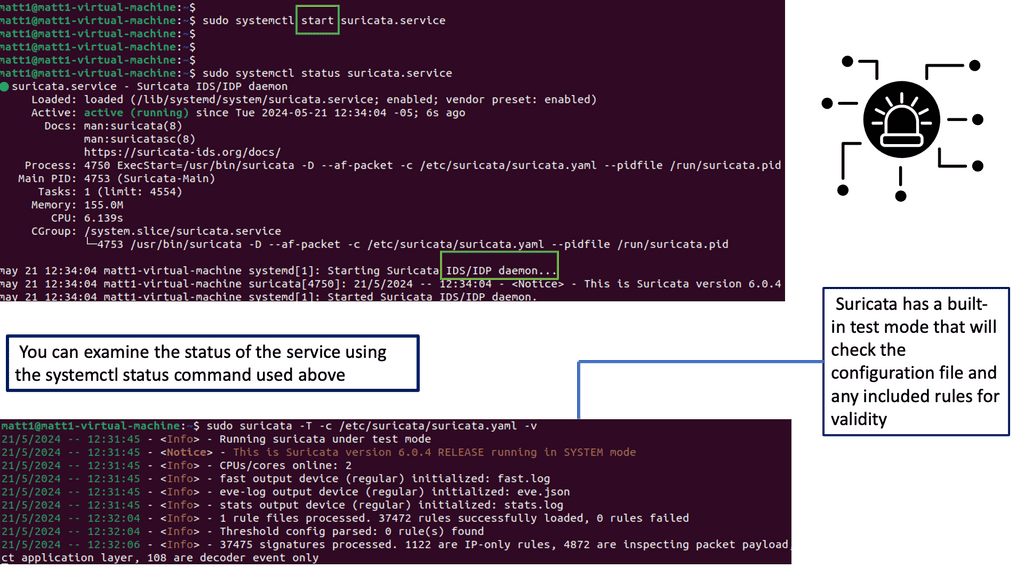
Example Security Technology: IPS IDS

Understanding Suricata

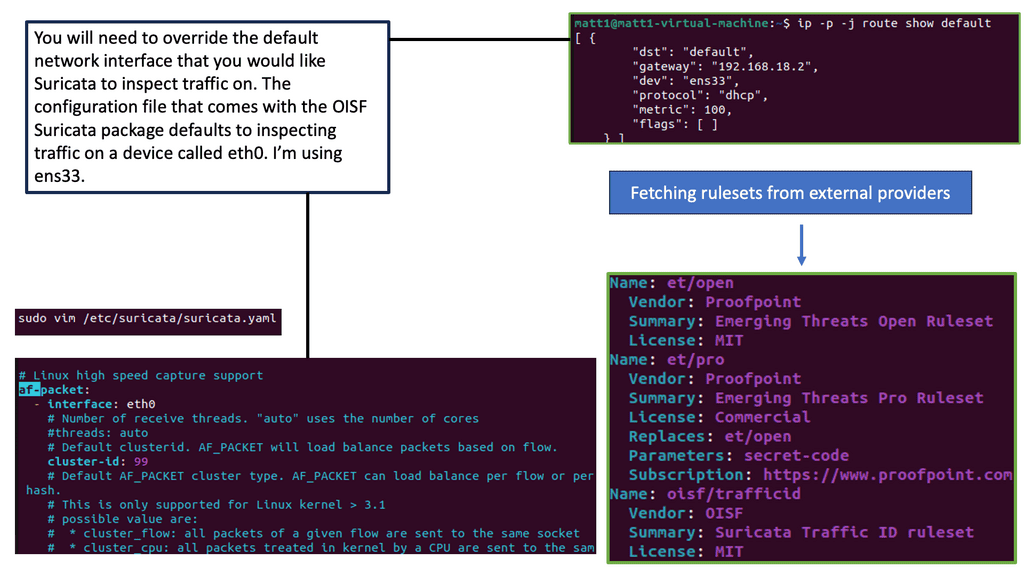
Suricata is an open-source network threat detection engine that offers high-performance intrusion detection and prevention capabilities. Built with speed, scalability, and robustness, Suricata analyzes network traffic and detects various threats, including malware, exploits, and suspicious activities. Its multi-threaded architecture and rule-based detection mechanism make it a formidable weapon against cyber threats.

Suricata boasts an impressive array of features that elevate its effectiveness in network security. Suricata covers various security needs, from protocol analysis and content inspection to file extraction and SSL/TLS decryption. Its extensive rule set allows for fine-grained control over network traffic, enabling tailored threat detection and prevention. Additionally, Suricata supports various output formats, making it compatible with other security tools and SIEM solutions.
Understanding SASE Cloud

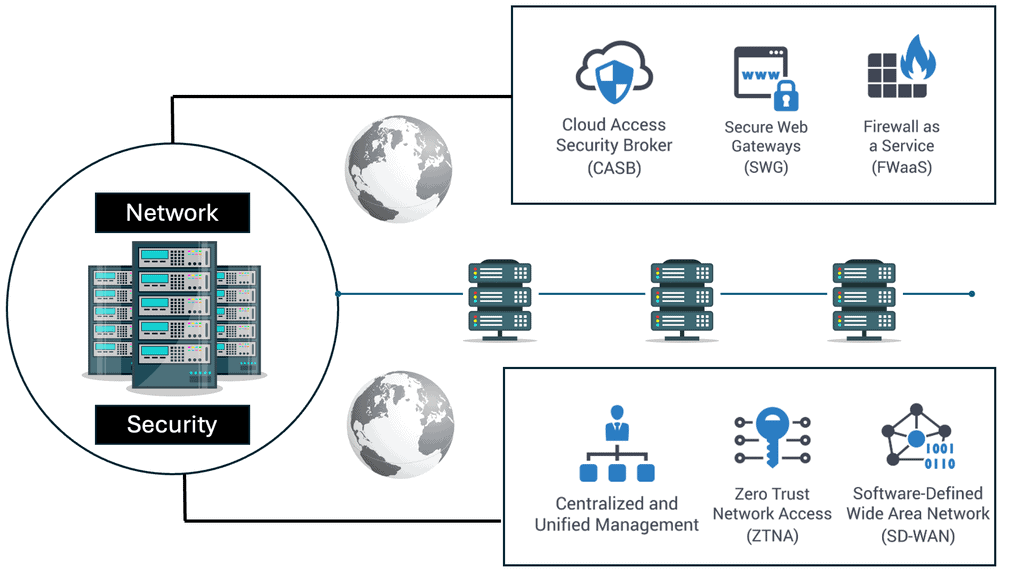
Cisco SASE Cloud, short for Secure Access Service Edge Cloud, is a comprehensive networking and security platform that combines wide area networking (WAN) capabilities with robust security features. It offers a unified solution for remote access, branch connectivity, and cloud security, all delivered from the cloud. This convergence of networking and security into a single cloud-native platform allows organizations to simplify their infrastructure, reduce costs, and enhance agility.

SASE Cloud Key Points:

Enhanced Security: One of Cisco SASE Cloud’s standout features is its advanced security capabilities. By leveraging a combination of next-generation firewalls, secure web gateways, data loss prevention, and other security services, it provides comprehensive protection against cyber threats. With SASE Cloud, organizations can ensure secure access to applications and data from anywhere, anytime, without compromising security.

Scalability and Flexibility: Cisco SASE Cloud offers unmatched scalability and flexibility. As an organization grows, SASE Cloud can quickly adapt to evolving needs. Whether it’s adding new branches, onboarding remote employees, or expanding into new markets, the cloud-native architecture of SASE Cloud enables seamless scalability without the need for extensive infrastructure investments.

Simplified Management: Managing complex networking and security infrastructure can be daunting for IT teams. However, Cisco SASE Cloud simplifies this process by centralizing management and providing a single pane of glass for visibility and control. This streamlined approach allows IT teams to monitor and manage network traffic efficiently, apply security policies, and troubleshoot issues, improving operational efficiency.

Secure Access Anywhere & Anytime

Converged Networking and Security: Cisco SASE combines networking and security functions, such as secure web gateways, firewalls, and data loss prevention, into a single solution. This convergence eliminates the need for multiple standalone appliances, reducing complexity and improving operational efficiency.

Cloud-Native Architecture: Built on a cloud-native architecture, Cisco SASE leverages the scalability and flexibility of the cloud. This enables organizations to dynamically adapt to changing network demands, scale their resources as needed, and integrate new security services without significant infrastructure investments.

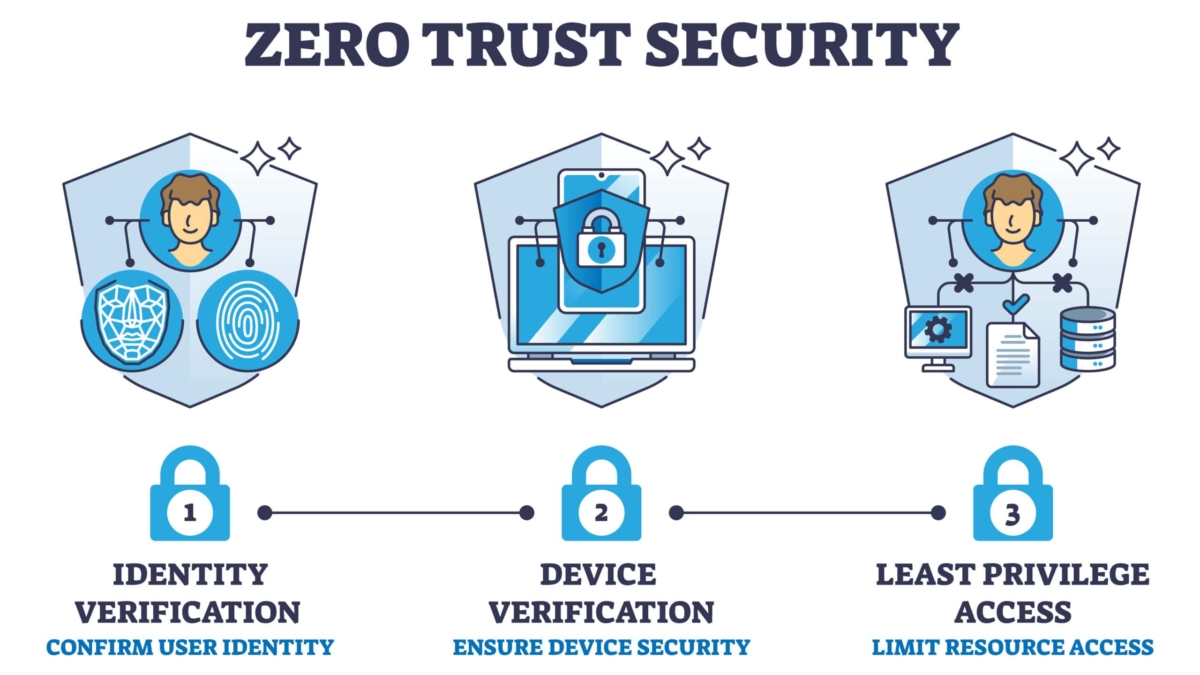
Enhanced User Experience and Security: With Cisco SASE, users can enjoy a seamless and secure experience regardless of location or device. Cisco SASE protects users and data from threats through its integrated security capabilities, including zero-trust network access and secure web gateways, ensuring a safe and productive digital environment.

Related: For additional pre-information, you may find the following helpful:

  1. SD WAN SASE
  2. SASE Model
  3. Zero Trust SASE
  4. SASE Solution
  5. Distributed Firewalls
  6. SASE Definition

Evolution of the Network Security

In the past, network security was typically delivered from the network using the Firewall. However, these times, network security extends well beyond just firewalling. We now have different points in the infrastructure that we can use to expand our security posture while reducing the attack surface.

You would have commonly heard of Cisco Umbrella Firewall and SASE, along with Cisco Secure Workload security, which can be used with your Cisco Secure firewall, which is still deployed at the network’s edge. Unfortunately, you can’t send everything to the SASE cloud.

You will still need an on-premise firewall, such as the Cisco Secure Firewall, that can perform standard stateful filtering, intrusion detection, and threat protection. This post will examine the Cisco Secure Firewall and its integration with Cisco Umbrella via the SASE Cloud. Firstly, let us address some basics of firewalling.

A. Redesigning Traditional Security:
Let’s examine the evolution of network security before we get into some inbound and outbound traffic use cases. Traditionally, the Firewall was placed at the network edge, acting as a control point for the network’s ingress/egress point. The Firewall was responsible for validating communications with rule sets and policies created and enforced at this single point of control to ensure that desired traffic was allowed into and out of the network and undesirable traffic was prevented. This type of design was known as the traditional perimeter approach to security.

B: Numerous Firewalling challenges:
Today, branch office locations, remote employees, and increasing use of cloud services drive more data away from the traditional “perimeter,” The cloud-first approach completely bypasses the conventional security control point.
Further, the overwhelming majority of business locations and users also require direct access to the Internet, where an increasing prevalence of cloud-based critical applications and data now lives. As a result, applications and data become further de-centralized, and networks become more diverse.

C: Conventional Appliance Sprawl:
This evolution of network architectures has dramatically increased our attack surfaces and did the job of protecting more complicated ones. So, we started to answer this challenge with point solutions. Typically, organizations have attempted to address these challenges by adding the "best" point security solution to address each new problem as it emerges. 

Because of this approach, we have seen tremendous device sprawl. Multiple security products from different vendors can pose significant management problems for network security teams, eventually leading to complexity and blind spots.

Consequently, our "traditional" firewall devices are being augmented by a mixture of physical and virtual appliances—some are embedded into the network. In contrast, others are delivered as a service, host-based, or included within public cloud environments. Regardless of the design, you will stall inbound and outbound traffic to protect.

**Basics of Firewalling**

A firewall is an entity or obstacle deployed between two structures to prevent fire from spreading from one system to another. This term has been taken into computer networking, where a firewall is a software or hardware device that enables you to filter unwanted traffic and restrict access from one network to another. The Firewall is a vital network security component in securing network infrastructure and can take many forms. For example, we can have a host-based or network-based Firewall.
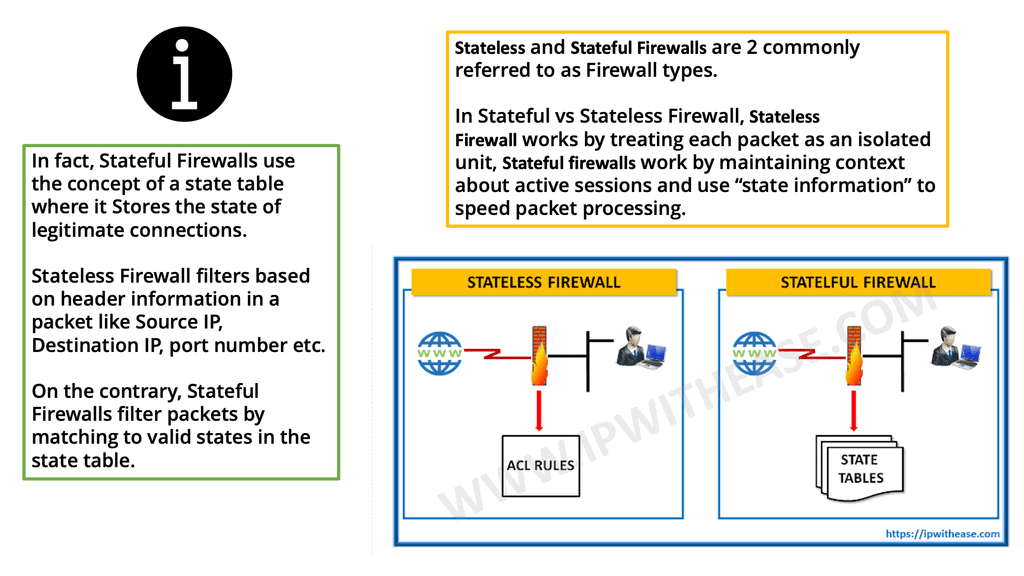
Firewall types
Diagram: Firewall types. Source is IPwithease

Firewalling Types:

A. Host-based Firewall

A host-based firewall service is installed locally on a computer system. In this case, the end user’s computer system takes the final action—to permit or deny traffic. Every operating system has some Firewall. It consumes the resources of a local computer to run the firewall services, which can impact the other applications running on that particular computer. Furthermore, in a host-based firewall architecture, traffic traverses all the network components and can consume the underlying network resources until the traffic reaches its target.

B. Network-based Firewall

On the other hand, a network-based firewall can be entirely transparent to an end user and is not installed on the computer system. Typically, you deploy it in a perimeter network or at the Internet edge where you want to prevent unwanted traffic from entering your network. The end-user computer system remains unaware of any traffic control by an intermediate device performing the filtering. In a network-based firewall deployment, you do not need to install additional software or daemon on the end-user computer systems. However, it would help if you used both firewall types for a defense-in-depth approach.

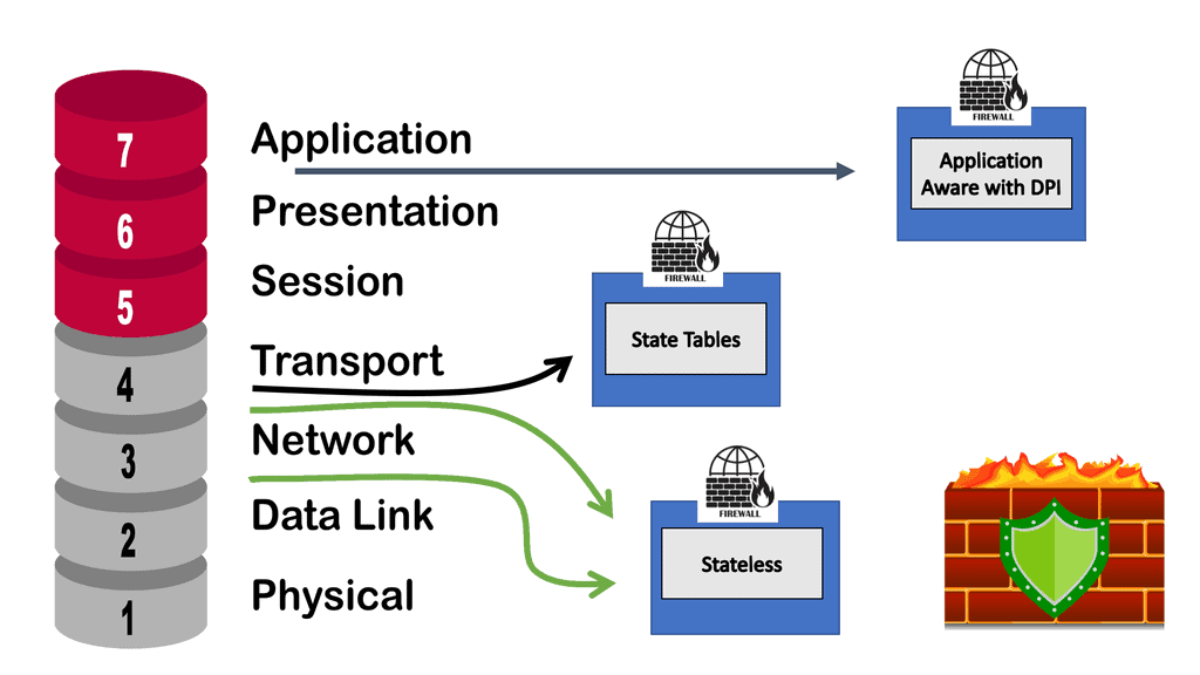
The early generation of firewalls could allow or block packets only based on their static elements, such as a packet’s source address, destination address, source port, destination port, and protocol information. These elements are also known as the 5-tuple.

Example Technology Cisco Packet Filter

### Implementing Packet Filtering in Your Network

To effectively implement packet filtering, it’s crucial to have a clear understanding of your network architecture and traffic patterns. Begin by identifying the critical assets that need protection and the types of traffic that should be allowed. Develop a detailed access list, considering both inbound and outbound traffic.
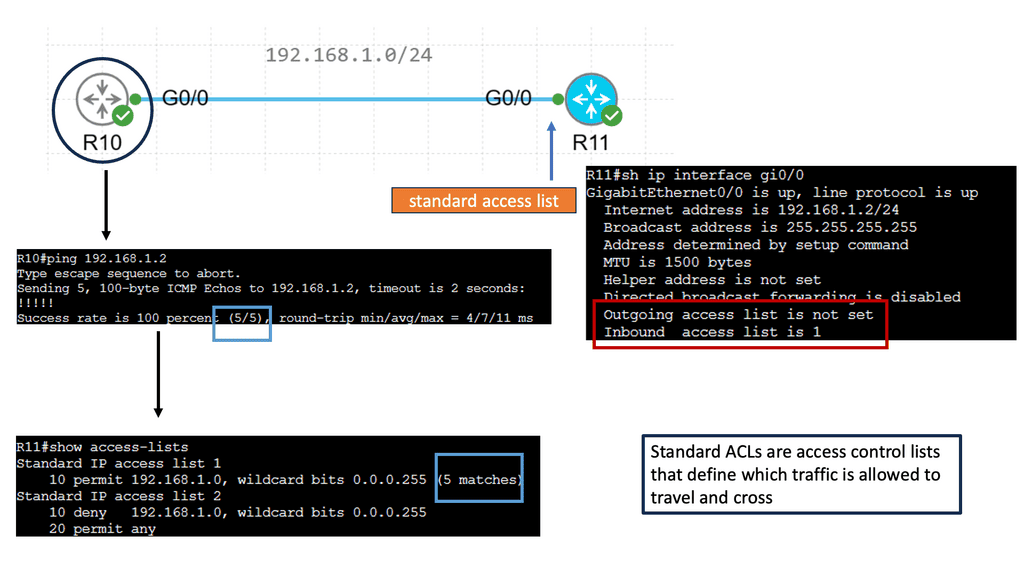
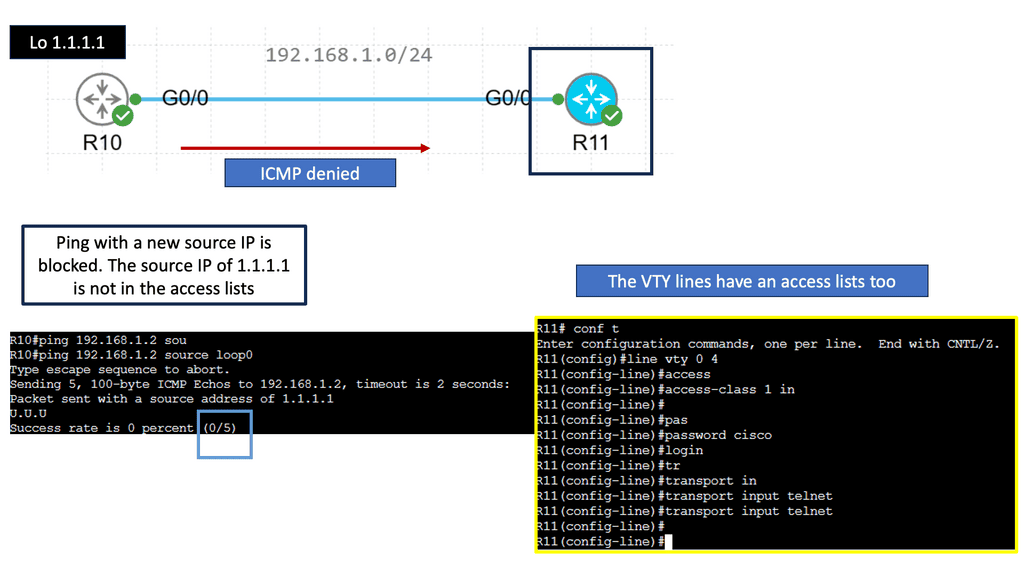
C. Stateless Firewalling

When an early-generation firewall examined a particular packet, it was unaware of any prior packets that passed through it because it was agnostic of the Transmission Control Protocol (TCP) states that would have signaled this. Due to the nature of its operation, this type of Firewall is called a stateless firewall.

A stateless firewall is unable to distinguish the state of a particular packet. So, for example, it could not determine if a packet is part of an existing connection, trying to establish a legitimate new connection, or whether it is a manipulated, rogue packet. We then moved to a stateful inspection firewall and an application-aware form of next-generation firewalling.

D. Stateful Firewaling

The stateful inspection examines the TCP and UDP port numbers, while an application-aware firewall examines Layer 7. So now we are at a stage where the Firewall does some of everything, such as the Cisco Secure Firewall.
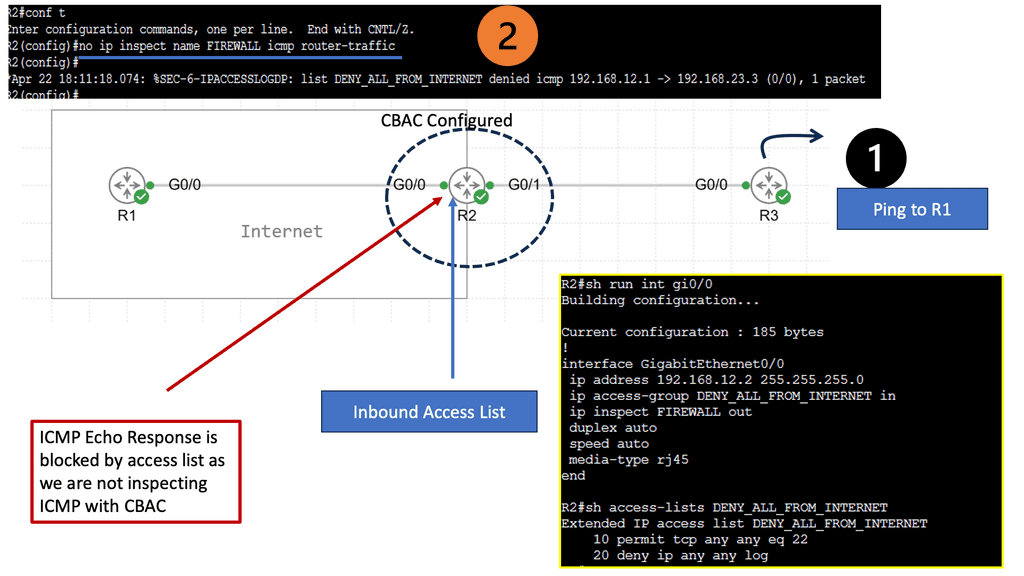
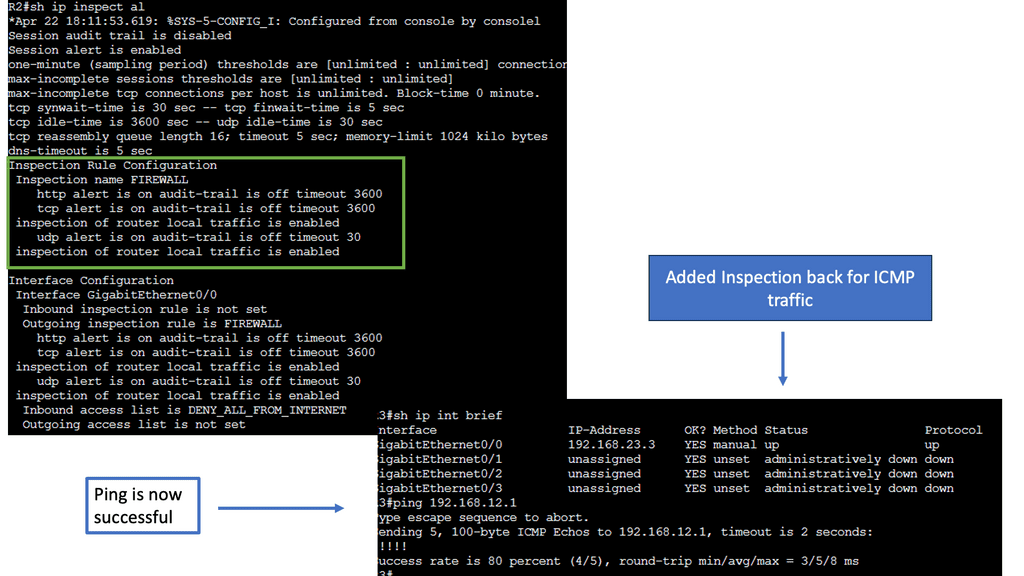
CBAC Firewall CBAC Firewall

**Firewalling Use Cases**

1.Inbound Use case

The Firewall picks up every packet, looks at different fields, examines for signatures that could signal an attack is in process, and then re-packs and sends the packet out its interfaces. Still, the technique is relevant. It tracks inbound traffic to tell if someone outside or inside is accessing the private applications you want to keep secure. So, looking at every packet is still relevant for the inbound traffic use case. 

While everything is encrypted these days, you need to decrypt traffic to gain security value. Deep Packet Inspection (DPI) is still very relevant for inbound traffic. So, we will continue to decrypt inbound traffic for complete application threat protection with the hope of minimal functional impact.

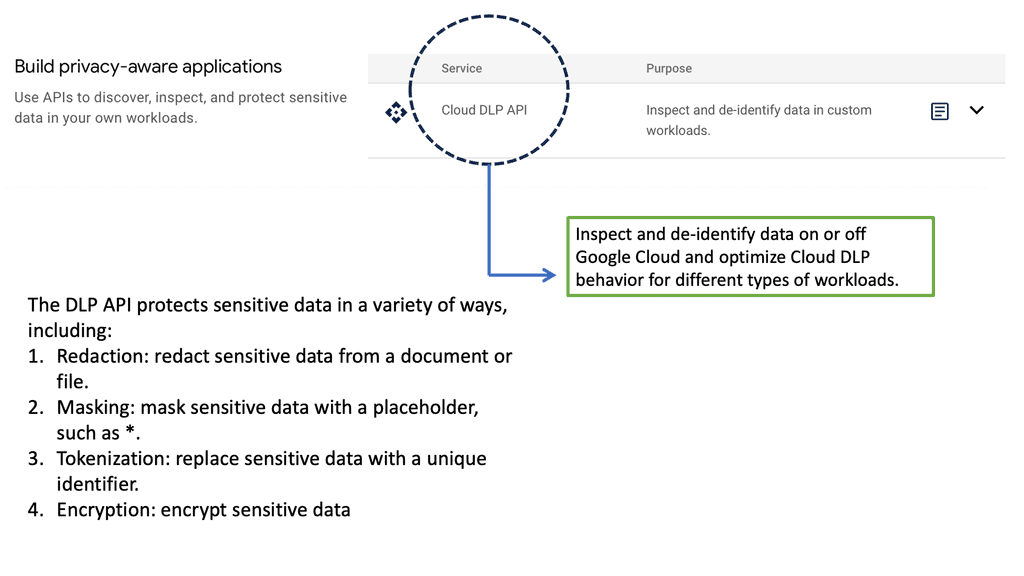
Example Technology: Sensitive Data Protection with Google Cloud
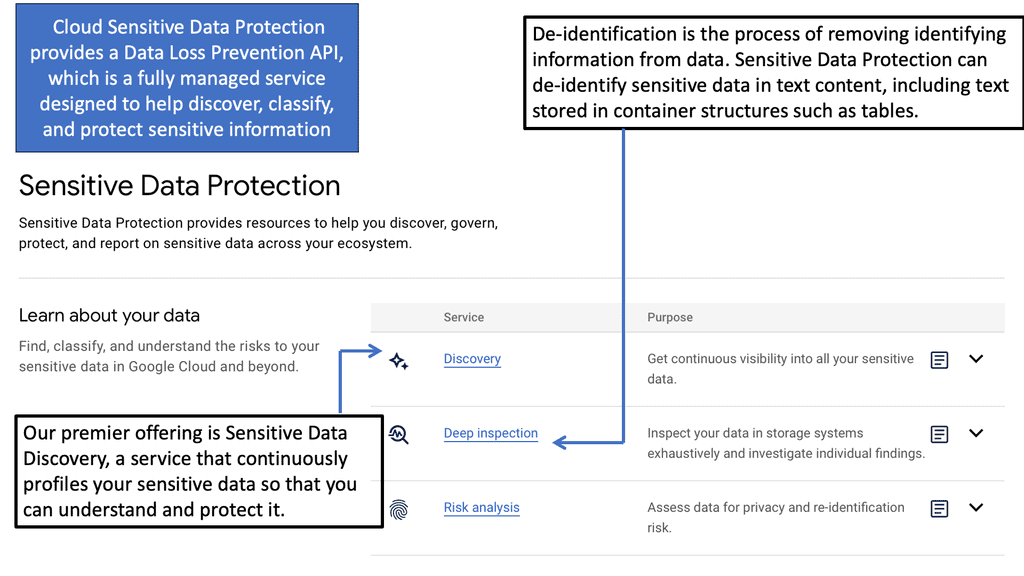
Sensitive data protection

2.Outbound Use Case

Then, we need to look at outbound traffic. Here, things have changed considerably. Some users need to catch up to a firewall and then go to applications hosted outside the protection of your on-premise security stack and network. These are applications in the cloud, such as SaaS applications, that do not like when the network devices in the middle interfere with the traffic.

Therefore, applications such as Office365 make an effort with their design to reduce the chances of the potential of any network and security device from peeking into their traffic. For example, you could have mutual certificate authentication with the service in the cloud. So, there are a couple of options here besides the traditional DPI use case for inbound traffic use case.

**Improving Security: Understanding the network**

Understanding Network Scanning

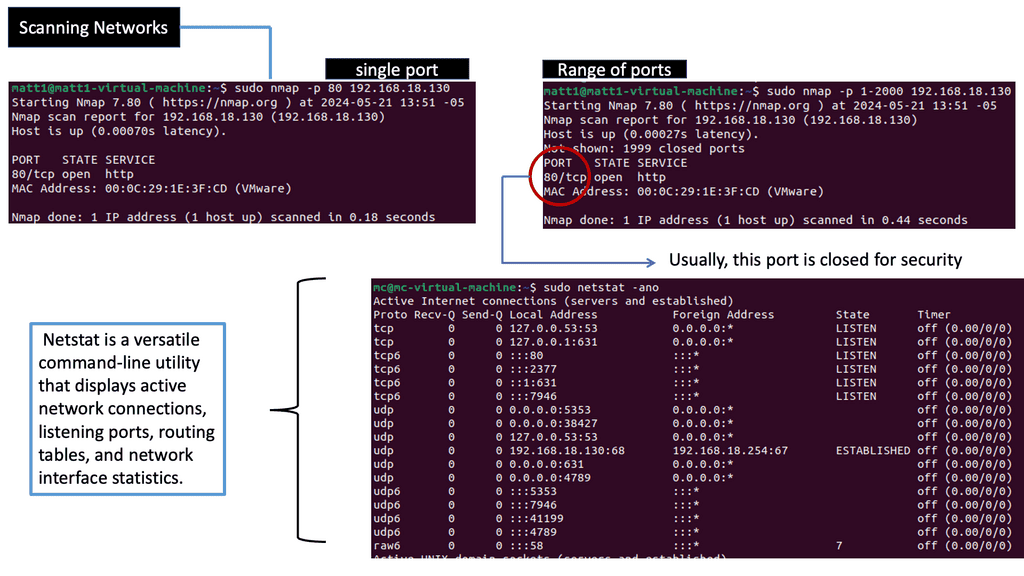
Network scanning involves exploring computer networks to gather information about connected devices, open ports, and system vulnerabilities. Cybersecurity professionals gain valuable insights into the network’s architecture, potential entry points, and security risks by utilizing various scanning techniques and tools.

There are different types of network scans, each serving a specific purpose. Port scans identify open ports and services running on them, while vulnerability scans aim to pinpoint weaknesses within network devices, applications, or configurations. Additionally, network mapping scans visually represent the network’s structure, aiding in better understanding and management.
Example: Cisco Secure Firewall 3100

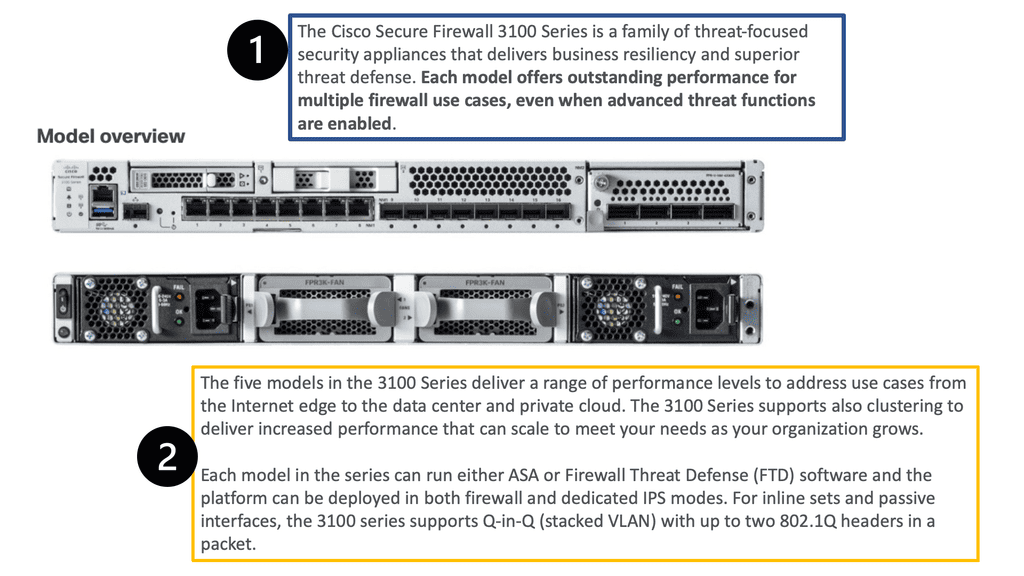
Cisco has the Cisco Secure Firewall 3100, a mid-range model that can be an Adaptive Security Appliance (ASA) for standard stateful firewall inspection or Firewall Threat Defense (FTD) software.

So it can perform one or the other. It also has clustering, a multi-instance firewall, and high availability, which we will discuss. In addition, the Cisco Series Firewall throughput range addresses use cases from the Internet edge to the data center and private cloud.

Cisco Secure Firewall 3100 is an advanced next-generation firewall that provides comprehensive security and high performance for businesses of all sizes. Its advanced security features can protect an organization’s most critical assets, from data, applications, and users to the network infrastructure. Cisco Secure Firewall 3100 offers an integrated threat defense system that combines intrusion prevention, application control, and advanced malware protection. This firewall is designed to detect and block malicious traffic and protect your network from known and unknown threats.
Secure Firewall
Diagram: Cisco Secure Firewall. The source is Cisco.

Adaptive Security Appliance (ASA) and Firewall Threat Defense (FTD)

The platforms can be deployed in Firewall (ASA) and dedicated IPS (FTD) modes. In addition, the 3100 series supports Q-in-Q (stacked VLAN) up to two 802.1Q headers in a packet for inline sets and passive interfaces. The platform also supports FTW (fail-to-wire) network modules.

Remember that you cannot mix and match ASA and FTD modes. However, you can make FTD operate similarly to the ASA. For example, the heart of the Cisco Secure Firewall is Snort, one of the most popular open-source intrusion detection and prevention systems capable of real-time traffic inspection. 

**IPS Engine – Snort**

What’s powerful about the Cisco Secure Firewall is its high decryption performance due to the Crypto Engine. The Firewall has an architecture built around decrypting traffic and has impressive performance. In addition, you can tune your CPU cores to perform more traditional ASA functionality, such as termination IPsec and some stateful firewall inspection.

In such a scenario, we have an IPS engine ( based on Snort ) but give it only 10%. We can provide 90% of the data plane to traditional firewalling in this case. So, a VPN headend or basic stateful Firewall would use more data plane cores.

On the other hand, any heavy IPS and file inspection would be biased toward more “Snort” Cores. Snort provides the IPS engine to tailor the performance profiles to your liking. We have configurable CPU Core allocation, which can be set statically, not dynamically.

Secure Firewalling Features:

1.Secure Firewall Feature: Clustering

Your Secure Firewall deployment can also expand as your organization grows to support its network growth. You do not need to replace your existing devices for additional horsepower; you can add threat defense devices to your current deployment and group them into a single logical cluster to support additional throughput. 

A clustered logical device offers higher performance, scalability, and resiliency simultaneously. You can create a cluster between multiple chassis or numerous security modules of the same chassis. When a cluster is built with various independent chassis, it is called inter-chassis clustering.

2.Secure Firewall Feature: Multi-Instance

The Secure Firewall offers multi-instance capability powered by Docker container technology. It enables you to create and run multiple application instances using a small subset of a chassis’s hardware resources. You can independently manage the threat defense application instances as separate threat defense devices. Multi-instance capability enables you to isolate many critical elements.

3.Secure Firewall Feature: High Availability

In a high-availability architecture, one device operates actively while the other stays on standby. A standby device does not actively process traffic or security events. For example, suppose a failure is detected in the active device, or there’s any discontinuation of keepalive messages from the active device.

In that case, the standby device takes over the role of the active device and starts operating actively to maintain continuity in firewall operations. An active device periodically sends keepalive messages and replicates its configurations to a standby device. Therefore, the communication channel between the peers of a high-availability pair must be robust and with much less latency. 

Exploring SASE Cloud

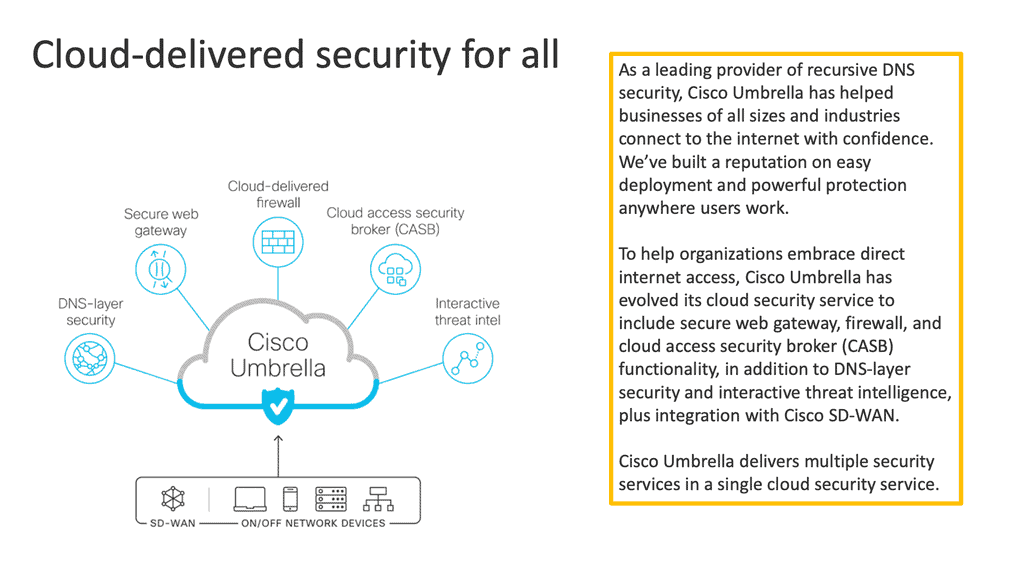
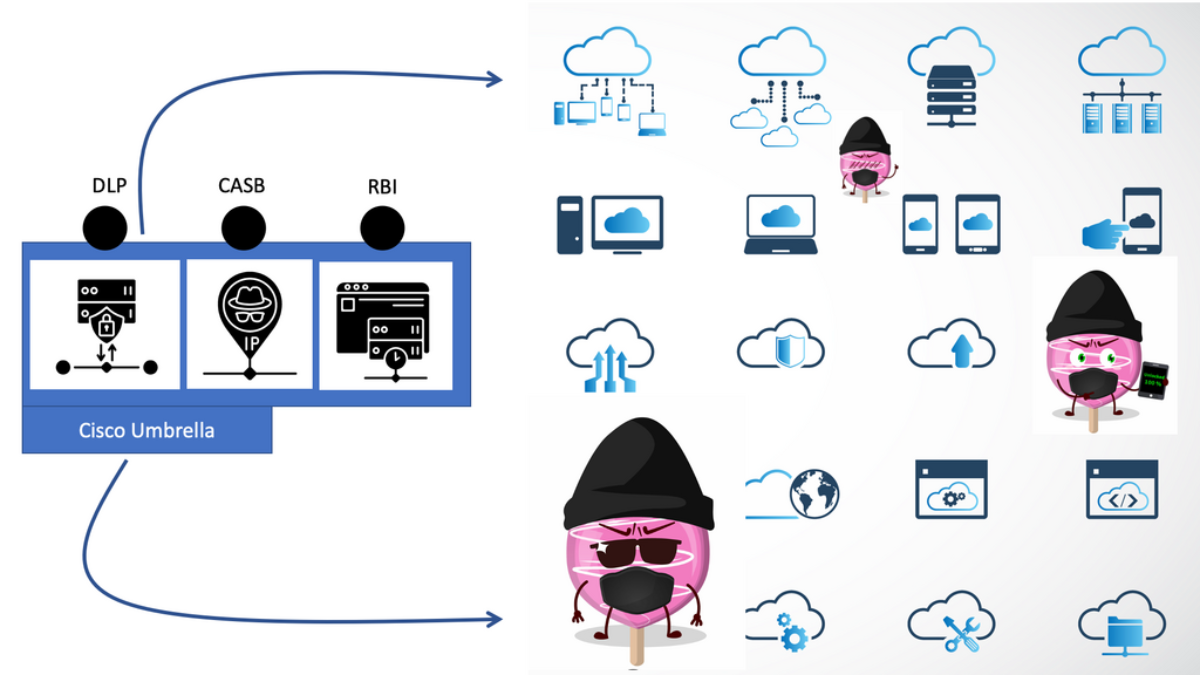
One way to examine SaaS-based applications and introduce some cloud security is by using Cisco Umbrella with the SASE Cloud. The SASE Cloud can also have a cloud access security broker known as Cloudlock. The Cisco Umbrella CASB  is like a broker that hooks into the application’s backend to determine users’ actions. It does this by asking for the service via an Application Programming Interface (API) call and not by DPI.
Cisco Umbrella
Diagram: Cisco Umbrella. Source is Cisco

Cisco Cloudlock is part of the SASE cloud that provides a cloud-native cloud access security broker (CASB) that protects your cloud users, data, and apps. Cloud lock’s simple, open, and automated approach uses APIs to manage the risks in your cloud app ecosystem. With Cloudlock, you can more quickly combat data breaches while meeting compliance regulations.

Cisco Umbrella also has a firewall known as the Cisco Umbrella Firewall. We can take the Cisco Umbrella Firewall to improve its policy decision using information gleaned from the CASB. In addition, we map network flows to a specific user action via cloud applications and CASB solutions. So this is one area you can look into.

Extending the Firewall with SASE Cloud

Cisco Umbrella Firewall:

The SASE Cloud with Cisco Umbrella firewall is a good solution that can be combined with the on-premise Firewall. So, if you have FDT at the edge of your network, why would you need to introduce a Cisco Umbrella Firewall or any other SASE technologies? Or if you have a SASE cloud with a Cisco Umbrella, why would you need FDT?

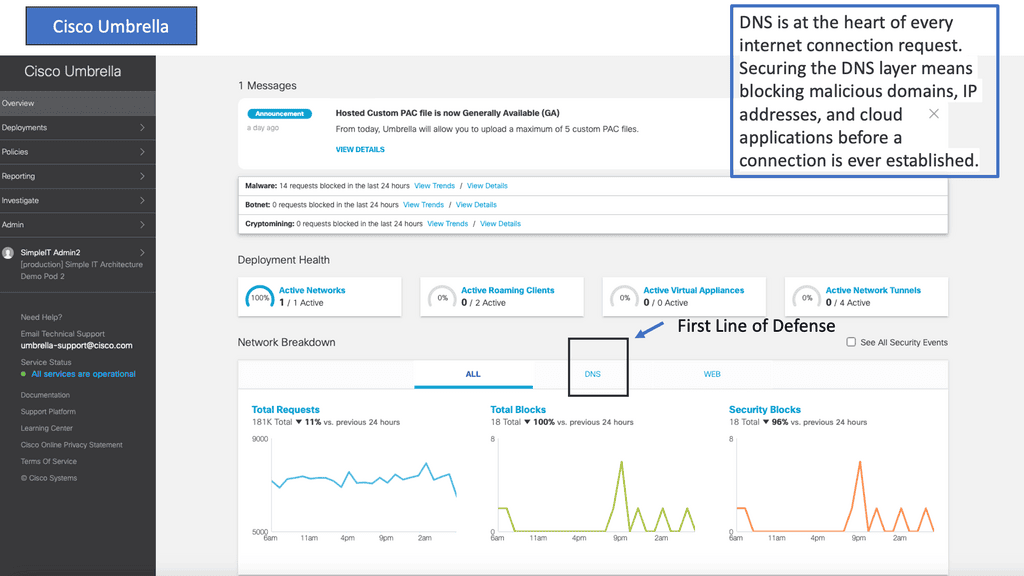
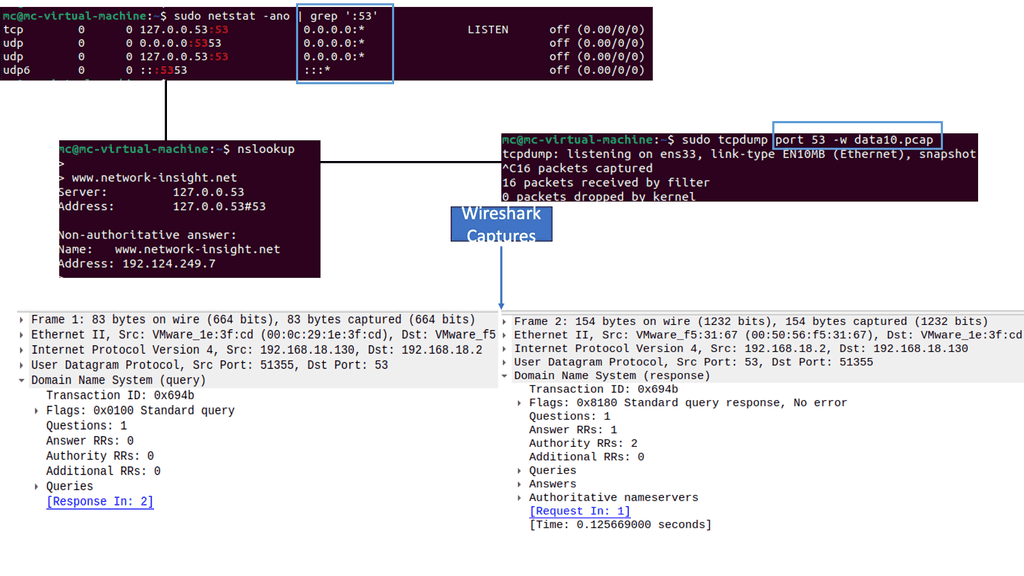
First, it makes sense to process specific traffic locally. However, the two categories of traffic that Cisco Umbrella excels in beyond any firewall are DNS and CASB. Your edge firewall is less effective against some outbound traffic, such as dynamically changing DNS and undecryptable TLS connections. DNS is Cisco Umbrella’s bread and butter.

DNS Request Proceed The IP Connection

Knowledge Check: Cisco DNS-layer security.

DNS requests precede the IP connection, enabling DNS resolvers to log requested domains over any port or protocol for all network devices, office locations, and roaming users. As a result, you can monitor DNS requests and subsequent IP connections to improve the accuracy and detection of compromised systems, security visibility, and network protection. 

You can also block requests to malicious destinations before a connection is even established, thus stopping threats before they reach your network or endpoints. Cisco Umbrella under the hood can clean your DNS traffic and stop the attacks before they get to any malicious connection. 

SASE Cloud: Cisco Umbrella CASB.

Also, you can not decrypt SaaS-based applications and CASB on the edge firewall. The Firewall can’t detect if the user is carrying out any data exfiltration.

With SASE cloud, Cisco Umbrella, and its integrated CASB offering, we get better visibility in this type of traffic and apply a risk category to certain kinds of activity. So now we have an excellent combination. The cloud security stack does what it does best: processing cycles away from the Firewall.

**Cisco Umbrella Integration**

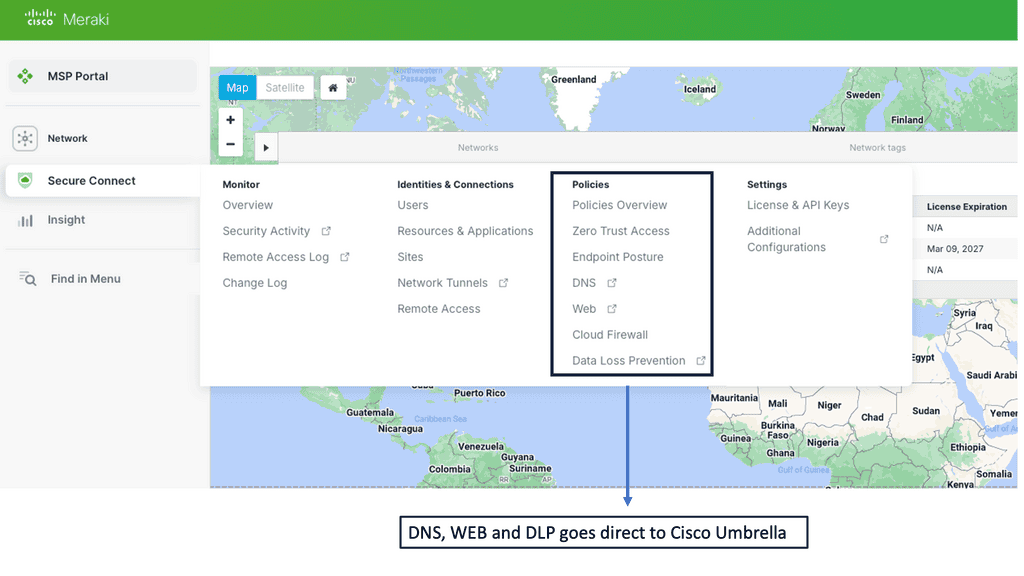
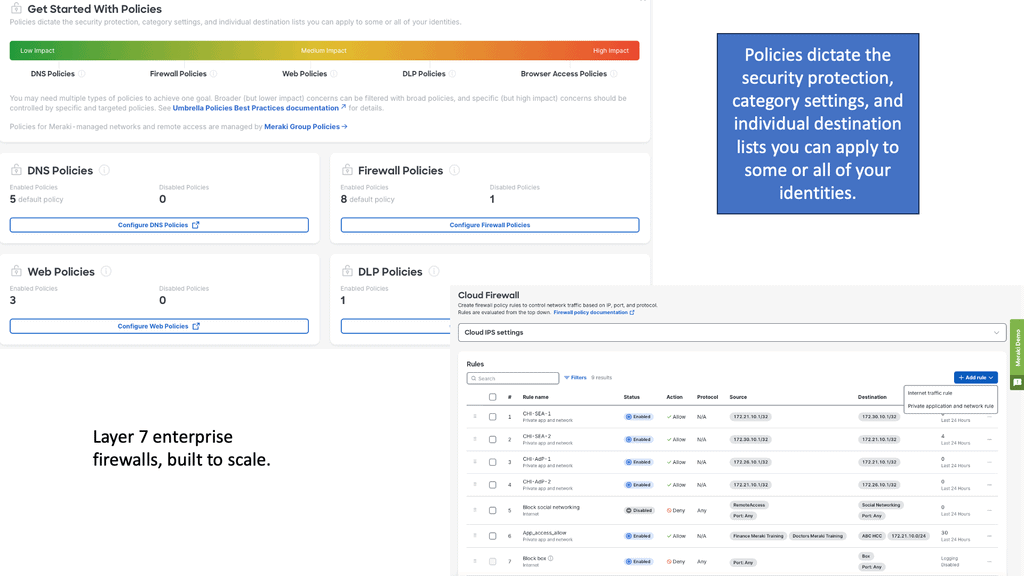
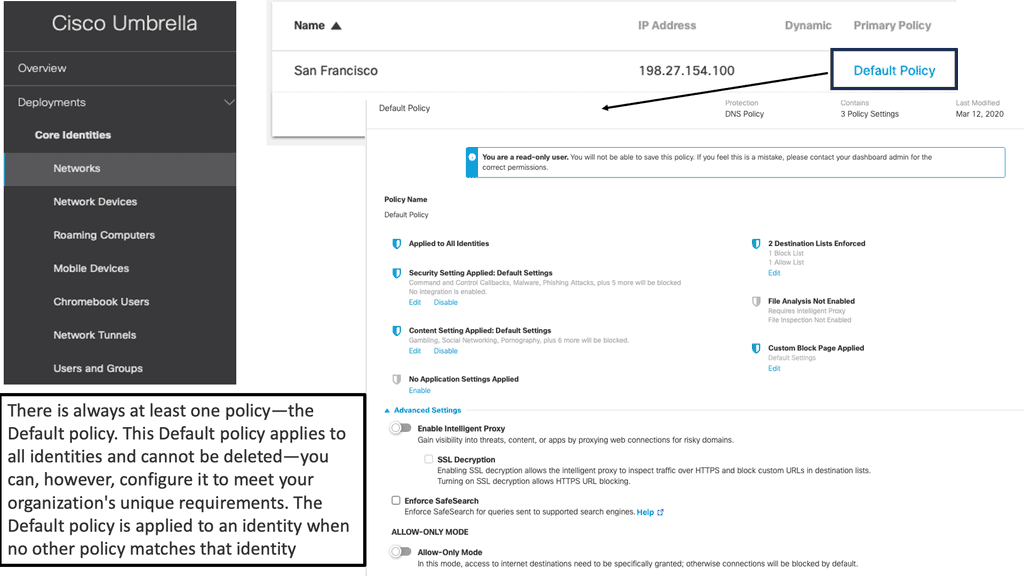
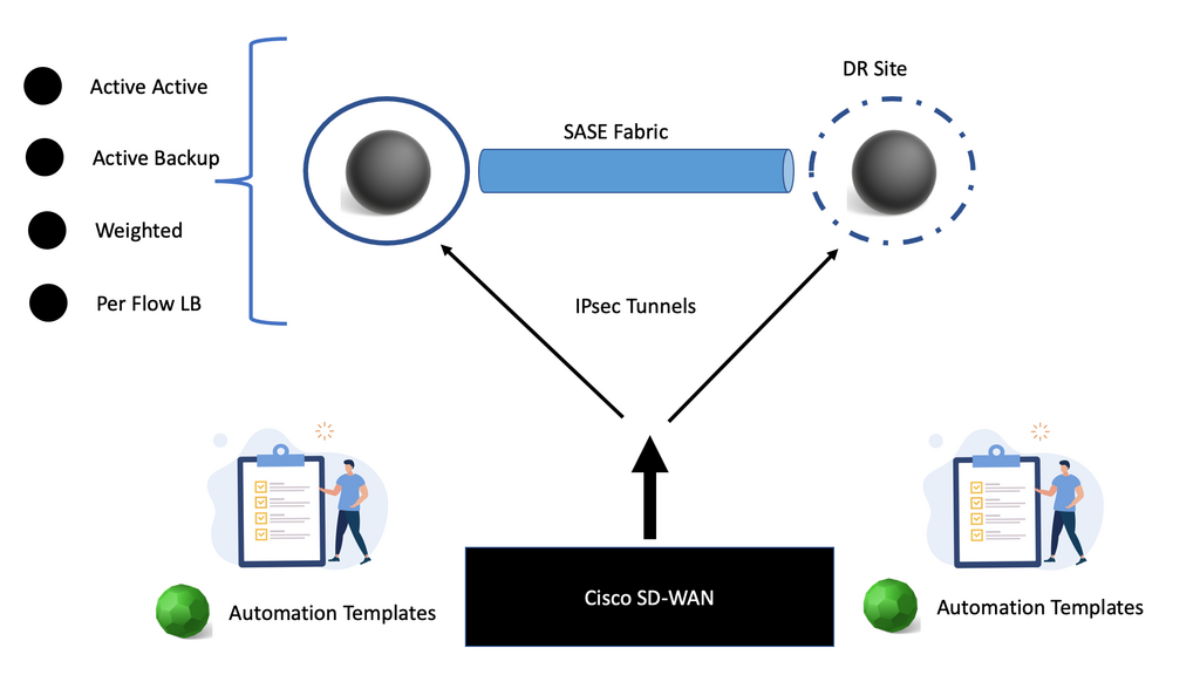
With the Cisco Secure Firewall, they have nice DNS redirection to the Cisco Umbrella Firewall. The on-premise Firewall communicates API to Cisco Umbrella and pulls in the existing DNS policy so the Umbrella DNS policies can be used with the current firewalling policies.  Recently, Cisco has gone one step further, and you can have a SIG tunnel between the Cisco Secure Firewall Management Center (FMC) and the Cisco Umbrella.

So there is a tunnel and have per tunnel IKE ID and bundle multiple tunnels to Umbrella.  Now, we can have load balance across multi-spoke tunnels with per-tunnel custom IKE ID. Once set up, we can have certain kinds of traffic going down each tunnel.

**Endpoint controls**

Then, we have the endpoint, such as your desktop computer or phone. We can collect a wealth of information about each network connection. This information can be fed into the Firewall via metadata. So you can provide both the Cisco Umbrella Firewall and the Cisco Secure Firewall. Again, for improved policy.

The Firewall, either the Cisco Secure Firewall or the Cisco Umbrella Firewall, does not need to decrypt any traffic. Instead, we can get client context discovery via passive fingerprinting using an agent on the endpoint. We can get a wealth of attributes you can’t get with DPI. So we can move from DPI to everything and augment that with all other components to get better visibility.
Summary: Cisco Secure Firewall with SASE Cloud

In today’s rapidly evolving digital landscape, organizations face the challenge of ensuring robust security while embracing the benefits of cloud-based solutions. Cisco Secure Firewall with SASE (Secure Access Service Edge) Cloud offers a comprehensive and streamlined approach to address these concerns. This blog post delved into the features and benefits of this powerful combination, highlighting its ability to enhance security, simplify network management, and optimize performance.

Understanding Cisco Secure Firewall

Cisco Secure Firewall serves as the first line of defense against cyber threats. Its advanced threat detection capabilities and deep visibility into network traffic provide proactive protection for organizations of all sizes. Cisco Secure Firewall ensures a secure network environment by preventing unauthorized access, blocking malicious content, or detecting and mitigating advanced threats.

Introducing SASE Cloud

On the other hand, SASE Cloud revolutionizes how organizations approach network and security services. SASE Cloud offers a scalable and agile solution by converging network functions and security services into a unified cloud-native platform. It combines features such as secure web gateways, data loss prevention, firewall-as-a-service, and more, all delivered from the cloud. This eliminates the need for costly on-premises infrastructure and allows businesses to scale their network and security requirements effortlessly.

The Power of Integration

When Cisco Secure Firewall integrates with SASE Cloud, it creates a formidable combination that enhances security posture while delivering optimal performance. The integration allows organizations to extend their security policies seamlessly across the entire network infrastructure, including remote locations and cloud environments. This unified approach ensures consistent security enforcement, reducing potential vulnerabilities and simplifying management overhead.

Simplified Network Management

One of the key advantages of Cisco Secure Firewall with SASE Cloud is its centralized management and control. Administrators can easily configure and enforce security policies, monitor network traffic, and gain valuable insights through a single glass pane of glass. This simplifies network management, reduces complexity, and enhances operational efficiency, enabling IT teams to focus on strategic initiatives rather than mundane tasks.

Conclusion

In conclusion, the combination of Cisco Secure Firewall with SASE Cloud provides organizations with a robust and scalable security solution that meets the demands of modern networks. By integrating advanced threat detection, cloud-native architecture, and centralized management, this potent duo empowers businesses to navigate the digital landscape confidently. Experience the benefits of enhanced security, simplified management, and optimized performance by adopting Cisco Secure Firewall with SASE Cloud.

Cisco Umbrella

SD-WAN SASE

NETWORK ENGINEERING GUIDE

SD-WAN & SASE: From Intelligent Connectivity to Secure Access

SD-WAN and SASE address different parts of the modern connectivity problem. SD-WAN provides the software-controlled networking fabric that determines how traffic moves across available transports, while SASE extends security and access enforcement closer to users, devices, applications and Internet destinations.

ENGINEERING QUESTION
How do SD-WAN and SASE work together to connect users and applications while continuously deciding how access should be secured and enforced?
01
CONNECT
Build the intelligent connectivity fabric
02
DECIDE
Evaluate identity, context and policy
03
ENFORCE
Apply security controls at the edge
04
ADAPT
Respond when behaviour or risk changes

What This Guide Examines

The relationship between SD-WAN and SASE is often reduced to a product comparison. The engineering problem is broader: traffic may originate from a branch, remote user, cloud workload or SaaS application, traverse multiple transports, and encounter security controls distributed across different enforcement points.

This guide follows that traffic and examines how connectivity, identity, application context, path quality, security policy and behavioural signals combine to determine what should happen to each flow.

The objective is not to treat SD-WAN and SASE as interchangeable technologies, but to understand where their responsibilities meet and how they can form a coherent architecture.

CORE ENGINEERING MODEL
SD-WAN provides connectivity, routing, path selection and traffic steering across the WAN fabric.

SASE provides a distributed security and access architecture that evaluates context and applies security controls closer to users and applications.

Together they enable a more dynamic model of connectivity + policy + security + continuous adaptation.
ENGINEERING PROGRESSION
01 Architecture → understand where SD-WAN connectivity and SASE security responsibilities sit  ·  02 Decision → evaluate identity, context, path and policy  ·  03 Enforcement → determine where security inspection should occur  ·  04 Adaptation → respond when trust, behaviour or risk changes

SD-WAN & SASE Architecture

ENGINEERING FOCUS · 01
SD-WAN & SASE Architecture
CONNECT
ENGINEERING QUESTION How do SD-WAN and SASE fit together without treating them as the same technology?
UNDERLAY Transport
→
SD-WAN Connectivity
→
SASE Security Edge
→
APPLICATION Access
THIS SECTION EXAMINES

Underlay and overlay, SD-WAN edge functions, application-aware routing, distributed SASE enforcement and the boundary between connectivity and security.

INTERACTIVE LAB Modern Secure Connectivity Architecture

Section 01 — SD-WAN & SASE Architecture

The first step in understanding SD-WAN and SASE is to separate their responsibilities. They are complementary architectural capabilities, not two names for the same technology. SD-WAN focuses primarily on connectivity, routing, path selection and traffic steering, while SASE brings security and access controls closer to users, devices, applications and Internet destinations.

The SD-WAN Connectivity Fabric

SD-WAN creates a software-controlled abstraction over the available WAN transports. A branch may have broadband, private connectivity, 5G, LTE or other transport options, and the SD-WAN edge can use policy and real-time path information to determine how application traffic should be carried.

The important distinction is between the underlay and the overlay. The underlay provides the physical or provider connectivity. The overlay provides the logical networking relationships, routing information, tunnels and policy-controlled paths that operate across those transports.

This separation allows the network to make decisions based on application requirements rather than treating every available link as equivalent. A latency-sensitive application may require a different path from bulk data transfer, while a critical business service may be given a higher-quality path when conditions change.

Where SASE Enters the Architecture

SASE extends this model beyond connectivity. Instead of assuming that security enforcement must occur at a central enterprise data centre, security capabilities can be delivered through distributed cloud-based enforcement points, commonly referred to as SASE Points of Presence or security service edges.

Depending on the architecture and provider, these enforcement capabilities may include secure web access, firewall services, DNS security, intrusion prevention, URL filtering, cloud access controls, data protection and other security functions.

The architectural objective is to place security enforcement in a location that is appropriate for the traffic rather than automatically backhauling every Internet or SaaS request through a traditional central security stack.

SD-WAN and SASE Are Not the Same Decision

A useful engineering model is to treat connectivity and security as related but distinct decisions.

SD-WAN
Which available network path should carry this traffic?
SASE
What security and access controls should apply to this traffic?

In practice these decisions interact. Application identity, user identity, device posture, path quality and security policy can all influence the resulting treatment of a flow. However, combining the technologies does not mean that routing and security become a single function.

From Branch Connectivity to Application Access

Consider a user at a branch accessing a cloud application. The request may begin at a local endpoint, cross the branch LAN, reach the SD-WAN edge and then use an available WAN transport. Rather than automatically sending the request through a central data centre, the architecture may steer it toward an appropriate cloud or SASE enforcement point.

At the security edge, the request can be evaluated using identity, device context, application classification, destination, policy and risk signals. The resulting decision may permit the request, require additional verification, restrict access or block the flow.

This creates a much more distributed architecture than the traditional model of branch → WAN → central data centre → Internet. The important change is not simply that security has moved into the cloud. It is that connectivity and security can now be coordinated around the location of the user, application and enforcement point.

The Architecture in Four Layers

01 · UNDERLAY
Physical and provider transports that supply connectivity.
02 · OVERLAY
Logical paths, routing and policy-controlled traffic steering.
03 · SECURITY EDGE
Distributed security services and access enforcement.
04 · POLICY
Identity, context, application and risk determine treatment.

Why the Architecture Matters

The value of combining SD-WAN and SASE is therefore not simply operational convenience. It is the ability to create a consistent policy model across increasingly distributed environments where users, applications and workloads are no longer concentrated inside one enterprise perimeter.

SD-WAN provides the connectivity intelligence required to move traffic efficiently across the available network. SASE provides security and access enforcement that can follow the traffic toward the user, application or destination.

The result is an architecture in which connectivity is dynamic, security is distributed, and access decisions can continuously adapt to context.

SD-WAN + SASE

Modern Secure Connectivity Architecture

SD-WAN provides the connectivity and application-aware path selection. SASE adds cloud-delivered security, identity-aware policy and continuous protection. Click each layer to explore its role.
01
User / Branch
Identity + device
›
02
SD-WAN Edge
Routing + telemetry
›
03
Secure Overlay
IPsec + segments
›
04
SASE Policy
Identity + context
›
05
Security Services
Inspect + enforce
›
06
Application
SaaS + cloud + private

User / Branch

Traffic originates from a branch, remote user, device or workload. The request carries identity, application and device context that can influence the security decision.

SD-WAN Responsibilities

Connect: build the WAN fabric.
Measure: latency, loss and jitter.
Classify: identify applications.
Steer: select an appropriate path.

SASE Responsibilities

Evaluate: identity and context.
Inspect: apply security services.
Enforce: allow, restrict or block.
Protect: maintain policy at the cloud edge.

Engineer’s mental model: SD-WAN answers “How should this traffic move?” while SASE answers “What security policy should apply?”. Together they create an identity-aware connectivity fabric rather than treating networking and security as separate systems.

Identity, Context & Traffic Decision

ENGINEERING FOCUS · 02
Identity, Context & Traffic Decision
DECIDE
ENGINEERING QUESTION How do we decide which path, security controls and access policy should apply to a flow?
IDENTITY Who?
DEVICE Trusted?
APPLICATION What?
PATH Which route?
RISK How risky?
POLICY DECISION
ALLOW
STEP-UP
RESTRICT
BLOCK
THIS SECTION EXAMINES

Identity, device posture, application classification, link quality, risk signals and the difference between routing decisions and security decisions.

INTERACTIVE LAB SD-WAN → SASE Traffic Decision

Section 02 — Identity, Context & Traffic Decision

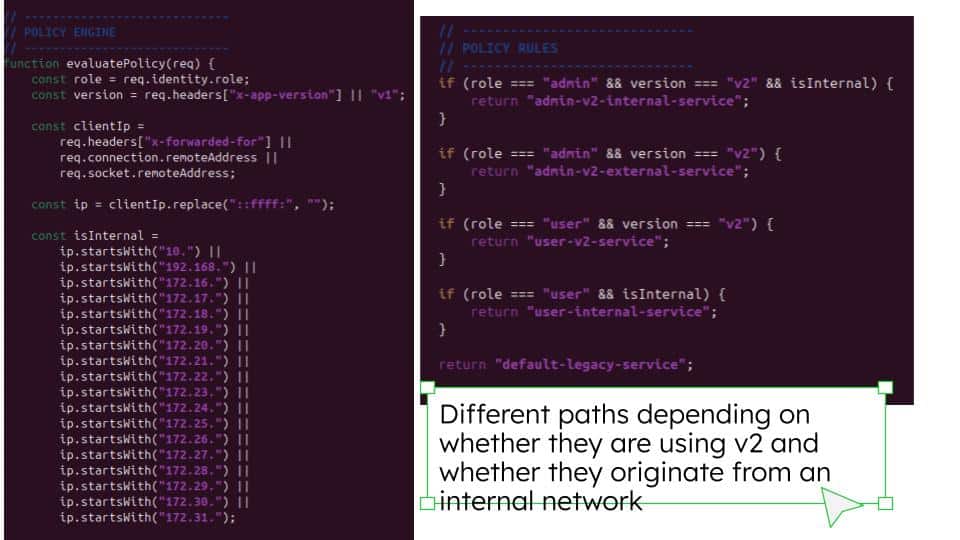
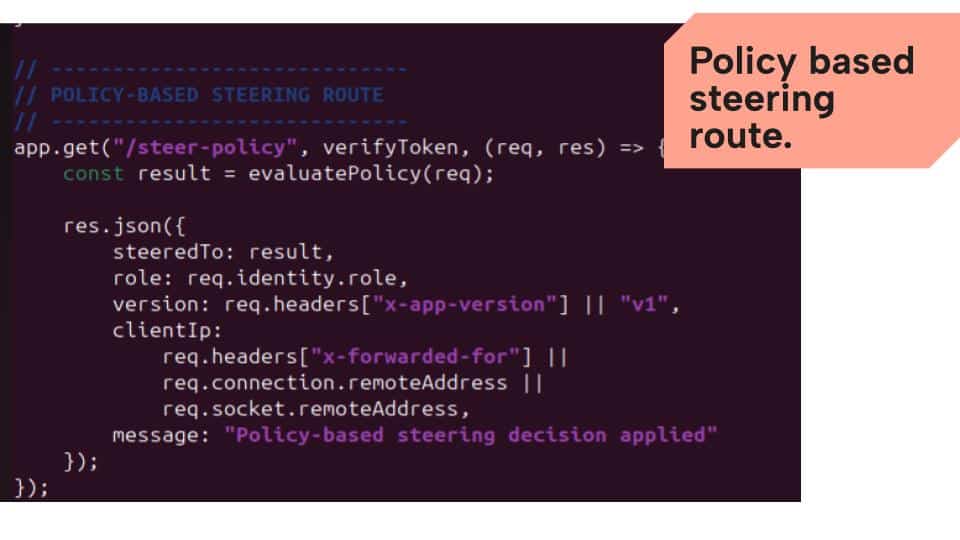
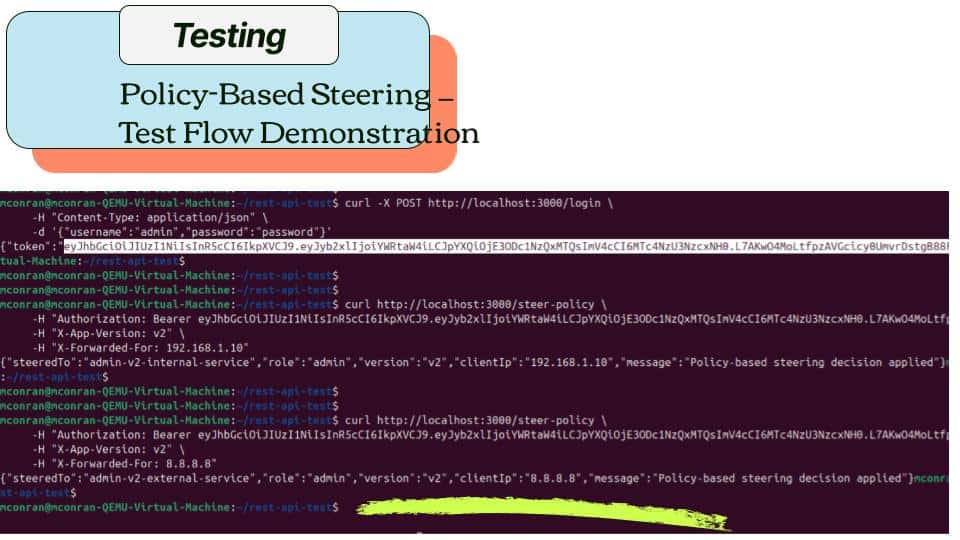
Once SD-WAN provides a programmable connectivity fabric, the next engineering problem is deciding how an individual flow should be treated. Modern access decisions cannot rely only on an IP address or the network from which a request originated. User identity, device posture, application identity, destination, path conditions and security policy can all contribute to the final decision.

From Network Location to Context

Traditional network security often associated trust with location. A request arriving from an internal subnet or corporate WAN was generally treated differently from traffic arriving from the public Internet. Distributed applications and remote access have made that model increasingly difficult to maintain.

A modern architecture can instead evaluate the context surrounding the request. The same user accessing the same application may receive different treatment depending on the device being used, authentication strength, security posture, destination, current risk and other policy signals.

This does not mean that every architecture uses exactly the same signals. The engineering principle is that access decisions should be based on relevant context rather than network location alone.

The Context Used by a Traffic Decision

IDENTITY
Who is requesting access and how strongly has that identity been verified?
DEVICE
Is the endpoint known, managed and compliant with the required security posture?
APPLICATION
What service is being accessed and what level of protection does it require?
DESTINATION
Where is the traffic going and is that destination permitted?
RISK
Are there signals indicating unusual behaviour or elevated security risk?
PATH
Which available network path currently meets the application's requirements?

Routing Decision vs Security Decision

One of the most important distinctions in a combined SD-WAN and SASE architecture is that path selection and security enforcement are related but different decisions.

CONNECTIVITY DECISION
Which transport, tunnel or forwarding path should carry the traffic?
Common inputs include latency, packet loss, jitter, availability, application requirements and routing policy.
SECURITY DECISION
Should this request be allowed, challenged, restricted or blocked?
Common inputs include identity, device posture, application, destination, policy and risk.

These decisions may influence one another without becoming the same decision. For example, an application may require a low-latency path while a security policy requires the traffic to pass through a particular inspection service. The resulting architecture must satisfy both requirements.

Application-Aware Connectivity

SD-WAN can classify traffic according to application characteristics and apply different forwarding policies. This allows the network to distinguish between business-critical collaboration, voice, SaaS, bulk data and less-sensitive traffic rather than treating every packet identically.

Path selection can then consider measured conditions across the available transports. If one path develops excessive loss or latency, traffic may be moved to another path when the policy permits that change.

This creates an important feedback loop: application requirements influence connectivity, while real-time network telemetry influences path selection.

Identity-Aware Access

SASE architectures extend the decision beyond the network path. A request can be evaluated against an identity-aware policy that considers who the user is, what device they are using and what application they are attempting to reach.

A successful authentication does not necessarily mean that every subsequent request should receive unrestricted access. Additional signals can change the decision. A managed device may receive normal access, while an unmanaged device may be restricted. A high-risk sign-in may trigger stronger authentication, while an explicitly prohibited destination may be blocked.

This is where Zero Trust principles become relevant: trust should not be treated as a permanent property of a user, device or network location. Access should be evaluated according to the policy and context applicable to the request.

Four Possible Policy Outcomes

ALLOW
The request satisfies the applicable policy and can proceed.
STEP-UP
Additional verification is required before access continues.
RESTRICT
Access is permitted with reduced capability or additional controls.
BLOCK
The request violates policy or presents unacceptable risk.

A Policy Decision Is a Point-in-Time Evaluation

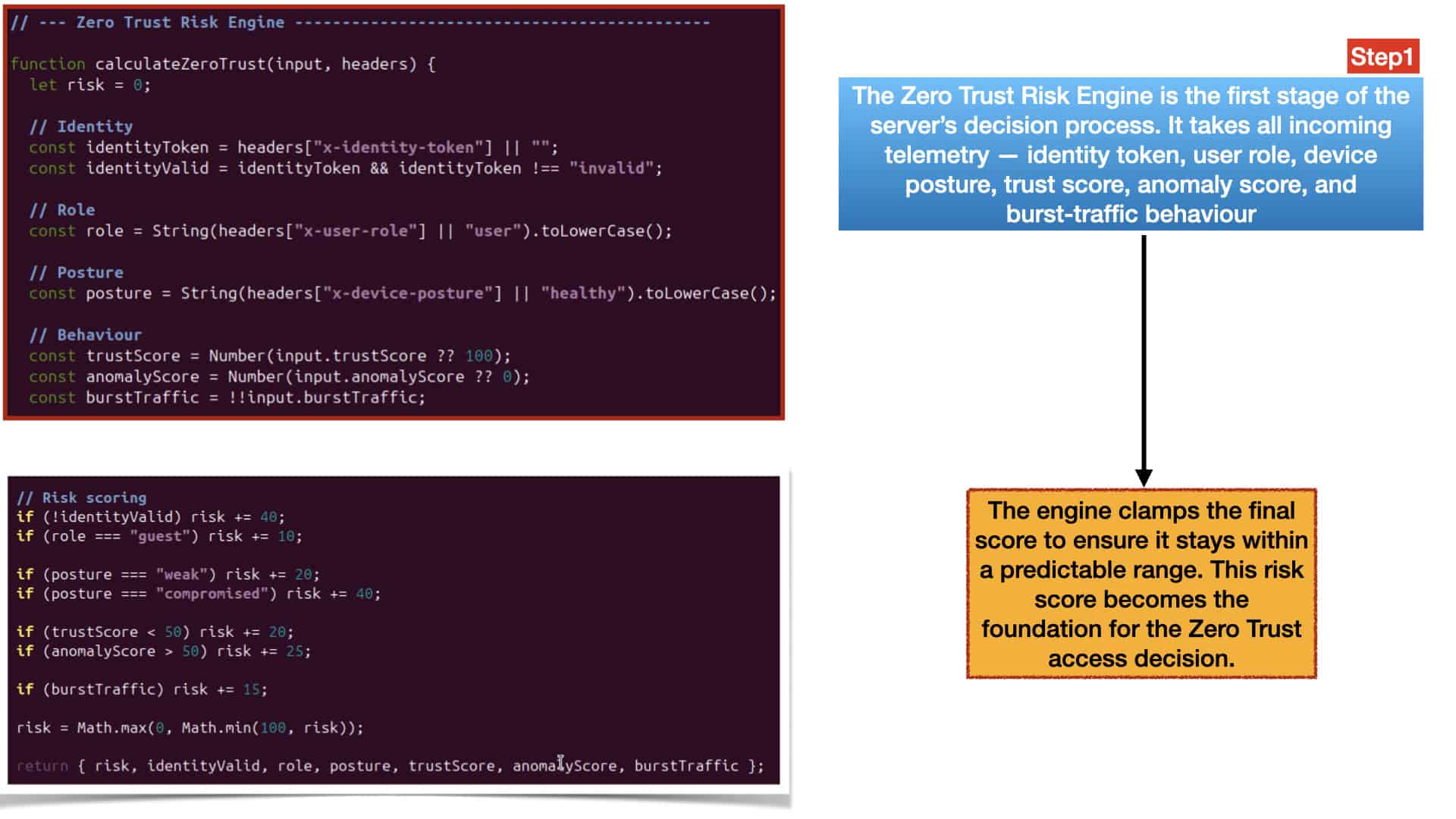
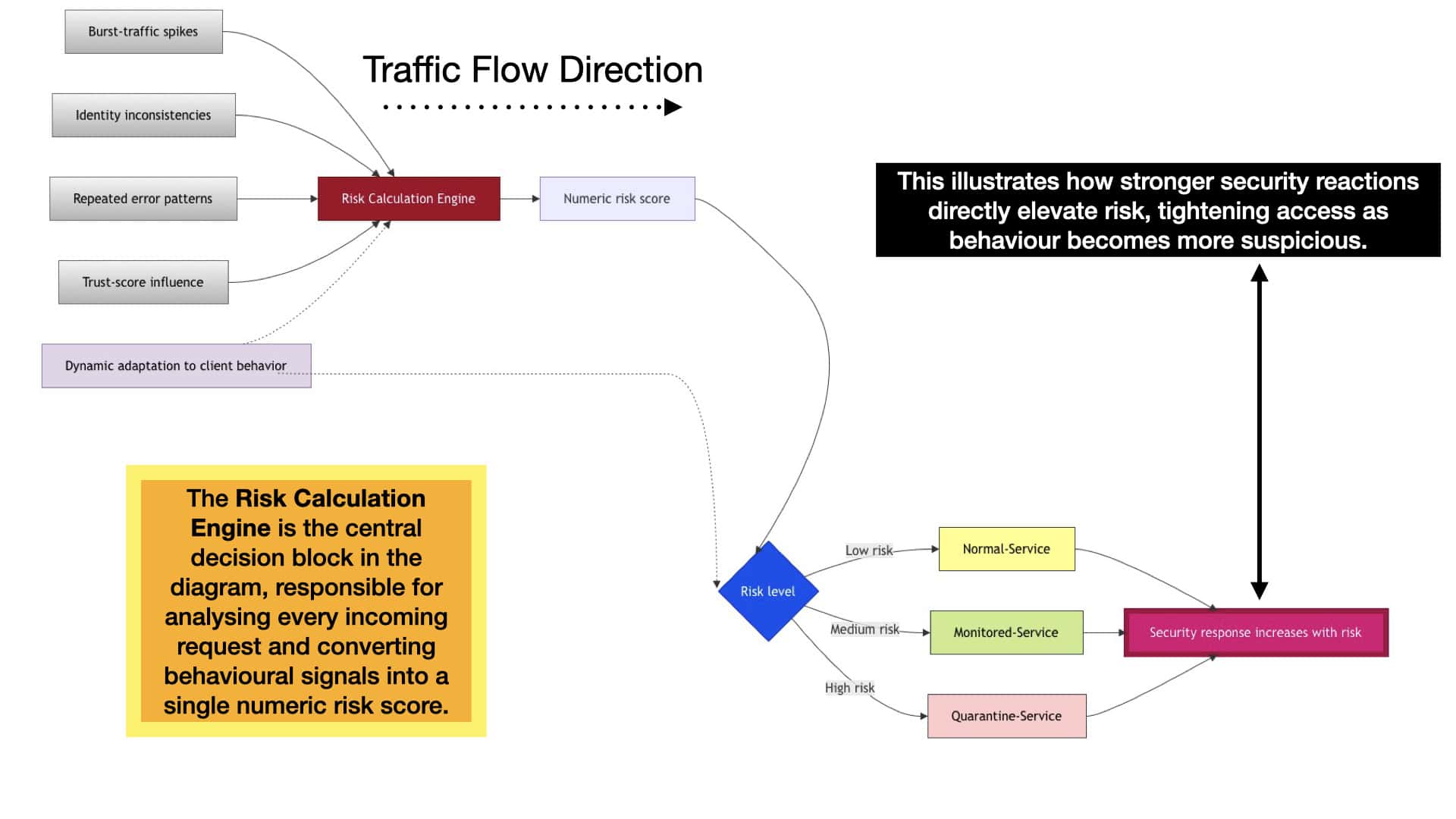
A major advantage of combining identity, network and security telemetry is that policy can respond to changing conditions. A flow that was acceptable several minutes ago may no longer satisfy policy if the user's risk changes, the device loses compliance, the destination becomes suspicious or the traffic pattern becomes anomalous.

This is why modern access architectures increasingly treat authorisation as a continuing control rather than a single event that occurs only at login.

The engineering model therefore becomes: IDENTITY + DEVICE + APPLICATION + DESTINATION + NETWORK + RISK → POLICY DECISION. The resulting decision can then determine both how the traffic is connected and which security controls are required.

DECISION ENGINE

SD-WAN → SASE Traffic Decision

A traffic flow is evaluated using application, identity, device, network and security context before the final access and forwarding decision. Click each stage to inspect the logic.
Example request: A user opens a business SaaS application from a branch. The SD-WAN fabric must select an appropriate path while SASE determines what security controls and access policy should apply.
01
Application
What is being accessed?
›
02
Identity
Who is requesting it?
›
03
Device
Is the device trusted?
›
04
Link Health
Which path performs?
›
05
Policy
What controls apply?
›
06
Inspection
Inspect + enforce
›
07
Decision
Allow / restrict / block

Application Request

The flow arrives with source, destination, protocol, port and application information. The first task is to understand what traffic is being requested.

APPLICATION SaaS
IDENTITY Validated
DEVICE Compliant
LATENCY 28 ms
LOSS 0.2%
RISK Low

Possible Policy Outcomes

The final result depends on the combined evidence rather than a single signal.

ALLOW Trusted identity, compliant device and acceptable risk.
STEP-UP Additional authentication is required.
RESTRICT Limited access or a controlled security path is applied.
BLOCK Policy prevents the connection from proceeding.
Example result: SaaS application + validated identity + compliant device + low risk + healthy preferred transport → appropriate SD-WAN path + normal SASE security policy → ALLOW.

Secure Internet Access & SASE Enforcement

ENGINEERING FOCUS · 03
Secure Internet Access & SASE Enforcement
ENFORCE
ENGINEERING QUESTION When users and branches connect directly to cloud and Internet services, where should security inspection occur?
USER / BRANCH Traffic source
→
SD-WAN EDGE Connectivity
→
SASE ENFORCEMENT
Security service path
→
INTERNET / SaaS Destination
DNS FIREWALL IPS URL FILTER CASB / DLP TLS INSPECTION
THIS SECTION EXAMINES

Direct Internet Access, SASE PoPs, secure web access, firewall services, threat inspection, cloud controls, data protection and policy-driven service chaining.

INTERACTIVE LAB SD-WAN Secure DIA / Internet Breakout Explorer

Section 03 — Secure Internet Access & SASE Enforcement

Once a traffic flow has been classified and a connectivity decision has been made, the next question is where security enforcement should occur. Modern users and applications increasingly communicate directly with SaaS platforms, public cloud services and the Internet. Sending every request back through a central enterprise security stack can introduce unnecessary latency and complexity, particularly when users and branches are geographically distributed.

Secure Internet Access combines direct connectivity with distributed security controls. SD-WAN can provide the path toward the Internet or cloud destination, while SASE security services can inspect and enforce policy closer to the source or destination of the traffic.

Direct Internet Access Changes the Traffic Path

In a traditional branch architecture, Internet-bound traffic may be backhauled across the WAN to a central data centre where firewalls, proxies and other security controls are located. This can provide centralised control, but it also means that traffic may travel farther than necessary before reaching its destination.

Direct Internet Access, or DIA, allows a branch or user location to connect directly to Internet destinations. The important security requirement is that direct connectivity must not mean direct, uncontrolled access.

TRADITIONAL MODEL
Branch / User → WAN → Central Security Stack → Internet / SaaS
DISTRIBUTED MODEL
Branch / User → SD-WAN Edge → SASE Enforcement → Internet / SaaS

The advantage is not simply shorter routing. The architecture can select an appropriate security enforcement point while preserving policy visibility and control.

The SASE Enforcement Point

A SASE architecture can provide a distributed security edge through cloud-based enforcement points. Traffic is directed to an appropriate security location where multiple controls can be applied according to the policy associated with the request.

SECURE WEB
Inspect and control web access according to security policy.
FIREWALL
Apply network and application-aware security rules to permitted flows.
THREAT CONTROL
Detect suspicious destinations, exploits, malware and other threats.
DATA CONTROL
Apply controls for cloud applications, sensitive data and organisational policy.

Security Service Chaining

Not every request needs every security service. An important part of SASE enforcement is determining which controls should inspect a particular flow.

For example, a request to a known business SaaS application may require identity-aware access control and policy enforcement, while general web traffic may require secure web filtering and DNS security. A suspicious destination may trigger deeper threat inspection or be blocked before the connection proceeds.

This creates a policy-driven security service path rather than a fixed sequence in which every packet is forced through every available inspection engine.

Common SASE Security Controls

DNS Security
Detect and control requests to known malicious or inappropriate destinations.
URL Filtering
Apply organisational policy to web destinations and content categories.
Firewall
Control network and application traffic according to policy.
IPS / Threat Prevention
Identify traffic patterns associated with known or suspected attacks.
CASB / Cloud Controls
Apply visibility and policy to cloud application usage.
DLP
Detect and control sensitive information leaving approved boundaries.

TLS Inspection Requires Deliberate Design

Encrypted traffic can limit the visibility available to security controls. Where an organisation chooses to perform TLS inspection, the architecture must account for certificate deployment, application compatibility, privacy requirements, performance overhead and regulatory or organisational policy.

TLS inspection should therefore be treated as a deliberate security control rather than an assumption that every encrypted session should automatically be decrypted and inspected.

Choosing the Enforcement Path

SOURCE
User / Branch
SD-WAN
Path
SASE
Policy
INSPECT
Controls
DESTINATION
Internet / SaaS

The ideal path is therefore not necessarily the shortest network path. It is the path that satisfies the combined requirements of connectivity, security, application performance and organisational policy.

Resilience is equally important. Distributed security introduces dependencies on SASE enforcement locations, Internet connectivity and cloud security services. Organisations should therefore consider availability, alternate enforcement locations, failure behaviour and what traffic should happen when a preferred security path is unavailable.

The engineering model for this section can be summarised as: DIRECT CONNECTIVITY → SECURITY ENFORCEMENT → INSPECTION → POLICY DECISION → DESTINATION. The goal is secure, observable access without introducing unnecessary traffic detours.

SECURE INTERNET ACCESS

SD-WAN Secure DIA / Internet Breakout Explorer

Direct Internet Access moves traffic closer to cloud and SaaS applications. The security question is what controls should protect that traffic before it reaches the Internet.
01
Branch / User
Traffic source
›
02
SD-WAN Edge
Classify + steer
›
03
DIA
Direct breakout
›
04
SASE PoP
Security enforcement
›
05
Internet / SaaS
Protected destination

Branch / User

A branch or remote user generates traffic destined for an Internet or SaaS application. Identity, device and application information can accompany the request.

Active security path: DNS Security → Firewall → URL Filtering → Identity Policy

Choose the Traffic Type

Trusted SaaS Known business application with validated identity and normal risk.
General Web Internet browsing subject to DNS, URL and firewall controls.
High-Risk Destination Destination has elevated reputation or policy risk.
Current path: Trusted SaaS traffic → direct Internet access → normal security inspection → ALLOW.

Secure Internet Access & SASE Enforcement

ENGINEERING FOCUS · 04
Behaviour, Analytics & Adaptive Security
ADAPT
ENGINEERING QUESTION What happens when a previously trusted user, device or flow begins behaving differently?
NORMAL Expected behaviour
→
TELEMETRY Signals change
→
ANALYSE Correlate risk
→
ADAPT Change enforcement
IDENTITY DEVICE POSTURE TRAFFIC PATTERN DESTINATION ERRORS RISK SCORE
THIS SECTION EXAMINES

Behavioural telemetry, anomaly detection, trust scoring, correlated signals, adaptive policy, isolation and the feedback loop between networking and security operations.

INTERACTIVE LAB SD-WAN SASE Through Behaviour-Driven Trust

Section 04 — Behaviour, Analytics & Adaptive Security

A secure SD-WAN and SASE architecture cannot depend entirely on decisions made when a user first authenticates or when a device initially connects. Conditions change. Devices lose compliance, identities become compromised, applications behave differently and traffic patterns can move outside their expected baseline.

Behavioural analytics and continuous telemetry provide the feedback required to recognise those changes. Instead of treating trust as a permanent state, the architecture can continuously evaluate whether the current behaviour still satisfies policy and adjust enforcement when the risk changes.

From Static Trust to Continuous Evaluation

Authentication establishes an important identity signal, but it does not guarantee that every action performed by that identity is legitimate. A valid account can be compromised, a trusted endpoint can become infected, or a legitimate session can begin behaving in a way that is inconsistent with normal activity.

Continuous evaluation introduces additional signals into the security decision. These can include authentication events, device posture, application activity, destination changes, traffic volume, connection frequency, error rates and other behavioural indicators.

CONTINUOUS TRUST MODEL
Identity + Device + Application + Network Telemetry + Behaviour = Current Risk Context

What Behavioural Analytics Looks For

Behavioural analysis does not necessarily mean that one unusual event is automatically treated as an attack. Useful detection normally comes from combining multiple signals and comparing activity against expected behaviour, policy thresholds or known threat indicators.

ACTIVITY RATE
Is the frequency or volume of activity significantly different from the expected pattern?
DESTINATION
Is the identity communicating with destinations that are unusual or outside policy?
ERROR PATTERN
Are repeated failures, authentication errors or connection attempts appearing?
DEVICE STATE
Has the security posture or management state of the endpoint changed?
IDENTITY
Are there identity changes, unusual authentication patterns or impossible combinations of signals?
FLOW PATTERN
Does the traffic pattern remain consistent with the application's expected behaviour?

Correlation Is More Valuable Than a Single Alert

A single unusual event may have a legitimate explanation. A user accessing a new application, for example, is not automatically evidence of compromise. The risk becomes more meaningful when multiple independent signals occur together.

IDENTITY
Change
+
DEVICE
Posture
+
BEHAVIOUR
Anomaly
Correlated signals can produce a stronger risk assessment than any individual event.

Risk Is a Signal, Not the Final Decision

A risk score or behavioural anomaly should not automatically become a block action. Security policy determines how the organisation responds to the assessed risk. A moderate anomaly may justify additional authentication or monitoring, while a combination of severe signals may justify restricting or isolating the session.

MONITOR
Continue access while increasing visibility and observation.
STEP-UP
Require stronger verification before permitting continued access.
RESTRICT
Reduce permissions or limit access to lower-risk resources.
ISOLATE
Contain the user, device or flow when the risk warrants stronger action.

Adaptive Security Changes the Policy State

Adaptive security means that policy can change when the underlying conditions change. A session does not necessarily remain in the same enforcement state for its entire lifetime.

NORMAL
Trusted activity
→
MONITORED
Risk emerging
→
RESTRICTED
Elevated risk

Telemetry Connects Networking and Security Operations

One of the strengths of a combined SD-WAN and SASE architecture is the amount of telemetry available across the environment. Network performance, application behaviour, identity events and security detections can be correlated rather than investigated as completely separate data sources.

For example, an application slowdown might initially appear to be a network problem. Telemetry could reveal that the traffic pattern changed at the same time as a new destination was contacted and an identity risk signal appeared. The incident then becomes a security investigation rather than simply a path-performance issue.

This correlation is particularly valuable to security operations because it provides a broader view of what happened before, during and after a policy change.

Closing the Feedback Loop

The architecture introduced throughout this guide is therefore not a one-way traffic pipeline. It is a feedback system. Connectivity produces telemetry. Security controls produce detections. Identity systems produce context. Behavioural analytics correlate those signals. Policy then determines whether the current treatment should remain unchanged or be modified.

CONNECT
Move traffic
OBSERVE
Collect signals
ANALYSE
Assess risk
ADAPT
Change policy

The resulting model is CONNECT → DECIDE → ENFORCE → ADAPT. SD-WAN provides the intelligent connectivity foundation, SASE extends security enforcement toward users and applications, and continuous telemetry allows the architecture to respond when the assumptions behind an access decision change.

Engineering Lab · 04 · Adaptive Security

Behaviour, Analytics & Adaptive Security

Observe a trusted session as its behaviour changes. Correlate identity, device, traffic and destination signals, then determine when policy should adapt.

LIVE TELEMETRY
◎
Identity
Normal session
◈
Device Posture
Compliant
↗
Traffic Pattern
Baseline
⌁
Destination
Trusted SaaS
Behavioural Risk Over Session
BASELINE
00:00
User authenticated successfully. Session trust established.
Composite Risk
18
LOW
Identity 10
Device 5
Behaviour 2
Destination 1
Advance the investigation to observe how the trust state changes.
Trust is continuous.
A session that was acceptable at authentication time may require stronger controls later when identity, device posture, behaviour, destination or other risk signals change.
```
☕
Support Network Insight
Help support independent engineering guides, interactive networking tools, and future learning labs.
Support Network Insight ```
Cisco Secure Workload

Cisco Umbrella CASB

Network Insight · Engineering Guide

Cisco Umbrella CASB: Cloud Visibility, Data Protection and Zero Trust Investigation

Cloud applications have changed where users work, where data is stored and where security decisions must be made. A modern Cloud Access Security Broker (CASB) approach is therefore not simply about blocking applications. It is about discovering cloud activity, understanding identity and data context, applying proportionate controls, and investigating what actually happened.

Discover

Identify sanctioned and unsanctioned SaaS activity and build visibility into the real cloud environment.

Decide

Combine identity, application, device, data and requested activity before making a policy decision.

Investigate

Correlate cloud, identity, DNS, web and security evidence to distinguish signals from confirmed incidents.

Engineering path Cloud Discovery → Context → Enforcement → Investigation
Network Insight · Interactive Architecture

Cisco Umbrella CASB Architecture Explorer

Explore how cloud application discovery, identity context, data protection and security policy fit together. Select any component to examine its engineering role.

Select an architecture component

Identity & policy Visibility & data Risk & response
01

Cloud Application Visibility: Discovering the Real SaaS Environment

Before a security team can protect cloud applications, it needs to understand what applications are actually being used. SaaS adoption rarely follows the approved application catalogue. Employees may introduce new services, connect third-party applications through OAuth, or move business data between platforms without the security team having complete visibility.
What CASB visibility needs to establish

  • Which cloud applications are being accessed?
  • Which applications are sanctioned and which are unknown?
  • Which users, devices and identities are involved?
  • What type of activity is taking place?
  • What data could be exposed or transferred?
  • How much risk does the application introduce?
Engineering principle Discovery comes before enforcement. A security control cannot reliably protect a cloud environment that it cannot see.

Cloud Application Visibility: Discovering the Real SaaS Environment

Cloud application security starts with visibility. Organisations may have an approved catalogue of SaaS services, but real-world usage is usually much broader. Users can introduce applications, connect third-party services through OAuth, and move business information between cloud platforms without those activities appearing in a traditional application inventory.
What the security team needs to discover

CASB visibility should establish which applications are being used, who is using them, what devices are involved, what activity is taking place and whether sensitive information may be entering or leaving the organisation.

SaaS application
User identity
Device context
Cloud activity
Data movement
Application risk
Why discovery matters

An unknown application is not automatically a security incident. It is a visibility signal that requires context. The security team needs to understand the application, its users, its data and its business purpose before deciding whether enforcement is appropriate.

CASB LAB 01 · CLOUD DISCOVERY

SaaS Discovery Explorer

Explore a simplified cloud environment and determine which applications require attention based on usage, approval status and risk.

Discovered SaaS Environment 6 applications
Microsoft 365 Low
Approved collaboration platform
Salesforce Low
Approved business application
Canva Medium
Unapproved SaaS usage detected
Dropbox Medium
External file-sharing activity
Unknown AI Tool High
Potential sensitive-data destination
GitHub Low
Approved development platform
Application Inspector
Application Microsoft 365
Approval Yes
Observed users 184
Risk Low
Engineering readout: Select an application to inspect its cloud-risk context.
02

Identity, Application and Data Context: Turning Cloud Activity Into Policy

Application identity alone is not enough to make a useful security decision. The same SaaS application may be appropriate for one user, device or dataset and unacceptable for another. CASB policy therefore combines multiple dimensions of context before determining what should happen to a cloud request.

Identity Who is making the request?
Device Is the endpoint trusted and healthy?
Application Is the SaaS service approved and appropriate?
Data What information is being accessed or moved?
Action What is the user attempting to do?
Policy principle

The strongest CASB decisions are contextual decisions: identity + device + application + data + activity. This allows security teams to apply controls proportionately instead of treating every cloud interaction as equally risky.

Identity, Application and Data Context: Turning Cloud Activity Into Policy

Once cloud activity has been discovered, the next challenge is deciding what that activity means. A CASB policy should not simply ask whether a user is accessing a particular SaaS application. It should evaluate the identity, device, application, data and requested action together.

Identity Who is making the request and what privileges do they have?
Device Is the endpoint trusted, managed and in an acceptable state?
Application Is the cloud service approved and appropriate for the organisation?
Data Does the activity involve sensitive or regulated information?
Action Is the user viewing, downloading, uploading or sharing data?
Context changes the decision

The same SaaS application can represent very different levels of risk depending on who is using it, what device they are using and what information they are attempting to move.

From signal to policy

Identity, application risk, data classification and activity context provide the evidence required to move from simple visibility toward a defensible security policy.

Network Insight · Interactive Policy Lab

CASB SaaS Access & Data Protection Engine

Change the identity, application, data sensitivity and requested action. Run the scenario to see how a sample CASB policy evaluates the available context and selects a response.

1. Configure the scenario

Application categories are illustrative policy inputs, not live reputation data.
The path affects which responses this example considers technically available.

2. Policy evaluation

Ready to evaluate

Awaiting scenario

Choose the scenario inputs, then run the policy engine to generate a decision and its explanation.

Decision reasoning
  • The engine evaluates the selected user, application, data and activity.
  • The available enforcement path limits the actions that can be taken.
Recommended next step
Run the scenario to see the recommended response.
Policy logic is deliberately simplified for learning. Real deployments require product-specific capabilities, identity signals, application support, licensing and validated organisational rules.
CASB POLICY LAB

CASB Policy Decision Engine

Evaluate cloud activity using identity, device posture, application risk, data sensitivity and requested action — rather than treating every SaaS request as equal.

Policy Inputs Context → Risk → Decision
Policy evaluation path
Identity → Device → SaaS → Data → Action → Policy
03

CASB Enforcement: DLP, SASE and Remote Browser Isolation

Visibility and policy decisions only become useful when they can drive an appropriate control. Modern cloud security can combine inline inspection, API-based controls, Data Loss Prevention (DLP), SASE enforcement and Remote Browser Isolation (RBI). The engineering challenge is choosing the right control for the evidence and the risk.

I
Inline CASB Inspect activity while the user is actively accessing a cloud service.
A
API CASB Inspect cloud-hosted data and activity through application integrations.
D
DLP Identify sensitive information and control inappropriate data movement.
R
RBI Isolate risky web content so the endpoint has less direct exposure.
Engineering principle: enforcement should be proportional to risk. Blocking, restricting, inspecting or isolating are different control responses and should be selected according to identity, application, data and activity context.

CASB Enforcement: DLP, SASE and Remote Browser Isolation

Visibility and policy decisions become operational security controls when they can trigger an appropriate enforcement mechanism. Modern cloud security architectures can combine inline CASB controls, API-based inspection, Data Loss Prevention and Remote Browser Isolation, often as part of a broader SASE architecture.

IN
Inline CASB

Inspect and control cloud activity while traffic or sessions are actively being used.

API
API CASB

Analyse data and activity already stored within connected SaaS platforms.

DLP
Data Loss Prevention

Identify sensitive information and apply controls to inappropriate data movement.

RBI
Remote Browser Isolation

Separate risky web content from the endpoint to reduce direct exposure.

Engineering principle

Enforcement should be proportional to evidence and risk. A mature cloud security architecture does not automatically block every anomaly; it selects the control that best matches the identity, application, data and activity involved.

Network Insight · Incident Investigation Lab

Shadow IT & Data Exposure Investigator

Act as the security analyst. Review a simulated SaaS security incident, examine the evidence and select a response supported by what the evidence actually establishes.

Investigation briefing A cloud application or SaaS activity has triggered an alert. Determine what is known, what remains uncertain and which containment or remediation action is justified.

1. Select an incident

2. Review the evidence

Incident ID: NI-CASB-104 · Simulated evidence · Times are illustrative

09:14:02
New SaaS destination observed

DNS and web gateway telemetry show connections to a service not present in the approved application catalogue.

Discovery signal
09:14:18
Repeated user activity

Several requests are associated with the same source identity, where identity mapping is available.

Activity pattern
09:16:40
Content exposure not verified

No SaaS audit record or API evidence has yet confirmed that sensitive files were uploaded.

Evidence gap
What is the most defensible initial response?

3. Analyst findings

Investigation not submitted

Select an incident, review its evidence and choose the response that best fits the facts. You will receive feedback explaining the evidence and limitations.

Analyst objective: separate a detection signal from a confirmed policy violation or data exposure.
Investigation checklist
STEP 1
Establish scope

Identify the user, application, activity, relevant time window and available data sources.

STEP 2
Corroborate evidence

Compare network records with SaaS audit events, identity logs and API evidence where available.

STEP 3
Apply proportionate response

Choose a supported control, preserve evidence and verify that remediation worked.

CLOUD PROTECTION CONTROL PLANE

Where Should the Control Live?

CASB is not a single enforcement point. Select a protection mechanism and inspect where it operates across the user request, cloud activity, stored data and endpoint exposure.

Inline CASB

Inline CASB provides visibility and policy enforcement while the user is actively accessing a cloud application.

Primary role
REAL-TIME
Control Placement Map Click a mechanism to compare coverage
User Request
Policy decision during active cloud access.
ACTIVE
Cloud Activity
Visibility into SaaS transactions and user actions.
CONTEXT
Stored Cloud Data
Inspection of data already residing in SaaS platforms.
LIMITED
Endpoint Exposure
Protection of the endpoint from risky web content.
LIMITED
Primary control point Supporting visibility
Engineering Readout Inline CASB is strongest when the organisation needs to evaluate and enforce policy during an active cloud session. It is about controlling the transaction as it happens.
Educational model: these mechanisms can overlap in real architectures. The important engineering question is where visibility is obtained, where policy is evaluated and where enforcement can actually occur.
04

Cloud Security Investigation: From Alert to Defensible Response

A cloud security alert is not automatically a confirmed incident. Effective investigation requires analysts to correlate the original signal with identity, SaaS activity, DNS and web telemetry, endpoint context and application evidence. The objective is to establish what happened, determine the confidence of the finding and select a defensible response.

01 · DETECT
Capture the signal Start with the alert, anomaly or suspicious cloud activity.
02 · CORRELATE
Build context Connect identity, application, DNS, endpoint and data evidence.
03 · VALIDATE
Test the hypothesis Separate supporting evidence from assumptions and missing data.
04 · RESPOND
Choose the action Contain, monitor, remediate or escalate according to confidence.
Shadow IT

An unknown SaaS application becomes more significant when combined with sensitive data movement, unusual identity activity or unexpected OAuth permissions.

Data Exposure

A suspected exposure should be investigated through the actual data classification, recipient, activity and available audit evidence rather than the alert alone.

Cloud Security Investigation: From Alert to Defensible Response

Security analytics becomes valuable when individual alerts can be connected to a broader evidence chain. A suspicious SaaS application, unusual OAuth permission or possible data exposure should therefore be investigated across identity, application, DNS, web, endpoint and audit evidence before an operational decision is made.

01 · DETECT
Capture the signal

Start with the alert, anomaly or suspicious cloud activity that triggered the investigation.

02 · CORRELATE
Build the evidence chain

Connect identity, SaaS, DNS, endpoint, data and audit information.

03 · VALIDATE
Test the finding

Determine what the evidence proves, what it suggests and what remains unknown.

04 · RESPOND
Choose the action

Contain, monitor, remediate or escalate according to confidence and business impact.

Shadow IT investigation

An unknown SaaS application becomes more significant when combined with unusual authentication, sensitive data movement, risky OAuth permissions or other supporting evidence.

Defensible response

The objective is not simply to react to an alert. It is to establish a sufficiently supported finding and select a response that matches the available evidence.

SECURITY INVESTIGATION LAB

Shadow IT Investigation Lab

Move from an alert to a defensible conclusion. Select an incident, collect the available evidence, correlate the signals and decide whether the activity represents a genuine security concern.

Unapproved SaaS Application

A previously unknown cloud application has appeared in enterprise traffic. Determine whether this is simply unsanctioned software or a genuine security concern.

NOT INVESTIGATED
Evidence Inspector 0 / 4 collected
Identity Telemetry Pending
Who performed the activity?
Awaiting collection
SaaS Activity Pending
What application activity occurred?
Awaiting collection
Data Evidence Pending
What information was involved?
Awaiting collection
Network / DNS Pending
What infrastructure or destination was involved?
Awaiting collection
Investigation readout
Begin by selecting an incident and collecting evidence. An alert alone is not enough to establish a security event.
Confidence
0%
Analyst finding No finding submitted. Collect evidence before deciding whether the alert represents a confirmed security concern.
Educational simulation: the evidence model is intentionally simplified. In a production investigation, analysts would combine identity, application, DNS/web, endpoint, DLP and SaaS audit evidence with organisational policy and incident-response procedures.
tion
```
☕
Support Network Insight
Help support independent engineering guides, interactive networking tools, and future learning labs.
Support Network Insight ```
zero trust network design

Zero Trust SASE

Zero Trust SASE

The traditional network perimeter has become increasingly difficult to define. Users work from offices, homes, mobile devices, and third-party locations, while applications and data are distributed across private data centres, SaaS platforms, and public clouds. In this environment, security cannot depend solely on whether a connection originates from a trusted corporate network. Organizations need a way to evaluate access continuously while delivering security and connectivity closer to users and applications.

Zero Trust provides the security model for this approach. Its core principle is that access should not be automatically trusted simply because a user or device is inside a particular network. Authentication and authorization should consider factors such as user identity, device posture, application, location, risk, and the sensitivity of the requested resource. Access can then be granted according to policy and the level of access actually required.

SASE, or Secure Access Service Edge, addresses the architectural side of the problem. It brings networking and security capabilities together through a distributed, cloud-delivered model designed to support users and applications wherever they are located. Instead of forcing all traffic through a traditional central data centre, security and connectivity services can be positioned closer to users, branches, and cloud resources.

A SASE architecture can incorporate capabilities such as secure web gateways, cloud-delivered firewalls, Zero Trust Network Access, security controls, and data protection services. The exact combination varies between implementations and vendors, but the broader objective is consistent: provide secure, policy-driven access without depending on a fixed network perimeter.

The combination of Zero Trust principles with SASE can simplify how organizations approach distributed access. Identity, device context, application requirements, security policy, and network connectivity can be evaluated together rather than treated as completely separate functions. This can help reduce unnecessary access while providing users with more direct and consistent connectivity to the applications they need.

The model also changes how security teams think about visibility and control. Rather than focusing only on network boundaries, they need to understand who is accessing an application, from which device, under what conditions, and what activity occurs after access is granted. Monitoring and policy enforcement therefore become continuous parts of the architecture rather than one-time decisions at the network edge.

Zero Trust and SASE should not be viewed as a single product or a quick replacement for existing security infrastructure. They represent architectural approaches that require careful consideration of identity, applications, devices, connectivity, security controls, legacy systems, and operational processes. When these elements are designed together, Zero Trust and SASE can provide a more adaptable security architecture for organizations operating across distributed users, networks, and cloud environments.

Zero Trust SASE • Risk-Based Access

Zero Trust Access Decision

See how identity, device posture and context are evaluated before access is granted. Zero Trust does not automatically trust the user simply because they are on a known network.

ACCESS DECISION ENGINE
User Request Who is requesting access? Identity User • role • authentication • MFA Device Posture Healthy • managed • compliant Context Location • time • behaviour • resource Risk & Policy Engine Evaluate trust against policy ALLOW Trusted request MFA Verify again LIMITED Restrict access DENY Block request
LEARNING PANEL
Selected

Trusted User

A trusted request still passes through the Zero Trust decision process. Trust is evaluated rather than assumed.

IDENTITY Authenticated user with valid MFA
DEVICE Managed and compliant
CONTEXT Normal behaviour and expected resource
DECISION ALLOW — application access granted

Highlights: Zero Trust SASE

Innovative Security Framework

Zero Trust SASE is an innovative security framework that combines Zero Trust principles with Secure Access Service Edge (SASE) architecture. It emphasizes continuous verification and validation of every user, device, and network resource attempting to access an organization’s network, regardless of location. By adopting a zero-trust approach, organizations can enhance security by eliminating the assumption of trust and implementing stricter access controls.

1. Note: Zero Trust SASE is built upon several key components to create a robust and comprehensive security framework. These components include identity and access management, multi-factor authentication, network segmentation, encryption, continuous monitoring, and threat intelligence integration. Each element is crucial in strengthening network security and protecting against evolving cyber threats.

2. Note: Both SASE and ZTNA are essential components of modern security architecture. However, they are two different solutions. SASE provides a comprehensive, multi-faceted security framework, while ZTNA is a more narrowly focused model focused on limiting resource access, which is a part of SAS

SASE + Zero Trust — Unified Secure Access for Modern Networks

SASE (Secure Access Service Edge) and Zero Trust form a unified architecture for securing modern distributed environments. SASE delivers networking and security controls through a cloud‑based framework, while Zero Trust defines how access should be verified, limited, and continuously monitored. Together, they replace legacy perimeter‑based models with identity‑driven, context‑aware access that follows users, devices, and applications wherever they operate. SASE provides the delivery mechanism—SD‑WAN, SWG, CASB, FWaaS, ZTNA—while Zero Trust provides the decision engine, enforcing least‑privilege access and continuous verification.

— Identity as the Foundation of Secure Access

Zero Trust requires explicit verification of every user, device, and session. Identity becomes the primary control point, replacing network location as the basis for trust. SASE operationalizes this by applying identity‑aware policies at distributed cloud enforcement points rather than centralized data centers. This ensures consistent protection across remote workers, branch sites, and cloud workloads. Identity signals—user role, device posture, authentication strength, and behavioral context—drive access decisions, aligning with NIST Zero Trust principles.

— Continuous Verification and Context‑Aware Access

Zero Trust eliminates implicit trust by continuously evaluating risk throughout the session. SASE enforces this through ZTNA, SWG, CASB, and FWaaS delivered at the cloud edge. Every request is assessed based on identity, device health, location, application sensitivity, and behavioral anomalies. If risk increases—unusual commands, suspicious cloud activity, degraded device posture—policies tighten automatically. This adaptive enforcement ensures that access is always aligned with real‑time context rather than static rules.

— Replacing VPNs with Application‑Level Access

Zero Trust SASE replaces traditional VPNs with ZTNA, granting access only to specific applications rather than entire network segments. This eliminates over‑privileged access and reduces lateral movement risk. Users connect directly to the application they are authorized to use, not the network. This model is especially critical as hybrid work expands and VPN concentrators become bottlenecks and security liabilities. ZTNA inside SASE becomes the modern remote‑access architecture.

— Cloud‑Delivered Security at the Edge

SASE shifts security from centralized appliances to distributed cloud points of presence (PoPs). SWG, CASB, DNS security, FWaaS, and ZTNA are applied close to users and applications, improving performance and reducing backhaul. This cloud‑delivered model supports hybrid work, SaaS adoption, and multi‑cloud architectures by enforcing consistent policies across all edges—branch, remote, and cloud. Zero Trust ensures that these policies are identity‑driven and continuously validated.

— Zero Trust SASE — One Policy Engine for All Traffic

Zero Trust SASE unifies private‑app access, web traffic inspection, SaaS governance, and WAN security under a single policy engine. Identity, device posture, data sensitivity, and application behavior feed into one decision framework. This ensures that least‑privilege access applies not only to private applications but also to SaaS, AI traffic, encrypted channels, and cloud workloads. Modern Zero Trust SASE platforms integrate AI visibility, DLP, and app control to secure data paths—not just ports and protocols.

**Challenge: The Lag in Security** 

Today’s digital transformation and strategy initiatives require speed and agility in I.T. However, there is a lag, and that lag is with security. Security can either hold them back or not align with the fluidity needed for agility. As a result, we have decreased an organization’s security posture, which poses a risk that needs to be managed. We have a lot to deal with, such as the rise in phishing attacks, mobile malware, fake public Wi-Fi networks, malicious apps, and data leaks. Therefore, we have new requirements that SASE can help with.

Zero Trust Security

Zero Trust Security is a paradigm shift from the traditional perimeter-based security model. It operates on the principle of “never trust, always verify.” Unlike the old approach, where users and devices were granted broad access once inside the network, Zero Trust Security treats every user, device, and network segment as potentially untrusted. This enhanced approach minimizes the risk of unauthorized access and lateral movement within the network.

Continuous Verification & Strict Access Control

Zero Trust is a security model that operates on the principle of never trusting any network or user by default. It emphasizes continuous verification and strict access control to mitigate potential threats. With Zero Trust, organizations adopt a granular approach to security, ensuring that every user, device, and application is authenticated and authorized before accessing any resources.

Zero Trust SASE Through Unified Access & Steering

This lab demonstrates how Zero Trust SASE evaluates every access request using identity, posture, and behavioural signals before allowing traffic to move across the network. By analysing trustScore, anomalyScore, burst‑traffic behaviour, device posture, and identity tokens, the Zero Trust SASE engine builds a complete security context for each session. This lightweight model shows learners how Zero Trust SASE continuously validates both the user and the device before any routing or access decision is made.

Unified Access and Steering

When the Zero Trust SASE server receives a request, it calculates a risk score that reflects identity strength, posture health, and behavioural stability. This risk score drives the enforcement outcome, shifting the session between allow, MFA‑required, limited‑access, or deny. Because the test payload represents a trusted and stable session, the Zero Trust SASE engine returns an allow decision. This makes it easy for learners to see how Zero Trust SASE uses risk to adapt its security posture in real time.Zero Trust Engine
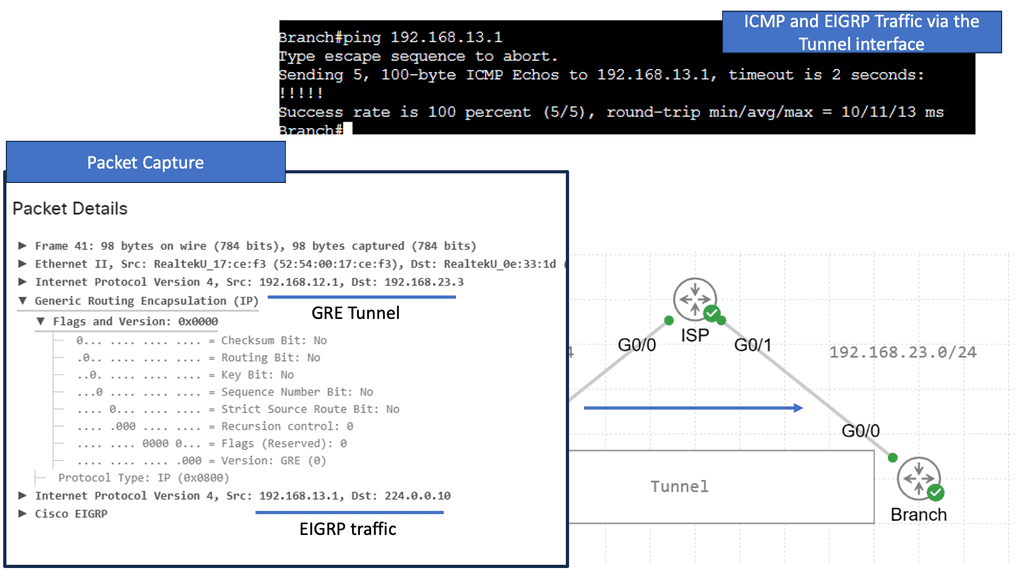
The Zero Trust SASE lab provides full visibility into how access decisions are made. The server prints the payload, headers, risk breakdown, and final enforcement action, while the client displays the JSON decision returned by the engine. This end‑to‑end flow illustrates how Zero Trust SASE merges identity validation, posture assessment, and behavioural analytics into a single enforcement pipeline. With this foundation in place, learners can expand into more advanced Zero Trust SASE topics such as microsegmentation, continuous authentication, and dynamic session re‑evaluation.
Zero Trust Enforcement Engine

Zero Trust SASE Through Behaviour‑Driven Trust

This lab demonstrates how Zero Trust SASE strengthens security by evaluating every client request using behavioural signals rather than relying solely on identity or tokens. By analysing request frequency, metadata consistency, and error patterns, the system builds a dynamic trust profile for each client. This ensures that Zero Trust SASE policies continuously validate every action, preventing risky behaviour from moving across the edge‑to‑cloud environment.

The risk engine applies weighted rules to burst‑traffic spikes, identity mismatches, repeated failures, and trust‑score influence to generate a single risk value. This multi‑factor scoring model reflects how Zero Trust SASE depends on combining diverse indicators to detect anomalies across distributed branches, cloud edges, and secure gateways. As risk increases, the system escalates its security posture, shifting from normal to monitored to quarantine service to protect the SASE fabric.

Once the risk score is computed, the steering engine selects the appropriate response path. Low‑risk behaviour is routed normally, medium‑risk behaviour is monitored, and high‑risk behaviour is quarantined. This adaptive routing illustrates how Zero Trust SASE enforces dynamic segmentation, ensuring that suspicious behaviour triggers stronger controls while legitimate application flows continue securely across the network.

Zero Trust SASE Through Identity‑Centric Access Control

This server file demonstrates how Zero Trust SASE begins with strict identity validation before any traffic is allowed to reach protected services. The login endpoint issues JWT tokens that act as authenticated identity credentials, mirroring how SASE platforms verify users before granting access to cloud or edge resources. The JWT middleware enforces continuous authentication, ensuring that every request is checked rather than relying on any implicit trust. By anchoring all routing decisions to verified identity, the application reflects the Zero Trust SASE principle that access must always be authenticated, authorized, and continuously validated

SD WAN Policy

Once identity is confirmed, the application applies Zero Trust SASE logic by evaluating multiple contextual attributes—user role, application version, and client IP—to determine how traffic should be routed. This mirrors how SASE engines combine identity, device posture, application metadata, and network origin to enforce granular access policies. The policy engine dynamically selects the correct backend service based on these combined factors, demonstrating how Zero Trust SASE uses layered, context‑driven checks to classify flows and apply precise routing decisions across distributed cloud environments. Every request is steered according to explicit policy rather than network location or assumed trust.SDN WAN Node Js

The overall behavior of this file showcases how Zero Trust SASE can be implemented through dynamic segmentation and secure path selection. After a request passes identity validation and policy evaluation, the application determines the correct backend service, effectively creating isolated service paths based on role, version, and network origin. This reflects SASE architectures where segmentation is enforced through identity‑driven policy rather than static network boundaries, ensuring that each flow reaches only the services it is authorized to access. By combining identity, metadata, and IP context, the application demonstrates how Zero Trust SASE delivers adaptive, policy‑driven control over traffic movement across cloud and edge environments.
SD WAN security testing
SD WAN Security testing

Knowledge Checks: Microsegmentation

**Understanding Microsegmentation**

Microsegmentation is a network security technique that involves creating secure zones within a data center, enabling organizations to isolate different workloads from each other. This isolation limits the potential for lateral movement by attackers, thereby reducing the attack surface. Unlike traditional network segmentation, which often relies on physical barriers, microsegmentation uses software-defined policies to manage and secure traffic between segments.

**Benefits of Microsegmentation**

The primary advantage of microsegmentation is its ability to provide granular security controls. By implementing policies at the workload level, organizations can tailor security measures to specific applications and data. This not only enhances protection but also improves compliance with regulatory standards. Additionally, microsegmentation offers greater visibility into network traffic, allowing for more effective monitoring and threat detection.

Challenge: Large Segments with VLANs

Example Technology: Network Endpoint Groups

#### What Are Network Endpoint Groups?

Network Endpoint Groups are collections of endpoints, which can be instances, IP addresses, or other network entities, that share the same configuration within Google Cloud. NEGs are pivotal for managing traffic and balancing loads across multiple endpoints, ensuring that applications remain available and performant even under heavy demand. This flexibility allows businesses to seamlessly scale their operations without compromising on efficiency or security.

#### Types of Network Endpoint Groups

Google Cloud provides different types of NEGs to cater to various networking needs:

1. **Zonal NEGs**: These are used for backend services within a single zone, offering reliability and low-latency connections.

2. **Internet NEGs**: Designed for external services, these endpoints can reside outside of Google Cloud, enabling effective hybrid cloud architectures.

3. **Serverless NEGs**: Perfect for serverless applications, these allow you to integrate Cloud Run, App Engine, and Cloud Functions with your load balancer.

Each type serves distinct use cases, making it vital to choose the right NEG for your specific application requirements.

**Understanding Micro-segmentation**

Microsegmentation is a critical strategy in modern network management, providing a method to improve security by dividing a network into smaller, isolated segments. This approach ensures that any potential security breaches are contained and do not spread across the network. In the context of Google Cloud, NEGs can be effectively used to implement microsegmentation. By creating smaller, controlled segments, you can enforce security policies more rigorously, reducing the risk of unauthorized access and enhancing the overall security posture of your applications.


network endpoint groups

**The SASE Concept**

Gartner coined the SASE concept after seeing a pattern emerge in cloud and SD-WAN projects where full security integration was needed. We now refer to SASE as a framework and a security best practice. SASE leverages multiple security services into a framework approach.

The idea of SASE was not far from what we already did, which was integrating numerous security solutions into a stack that ensured a comprehensive, layered, secure access solution. By calling it a SASE framework, the approach to a complete solution somehow felt more focused than what the industry recognized as a best security practice.

The security infrastructure and decisions must become continuous and adaptive, not static, that formed the basis of traditional security methods. Consequently, we must enable real-time decisions that balance risk, trust, and opportunity. As a result, security has beyond a simple access control list (ACL) and zone-based segmentation based on VLANs. In reality, no network point acts as an anchor for security.

Example Technology: IPv6 Access Lists 

Many current network security designs and technologies were not designed to handle all the traffic and security threats we face today. This has forced many to adopt multiple-point products to address the different requirements. Remember that for every point product, there is an architecture to deploy, a set of policies to configure, and a bunch of logs to analyze. I find correlating logs across multiple-point product solutions used in different domains hard.

For example, a diverse team may operate the secure web gateways (SWG) to that of the virtual private network (VPN) appliances. It could be the case that these teams work in silos and are in different locations.

Zero Trust SASE requirements:

  1. Information hiding: SASE requires clients to be authenticated and authorized before accessing protected assets, regardless of whether the connection is inside or outside the network perimeter.
  2. Mutually encrypted connections: SASE uses the full TLS standard to provide mutual, two-way cryptographic authentication. Mutual TLS provides this and goes one step further to authenticate the client.
  3. Need to know the access model: SASE employs a need-to-know access model. As a result, SASE permits the requesting client to view only the resources appropriate to the assigned policy.
  4. Dynamic access control: SASE deploys a dynamic firewall that starts with one rule – deny all. Then, requested communication is dynamically inserted into the firewall, providing an active firewall security policy instead of static configurations.
  5. Identity-driven access control: SASE provides adaptive, identity-aware, precision access for those seeking more precise access and session control to applications on-premises and in the cloud.

Starting Zero Trust

Endpoint Security 

Understanding ARP (Address Resolution Protocol)

ARP is a vital network communication protocol that maps an IP address to a physical MAC address. By maintaining an ARP table, endpoints can efficiently communicate within a network. 

Routes and gateways act as the pathways for data transmission between networks. Safeguarding these routes is crucial to ensure network integrity. We will discuss the significance of secure routing protocols, such as OSPF and BGP, and how they contribute to endpoint security. 

Netstat, short for Network Statistics, is a powerful command-line tool providing detailed information about network connections and statistics. This section will highlight the importance of using netstat for monitoring endpoint security. From identifying active connections to detecting suspicious activities, netstat empowers administrators to protect their networks proactively.

Understanding SELinux

SELinux is a robust security framework built into the Linux kernel. It provides fine-grained access control policies and mandatory access controls (MAC) to enforce system-wide security policies. Unlike traditional Linux discretionary access controls (DAC), SELinux operates on the principle of least privilege, ensuring that only authorized actions are allowed.

Organizations can establish a robust security posture for their endpoints by combining SELinux with zero trust principles. SELinux provides granular control over system resources, enabling administrators to define strict policies based on user roles, processes, and system components. This ensures that even if an endpoint is compromised, the attacker’s lateral movement and potential damage are significantly limited.

### Understanding Authentication in Vault

Authentication is the process of verifying the identity of a user or system. In Vault, this is achieved through various authentication methods such as tokens, AppRole, LDAP, GitHub, and more. Each method serves different use cases, allowing flexibility and scalability in managing access. Vault ensures that only authenticated users can access sensitive data, thus mitigating the risk of unauthorized access.

—

### The Role of Authorization

While authentication verifies identity, authorization determines what authenticated users can do. Vault uses policies to define the actions that users and applications can perform. These policies are written in HashiCorp Configuration Language (HCL) or JSON, and they provide a fine-grained control over access to secrets. By segregating duties and defining clear access levels, Vault helps prevent privilege escalation and minimizes the risk of data exposure.

—

### Managing Identity with Vault

Vault’s identity management capabilities allow organizations to unify identities across various platforms. By integrating with identity providers and managing roles and entities, Vault simplifies user management and enhances security. This integration ensures that user credentials are consistently verified and that access rights are updated as roles change, reducing the risk of stale credentials being exploited.

—

Vault

Use Case: WAN Edge Performance Routing

SASE & Performance-Based Routing

Performance-based routing is a dynamic routing technique that selects the best path for network traffic based on real-time performance metrics. Traditional routing protocols often follow static routes, leading to suboptimal network performance. However, performance-based routing leverages latency, packet loss, and bandwidth availability metrics to make informed routing decisions. By continuously evaluating these metrics, networks can adapt and reroute traffic to ensure optimal performance.

Google Cloud & IAP

**Understanding the Basics of IAP**

At its core, Identity-Aware Proxy is a security service that acts as a gatekeeper for applications and resources. It ensures that only authenticated and authorized users can access specific web applications hosted on cloud platforms. Unlike traditional security models that rely on network-level access controls, IAP takes a user-centric approach, verifying identity and context before granting access. This method not only strengthens security but also simplifies access management across distributed environments.

**The Role of IAP in Google Cloud**

Google Cloud offers a versatile and integrated approach to using IAP, making it an attractive option for organizations leveraging cloud services. With Google Cloud’s IAP, businesses can secure their web applications and VMs without the need for traditional VPNs or complex network configurations. This section will delve into how Google Cloud implements IAP, highlighting its seamless integration with other Google Cloud services and the ease with which it can be deployed. By utilizing Google Cloud’s IAP, businesses can streamline their security operations and focus on delivering value to their customers.

**Benefits of Using Identity-Aware Proxy**

The advantages of implementing IAP are manifold. Firstly, it enhances security by enforcing granular access controls based on user identity and context. This reduces the risk of unauthorized access and potential data breaches. Secondly, IAP simplifies the user experience by enabling single sign-on (SSO) capabilities, allowing users to access multiple applications with a single set of credentials. Additionally, IAP’s integration with existing identity providers ensures that businesses can maintain a consistent security policy across their entire IT ecosystem.

Identity aware proxy


Zero Trust SASE • Least Privilege

Zero Trust Micro-Perimeter Lab

Compare broad network access with application-level access. ZTNA creates a smaller security boundary around the application instead of placing the user directly onto the network.

APPLICATION-LEVEL ACCESS
User Identity + device ZTNA Identity + Context Least Privilege Application Policy Application A Approved application ACCESS ALLOWED Application B Policy permitted ACCESS ALLOWED Database Higher privilege ACCESS BLOCKED
LEARNING PANEL
Selected

ZTNA Model

The user is not placed directly onto the network. Access is granted to specific applications based on identity and policy.

ACCESS MODEL Application-level access
TRUST BOUNDARY Micro-perimeter around the application
SECURITY RESULT Reduced lateral movement

Zero Trust SASE

Many challenges to existing networks and infrastructure create big security holes and decrease security posture. In reality, several I.T. components give the entity more access than required. We have considerable security flaws with using I.P. addresses as a security anchor and static locations; the virtual private networks (VPN) and demilitarized zone (DMZ) architectures used to establish access are often configured to allow excessive implicit trust.  

##Challenge 1: The issue with a DMZ

The DMZ is the neutral network between the Internet and your organization’s private network. It’s protected by a front-end firewall that limits Internet traffic to specific systems within its zone. The DMZ can have a significant impact on security if not appropriately protected. Remote access technologies such as VPN or RDP, often located in the DMZ, have become common targets of cyberattacks. One of the main issues I see with the DMZ is that the bad actors know it’s there. It may be secured, but it’s visible.

##Challenge 2: The issue with the VPN

In basic terms, a VPN provides an encrypted server and hides your IP address. However, the VPN does not secure users when they land on a network segment and is based on coarse-grained access control where the user has access to entire network segments and subnets. Traditionally, once you are on a segment, there will be no intra-filtering on that segment. That means all users in that segment need the same security level and access to the same systems, but that is not always the case. 

GRE without IPsec GRE with IPsec

##Challenge 3: permissive network access

VPNs generally provide broad, overly permissive network access with only fundamental access control limits based on subnet ranges. So, the traditional VPN provides overly permissive access and security based on I.P. subnets. Note: The issue with VLAN-based segmentation is large broadcast domains with free-for-all access. This represents a larger attack surface where lateral movements can take place. Below is a standard VLAN-based network running Spanning Tree Protocol ( STP ).

## Challenge 4: Security-based on trust

Much of the non-zero trust security architecture is based on trust, which bad actors abuse. On the other hand, examining a SASE overview includes zero trust networking and remote access as one of its components, which can adaptively offer the appropriate trust required at the time and nothing more. It is like providing a narrow segmentation based on many contextual parameters continuously assessed for risk to ensure the users are who they are and that the entities, either internal or external to the network, are doing what they are supposed to do.

**Removes excessive trust**

A core feature of SASE and Zero Trust is that it removes the excessive trust once required to allow entities to connect and collaborate. Within a zero-trust environment, our implicit trust in traditional networks is replaced with explicit identity-based trust with a default denial. With an identity-based trust solution, we are not just looking at IP addresses to determine trust levels. After all, they are just binary, deemed a secure private or a less trustworthy public. This assumption is where all of our problems started. They are just ones and zeros.

## Challenge 5: IP for Location and Identity 

To improve your security posture, it would be best to stop relying primarily on IP addresses and network locations as a proxy for trust. We have been doing this for decades. There is minimal context in placing a policy with legacy constructs. To determine the trust of a requesting party, we need to examine multiple contextual aspects, not just IP addresses.

And the contextual aspects are continuously assessed for security posture. This is a much better way to manage risk and allows you to look at the entire picture before deciding to enter the network or access a resource.

Example: Firewall Tagging

Firewall tags

1) SASE: First attempt to 

Organizations have adopted different security technologies to combat these changes and include them in their security stack. Many of the security technologies are cloud-based services. Some of these services include the cloud-based secure web gateway (SWG), content delivery network [CDN], and web application firewall [WAF].

A secure web gateway (SWG) protects users from web-based threats and applies and enforces acceptable corporate use policies. A content delivery network (CDN) is a geographically distributed group of servers that works together to deliver Internet content quickly. A WAF, or web application firewall, helps protect web applications by filtering and monitoring HTTP traffic between them and the Internet.

The data center is the center of the universe.

However, even with these welcomed additions to security, the general trend was that the data center is still the center of most enterprise networks and network security architectures. Let’s face it: These designs are becoming ineffective and cumbersome with the rise of cloud and mobile technology. Traffic patterns have changed considerably, and so has the application logic.

2) SASE: Second attempt to

The next attempt was for a converged cloud-delivered secure access service edge (SASE) to accomplish this shift in the landscape. And that is what SASE architecture does. As you know, the SASE architecture relies on multiple contextual aspects to establish and adapt trust for application-level access. It does not concern itself with significant VLANs and broad-level access or believe that the data center is the center of the universe. Instead, the SASE architecture is often based on PoPs, where each PoP acts as the center of the universe.

The SASE definition and its components are a transformational architecture that can combat many of these discussed challenges. A SASE solution converges networking and security services into one unified, cloud-delivered solution that includes the following core capabilities of sase.

From the network side of things: SASE in networking:

    1. Software-defined wide area network (SD-WAN)
    2. Virtual private network (VPN)
    3. Zero Trust Network ZTN
    4. Quality of service (QoS)
    5. Software-defined perimeter (SDP)

Example SDP Technology: VPC Service Controls

**What are VPC Service Controls?**

VPC Service Controls are a security feature offered by Google Cloud that allows organizations to define a security perimeter around their cloud resources. This perimeter helps prevent unauthorized access to sensitive data and provides an additional layer of protection against potential threats. By using VPC Service Controls, you can restrict access to your resources based on specific criteria, ensuring that only trusted entities can interact with your data.

**Key Benefits of Implementing VPC Service Controls**

Implementing VPC Service Controls offers several key benefits for organizations seeking to enhance their cloud security:

1. **Enhanced Data Security**: By creating a security perimeter around your cloud resources, you can reduce the risk of data breaches and ensure that sensitive information remains protected.

2. **Granular Access Control**: VPC Service Controls allow you to define access policies based on various factors such as source IP addresses, user identities, and more. This granular control ensures that only authorized users can access your resources.

3. **Simplified Compliance**: For organizations operating in regulated industries, compliance with data protection laws is critical. VPC Service Controls simplify the process of meeting regulatory requirements by providing a robust security framework.

4. **Seamless Integration**: Google Cloud’s VPC Service Controls integrate seamlessly with other Google Cloud services, allowing you to maintain a consistent security posture across your entire cloud environment.

**Setting Up VPC Service Controls**

Getting started with VPC Service Controls is a straightforward process. First, identify the resources you want to protect and define the security perimeter around them. Next, configure access policies to control who can access these resources and under what conditions. Google Cloud provides detailed documentation and tools to guide you through the setup process, ensuring a smooth implementation.

**Best Practices for Using VPC Service Controls**

To maximize the effectiveness of your VPC Service Controls, consider the following best practices:

– **Regularly Review Access Policies**: Periodically review and update access policies to ensure they align with your organization’s security requirements and industry standards.

– **Monitor and Audit Activity**: Use Google Cloud’s monitoring and logging tools to track access to your resources and identify any potential security incidents.

– **Educate Your Team**: Ensure that your team is well-versed in the use of VPC Service Controls and understands the importance of maintaining a secure cloud environment.

VPC Security Controls VPC Service Controls

From the security side of things, SASE capabilities in security:

    1. Firewall as a service (FWaaS)
    2. Domain Name System (DNS) security
    3. Threat prevention
    4. Secure web gateways
    5. Data loss prevention (DLP)
    6. Cloud access security broker (CASB)

Example Technology: The Web Security Scanner

### How Google Cloud’s Web Security Scanner Works

Google Cloud’s Web Security Scanner is a robust solution that integrates seamlessly with the Google Cloud environment. It automatically scans your web applications for common vulnerabilities, such as cross-site scripting (XSS), mixed content, and outdated libraries. The scanner’s intuitive interface provides detailed reports, highlighting potential issues and offering actionable recommendations for mitigation. This automation not only saves time but also ensures that your applications remain secure as you continue to develop and deploy new features.

### Key Features and Benefits

One of the standout features of Google Cloud’s Web Security Scanner is its ability to perform authenticated scans. This means it can test parts of your web application that require user login, ensuring a comprehensive security assessment. Additionally, the scanner is designed to work seamlessly with other Google Cloud services, making it a convenient choice for those already invested in the Google ecosystem. Its cloud-native architecture ensures that it scales efficiently to meet the needs of businesses, big and small.

### Best Practices for Using Web Security Scanners

To get the most out of your web security scanner, it’s important to integrate it into your continuous integration and deployment processes. Regularly scanning your applications ensures that any new vulnerabilities are promptly identified and addressed. Additionally, consider using the scanner alongside other security tools to create a multi-layered defense strategy. Training your development team on common security pitfalls can also help prevent vulnerabilities from being introduced in the first place.

security web scanner

SASE changes the focal point to the identity of the user and device. With traditional network design, we have the on-premises data center, considered the universe’s center. With SASE, that architecture changes this to match today’s environment and moves the perimeter to the actual user, devices, or PoP with some SASE designs. In contrast to traditional enterprise networks and security architectures, the internal data center is the focal point for access. 

Example Product: Cisco Meraki

### What is Cisco Meraki?

Cisco Meraki is a suite of cloud-managed IT solutions that include wireless, switching, security, EMM (Enterprise Mobility Management), and security cameras, all centrally managed from the web. The Meraki dashboard provides powerful and intuitive tools to manage your entire network from a single pane of glass. This holistic approach ensures that businesses can maintain robust security protocols without compromising on ease of management.

### Key Features of Cisco Meraki

#### Cloud-Based Management

One of the standout features of Cisco Meraki is its cloud-based management. This allows for real-time monitoring, configuration, and troubleshooting from anywhere in the world. With automatic updates and seamless scalability, businesses can ensure their network is always up-to-date and secure.

#### Advanced Security Features

Cisco Meraki offers a range of advanced security features designed to protect your network from various threats. These include intrusion detection and prevention systems (IDS/IPS), advanced malware protection (AMP), and content filtering. By leveraging these tools, businesses can safeguard their data and maintain the integrity of their network.

#### Simplified Deployment

Deploying a traditional network can be a complex and time-consuming task. Cisco Meraki simplifies this process with zero-touch provisioning, which allows devices to be pre-configured and managed remotely. This reduces the need for on-site technical expertise and accelerates the deployment process.

### Benefits of Using Cisco Meraki for Network Security

#### Centralized Control

The centralized control offered by the Meraki dashboard enables IT teams to manage multiple sites from a single interface. This not only streamlines operations but also ensures consistent security policies across all locations.

#### Scalability

As businesses grow, their network needs evolve. Cisco Meraki’s scalable solutions allow for easy expansion without the need for significant infrastructure changes. This flexibility ensures that businesses can adapt to changing demands without compromising on security.

#### Cost Efficiency

By reducing the need for on-site hardware and simplifying management, Cisco Meraki can lead to significant cost savings. Additionally, the reduced need for technical expertise can lower operational costs, making it an attractive option for businesses looking to optimize their IT budget.

VPN Security Scenario 

  • Challenge: Traditional remote access VPNs

Remote access VPNs are primarily built to allow users outside the perimeter firewall to access resources inside the perimeter firewall. As a result, they often follow a hub-and-spoke architecture, with users connected by tunnels of various lengths depending on their distance from the data center. Traditional VPNs introduce a lot of complexity. For example, what do you do if you have multiple sites where users need to access applications? In this scenario, the cost of management would be high. 

  • Challenge: Tunnel based on I.P

What’s happening here is that the tunnel creates an extension between the client device and the application location. The tunnel is based on IP addresses on the client device and the remote application. Now that there is I.P. connectivity between the client and the application, the network where the application is located is extended to the client.

However, the client might not sit in an insecure hotel room or from home. These may not be sufficiently protected, and such locations should be considered insecure. The traditional VPN has many issues to deal with. It is user-initiated, and policy often permits split-tunnel VPNs without Internet or cloud traffic inspection.

SASE: A zero-trust VPN solution

A SASE solution encompasses VPN services and enhances the capabilities of operating in cloud-based infrastructure to route traffic. On the other hand, with SASE, the client connects to the SASE PoP, which carries out security checks and forwards the request to the application. A SASE design still allows clients to access the application, but they can only access that specific application and nothing more, like a stripped-down VLAN known as a micro-segmentation.

Restricting Lateral Movements

Clients must pass security controls, and no broad-level access is susceptible to lateral movements. Access control is based on an allowlist rather than the traditional blocklist rule. Also, other variables present in the request context are used instead of using I.P. addresses as the client identifier. As a result, the application is now the access path, not the network.

Simplified Management & Policy Control

So, no matter what type of VPN services you use, the SASE provides a unified cloud to connect to instead of backhauling to a VPN gateway—simplifying management and policy control. Well-established technologies such as VPN, secure web gateway, and firewall are being reviewed and reassessed in Zero Trust remote access solutions as organizations revisit approaches that have been in place for over a decade. 

A recommendation: SASE and SD-WAN

The value of SD-WAN is high. However, it also brings many challenges, including new security risks. In some of my consultancies, I have seen unreliable performance and increased complexity due to the need for multiple overlays. Also, these overlays need to terminate somewhere, and this will be at a hub site.  However, when combined with SASE, the SD-WAN edge devices can be connected to a cloud-based infrastructure rather than the physical SD-WAN hubs. This brings the value of interconnectivity between branch sites without the complexity of deploying or managing physical Hub sites.

Zero Trust SASE: Vendor considerations

SASE features converge various individual components into one connected, cloud-delivered service, making it easy to control policies and behaviors. The SASE architecture is often based on a PoP design. When examining the SASE vendor, the vendor’s PoP layout should be geographically diverse, with worldwide entry and exit points. 

Also, considerations should be made regarding the vendor’s edge/physical infrastructure providers or colocation facilities. We can change your security posture, but we can’t change the speed of light and the laws of physics.

Consider how the SASE vendor routes traffic in their PoP fabric. Route optimization should be performed at each PoP. Some route optimizations are for high availability, while others are for performance. Does the vendor offer cold-potato or hot-potato routing? The cold-potato routing means bringing the end-user device into the provider’s network as soon as possible. On the other hand, “hot-potato routing” means the end user’s traffic traverses more of the public Internet.

The following is a list of considerations to review when discussing SASE with your preferred cybersecurity vendor:

A. Zero Trust SASE requirements: Information hiding:

Secure access service requires clients to be authenticated and authorized before accessing protected assets, regardless of whether the connection is inside or outside the network perimeter. Then, real-time encrypted connections are created between the requesting client and the protected asset. As a result, all SASE-protected servers and services are hidden from all unauthorized network queries and scan attempts.

You can’t attack what you can’t see.

The base for network security started by limiting visibility – you cannot attack what you cannot see. Public and private IP addresses range from separate networks. This was the biggest mistake we ever made as I.P. addresses are just binary, whether they are deemed public or private. If a host were assigned a public address and wanted to communicate with a host with a private address, it would need to go through a network address translation (NAT) device and have a permit policy set.

Understanding Port Knocking

Port knocking is a technique that enables secure and controlled access to network services. Traditionally, network ports are open and accessible, leaving systems vulnerable to unauthorized access. However, with port knocking, access to specific ports is only granted after a predefined sequence of connection attempts is made to other closed ports. This sequence acts as a virtual “knock” on the door, allowing authorized users to gain access while keeping malicious actors at bay.

To fully comprehend port knocking, let’s explore its inner mechanics. When users wish to access a specific service, they must first send connection attempts to a series of closed ports in a particular order. This sequence acts as a secret handshake, notifying the server that the user is authorized. Once the correct sequence is detected, the server dynamically opens the desired port, granting access to the requested service. It’s like having a hidden key that unlocks the door to a secure sanctuary.

Security based on the visibility

Network address translation is mapping an IP address space into another by modifying network address information in the IP header of packets while they are in transit across a traffic routing device. Limiting visibility this way works to a degree, but we cannot ignore the fact that a) if you have someone’s IP address, you can reach them, and b) if a port is open, you can potentially connect to it.

Therefore, the traditional security method can open your network wide for compromise, especially when bad actors have all the tools. However, finding, downloading, and running a port scanning tool is not hard.

“Nmap,” for Network Mapper, is the most widely used port scanning tool. Nmap works by checking a network for hosts and services. Once found, the software platform sends information to those hosts and services, responding. Nmap reads and interprets the response and uses the data to create a network map.

Example: Understanding Lynis

Lynis is an open-source security auditing tool for discovering vulnerabilities on Unix, Linux, and macOS systems. It comprehensively analyzes the system’s configuration and provides valuable insights into potential security weaknesses. By scanning the system against a vast database of known security issues, Lynis helps identify areas for improvement.

Lynis runs a series of tests and audits on the target system. It examines various aspects, including file permissions, system settings, available software packages, and network configurations. Lynis generates a detailed report highlighting any identified vulnerabilities or potential security gaps by analyzing these factors. This report becomes a valuable resource for system administrators and security professionals to take necessary actions and mitigate risks.

Example: Single Packet Authorization

Zero-trust network security hides information and infrastructure through lightweight protocols such as single-packet authorization (SPA). No internal IP addresses or DNS information is shown, creating an invisible network. As a result, we have zero visibility and connectivity, only establishing connectivity after clients prove they can be trusted to allow legitimate traffic. Now, we can have various protected assets hidden regardless of location: on-premise, public or private clouds, a DMZ, or a server on the internal LAN, in keeping with today’s hybrid environment.

Default-drop dynamic firewall

This approach mitigates denial-of-service attacks. Anything internet-facing is reachable on the public Internet and, therefore, susceptible to bandwidth and server denial-of-service attacks. The default-drop firewall is deployed, with no visible presence to unauthorized users. Only good packets are allowed. Single packet authorization (SPA) also provides for attack detection.

If a host receives anything other than a valid SPA packet or similar construct, it views that packet as part of a threat. The first packet to a service must be a valid SPA packet or similar security construct.

If it receives another packet type, it views this as an attack, which is helpful for bad packet detection. Therefore, SPA can determine an attack based on a single malicious packet, a highly effective way to detect network-based attacks. Thus, external network and cross-domain attacks are detected.

B. Zero Trust SASE architecture requirements: Mutually encrypted connections:

Transport Layer Security ( TLS ) is an encryption protocol that protects data when it moves between computers. When two computers send data, they agree to encrypt the information in a way they both understand. Transport layer security (TLS) was designed to provide mutual device authentication before enabling confidential communication over the public Internet. However, the standard TLS configuration validates that the client is connected to a trusted entity. So, typical TLS adoptions authenticate servers to clients, not clients to servers. 

Mutually encrypted connections

SASE uses the full TLS standard to provide mutual, two-way cryptographic authentication. Mutual TLS provides this and goes one step further to authenticate the client. Mutual TLS connections are set up between all components in the SASE architecture. Mutual Transport Layer Security (mTLS) establishes an encrypted TLS connection in which both parties use X. 509 digital certificates to authenticate each other.

MTLS can help mitigate the risk of moving services to the cloud and prevent malicious third parties from imitating genuine apps. This offers robust device and user authentication, as connections from unauthorized users and devices are mitigated. Secondly, forged certificates, which are attacks aimed at credential theft, are disallowed. This will reduce impersonation attacks, where a bad actor can forge a certificate from a compromised authority.

C. Need to know the access model: Zero Trust SASE architecture requirements

Thirdly, SASE employs a need-to-know access model. As a result, SASE permits the requesting client to view only the resources appropriate to the assigned policy. Users are associated with their devices, which are validated based on policy. Only connections to the specifically requested service are enabled, and no other connection is allowed to any other service. SASE provides additional information, such as who made the connection, from what device, and to what service.

This gives you complete visibility into all the established connections, which is hard to do without an IP-based solution. So now we have a contextual aspect of determining the level of risk. As a result, it makes forensics easier. The SASE architecture only accepts good packets; bad packets can be analyzed and tracked for forensic activities.

Key Point: Device validation

Secondly, it enforces device validation, which helps against threats from unauthorized devices. We can examine the requesting user and perform device validation. Device validation ensures that the machine runs on trusted hardware and is used by the appropriate user.

Finally, suppose a device becomes compromised. In that case, lateral movements are entirely locked down, as a user is only allowed access to the resource it is authorized to. Or they could be placed into a sandbox zone where human approval must intervene and assess the situation.

D. Dynamic access control: Zero Trust SASE architecture requirements

This traditional type of firewall is limited in scope as it cannot express or enforce rules based on identity information, which you can with zero trust identity. Attempting to model identity-centric control with the limitations of the 5-tuple, SASE can be used alongside traditional firewalls and take over the network access control enforcement that we try to do with conventional firewalls. SASE deploys a dynamic firewall that starts with one rule – deny all.

Then, requested communication is dynamically inserted into the firewall, providing an active firewall security policy instead of static configurations. For example, every packet hitting the firewall is inspected with a single packet authentication (SPA) and then quickly verified for a connection request. 

Key Point: Dynamic firewall

Once established, the firewall is closed again. Therefore, the firewall is dynamically opened only for a specific period. The connections made are not seen by rogues outside the network or the user domain within the network. Allows dynamic, membership-based enclaves that prevent network-based attacks.

The SASE dynamically binds users to devices, enabling those users to access protected resources by dynamically creating and removing firewall rules.  Access to protected resources is facilitated by dynamically creating and removing inbound and outbound access rules. Therefore, we now have more precise access control mechanisms and considerably reduced firewall rules.

**Micro perimeter**

Traditional applications were grouped into VLANs whether they offered similar services or not. Everything on that VLAN was reachable. The VLAN was a performance construct to break up broadcast domains, but it was pushed into the security world and never meant to be there. 

Its prime use was to increase performance. However, it was used for security in what we know as traditional zone-based networking. The segments in zone-based networks are too large and often have different devices with different security levels and requirements.

Key Points:

A. Logical-access boundary: SASE enables this by creating a logical access boundary encompassing a user and an application or set of applications. And that is it—nothing more and nothing less. Therefore, we have many virtual micro perimeters specific to the business instead of the traditional main inside/outside perimeter. Virtual perimeters allow you to grant access to the particular application, not the underlying network or subnet.

B. Reduce the attack surface: The smaller micro perimeters reduce the attack surface and limit the need for excessive access to all ports and protocols or all applications. These individualized “virtual perimeters” encompass only the user, the device, and the application. They are created and specific to the session and then closed again when it is over or if the risk level changes and the device or user needs to perform setup authentication.

C. Software-defined perimeter (SDP): SASE only grants access to the specific application at an application layer. The SDP part of SASE now controls which devices and applications can access distinctive services at an application level. Permitted by a policy granted by the SDP part of SASE, machines can only access particular hosts and services and cannot access network segments and subnets.

**Reduced: Broad Network Access**

Broad network access is eliminated, reducing the attack surface to an absolute minimum. SDP provides a fully encrypted application communication path. However, the binding application permits only authorized applications to communicate through the established encrypted tunnels, thus blocking all other applications from using them. This creates a dynamic perimeter around the application, including connected users and devices. Furthermore, it offers a narrow access path—reducing the attack surface to an absolute minimum.

E. Identity-driven access control: Zero Trust SASE architecture requirements

Traditional network solutions provide coarse-grained network segmentation based on someone’s IP address. However, someone’s IP address is not a good security hook and does not provide much information about user identity. SASE enables the creation of microsegmentation based on user-defined controls, allowing a 1-to-1 mapping, unlike with a VLAN, where there is the potential to see everything within that VLAN.

Identity-aware access: SASE provides adaptive, identity-aware, precision access for those seeking more precise access and session control to applications on-premises and in the cloud. Access policies are primarily based on user, device, and application identities. The procedure is applied independent of the user’s physical location or the device’s I.P. address, except where it prohibits it. This brings a lot more context to policy application. Therefore, if a bad actor gains access to one segment in the zone, they are prevented from compromising any other network resource.

Detecting Authentication Failures in Logs:

Syslog: Useful Security Technology

Syslog, short for System Logging Protocol, is a standard for message logging within computer systems. It collects various log entries from different sources and stores them in a centralized location. Syslog is a valuable resource for detecting security events as it captures information about system activities, errors, and warnings.

Auth.log is a specific type of log file that focuses on authentication-related events in Unix-based operating systems. It records user logins, failed login attempts, password changes, and other authentication activities. Analyzing auth.log can provide vital insights into potential security breaches, such as brute-force attacks or suspicious login patterns.

Now that we understand the importance of syslog and auth.log, let’s delve into some effective techniques for detecting security events in these files. One widely used approach is log monitoring, where automated tools analyze log entries in real time, flagging suspicious or malicious activities. Another technique is log correlation, which involves correlating events across multiple log sources to identify complex attack patterns.

Zero Trust SASE • Cloud Security Edge

SASE Secure Access Flow

SASE brings networking and security services together at distributed cloud edges. The user request is inspected and policy is enforced before reaching the protected application.

SECURE ACCESS PATH
Remote User Identity + device SASE PoP Distributed security edge Policy inspection Identity-aware enforcement Traffic optimization ZTNA Private applications SWG Web security CASB SaaS visibility FWaaS Cloud firewall Policy Inspect Allow / Block Protected App Only approved access
LEARNING PANEL
Selected

SASE PoP

A SASE Point of Presence brings security enforcement closer to users and applications.

ROLE Distributed security edge
TRAFFIC Identity-aware inspection
RESULT Only policy-approved traffic continues

Summary: Zero Trust SASE

Traditional security measures are no longer sufficient in today’s rapidly evolving digital landscape, where remote work and cloud-based applications have become the norm. Enter Zero Trust Secure Access Service Edge (SASE), a revolutionary approach that combines network security and wide-area networking into a unified framework. In this blog post, we explored the concept of Zero Trust SASE and its implications for the future of cybersecurity.

Understanding Zero Trust

Zero Trust is a security framework that operates under the “never trust, always verify.” It assumes no user or device should be inherently trusted, regardless of location or network. Instead, Zero Trust focuses on continuously verifying and validating identity, access, and security parameters before granting any level of access.

The Evolution of SASE

Secure Access Service Edge (SASE) represents a convergence of network security and wide-area networking capabilities. It combines security services, such as secure web gateways, firewall-as-a-service, and data loss prevention, with networking functionalities like software-defined wide-area networking (SD-WAN) and cloud-native architecture. SASE aims to provide comprehensive security and networking services in a unified, cloud-delivered model.

The Benefits of Zero Trust SASE:

a) Enhanced Security: Zero Trust SASE brings a holistic approach to security, ensuring that every user and device is continuously authenticated and authorized. This reduces the risk of unauthorized access and mitigates potential threats.

b) Improved Performance: By leveraging cloud-native architecture and SD-WAN capabilities, Zero Trust SASE optimizes network traffic, reduces latency, and enhances overall performance.

c) Simplified Management: A unified security and networking framework can streamline organizations’ management processes, reduce complexity, and achieve better visibility and control over their entire network infrastructure.

Implementing Zero Trust SASE

a) Comprehensive Assessment: Before adopting Zero Trust SASE, organizations should conduct a thorough assessment of their existing security and networking infrastructure, identify vulnerabilities, and define their security requirements.

b) Architecture Design: Organizations must design a robust architecture that aligns with their needs and integrates Zero Trust principles into their existing systems. This may involve deploying virtualized security functions, adopting SD-WAN technologies, and leveraging cloud services.

c) Continuous Monitoring and Adaptation: Zero Trust SASE is an ongoing process that requires continuous monitoring, analysis, and adaptation to address emerging threats and evolving business needs. Regular security audits and updates are crucial to maintaining a solid security posture.

Conclusion: Zero Trust SASE represents a paradigm shift in cybersecurity, providing a comprehensive and unified approach to secure access and network management. By embracing the principles of Zero Trust and leveraging the capabilities of SASE, organizations can enhance their security, improve performance, and simplify their network infrastructure. As the digital landscape continues to evolve, adopting Zero Trust SASE is not just an option—it’s necessary to safeguard our interconnected world’s future.

rsz_secure_access_service_edge1

SASE Definition

As organisations distribute applications, users, and workloads across data centres, public cloud platforms, SaaS services, branches, and remote locations, the traditional model of sending traffic back through a central corporate network becomes increasingly difficult to scale. Secure Access Service Edge (SASE) addresses this challenge by bringing networking and security capabilities together through a cloud-delivered architectural model designed for distributed environments.

SASE combines software-defined networking with security services so that connectivity and security policy can be applied closer to users, devices, branches, and applications. Rather than treating the corporate data centre as the primary security boundary, SASE recognises that users and applications may exist in many different locations. The architecture therefore focuses on providing secure, policy-controlled access regardless of where the connection originates.

Several technologies commonly contribute to a SASE architecture. SD-WAN provides software-defined connectivity and traffic steering across transports such as MPLS, broadband, Internet, and cellular networks. Security services can include Secure Web Gateway (SWG), Firewall as a Service (FWaaS), Cloud Access Security Broker (CASB), Zero Trust Network Access (ZTNA), and data protection capabilities. The exact combination varies between implementations and providers, but the architectural objective is to bring these capabilities together through a consistent policy and operational model.

Zero Trust is particularly important to the SASE approach. Access decisions should not be based simply on whether a user is connected to a trusted corporate network. Instead, policies can consider identity, device posture, application, location, security context, and the sensitivity of the requested resource. Authentication and authorisation therefore become part of the access decision rather than an assumption made from network location alone.

SASE can also simplify operations by reducing the need to deploy and manage separate security appliances at every branch or user location. Cloud-delivered services can provide centrally managed policy while allowing enforcement to occur closer to the user or application. This can improve consistency, but implementation still requires careful planning around identity, existing infrastructure, application dependencies, traffic flows, security policy, and operational processes.

Performance is another important consideration. Distributed users accessing cloud and SaaS applications may not benefit from routing all traffic through a central data centre. SASE architectures can combine SD-WAN traffic steering with distributed security enforcement to select appropriate paths while maintaining security policy. Network performance, application experience, latency, packet loss, and service availability therefore become important operational measurements alongside traditional security events.

SASE is particularly relevant to hybrid and multi-cloud environments because the network boundary is no longer defined by a single physical location. Organisations may need to connect offices, remote users, private data centres, public clouds, SaaS applications, and third-party services while maintaining consistent access controls and security policies across these environments.

The most useful way to understand SASE is not as a single product or technology, but as an architectural approach for converging networking and security around distributed users and applications. Its effectiveness depends on how well connectivity, identity, security policy, application access, visibility, and operations are integrated. For organisations modernising their WAN and security architecture, SASE provides a framework for building secure access around the way applications and users actually operate today.

SASE Definition

Secure Access Service Edge • Widget 1

SASE Architecture Explorer

See how SASE brings networking and security together as a cloud-delivered service, with enforcement distributed closer to users, branches and applications.
USER / DEVICE Remote User Laptop / Mobile Anywhere EDGE Branch / Site Office / Campus SD-WAN edge SASE EDGE SASE PoP Distributed point of presence CONNECTIVITY SD-WAN / routing SECURITY inspection / control POLICY consistent enforcement CLOUD FABRIC SASE Cloud Networking + Security SD-WAN path control SWG web security CASB cloud control ZTNA access control FWaaS cloud firewall CLOUD APP SaaS Microsoft 365 CRM / Web Apps PRIVATE APP Enterprise Data Center / Private Cloud CORE SASE IDEA Connect users and sites to distributed SASE edges, then apply networking and security services close to the access point. CONVERGED SERVICES One cloud-delivered architecture
SASE CONCEPT

SASE Overview

SASE combines networking and security capabilities into a cloud-delivered architecture. Instead of forcing users and sites through a centralized security perimeter, services can be delivered from distributed points of presence.

Key Idea SASE is not simply a collection of security products. The important architectural change is the convergence of networking, security, cloud delivery and distributed enforcement.
SD-WAN SWG CASB ZTNA FWaaS
Cloud Delivered Networking and security functions are delivered from a distributed cloud architecture rather than requiring a separate appliance at every location.
Distributed Enforcement Users and sites can connect to nearby SASE PoPs, reducing dependence on traditional centralized security choke points.
Unified Architecture Routing, security and access policies can be managed as part of one operational model instead of many disconnected point solutions.

Highlights: SASE Definition

SASE: A Cloud-Centric Approach

Firstly, the SASE is related to our environment. In a cloud-centric world, users and devices require access to services everywhere. The focal point has changed. Now, the identity of the user and device, as opposed to the traditional model, focuses solely on the data center with many network security components. These environmental changes have created a new landscape we must protect and connect.

Many common problems challenge the new landscape. Due to deployed appliances for different technology stacks, enterprises are loaded with complexity and overhead. The legacy network and security designs increase latency. In addition, the world is encrypted when considering Zero Trust SASE. This needs to be inspected without degrading application performance.

These are reasons to leverage a cloud-delivered secure access service edge (SASE). SASE means a tailored network fabric optimized where it makes the most sense for the user, device, and application – at geographically dispersed PoPs enabling technologies that secure your environment with technologies such as single packet authorization.

**Driving Forces to Adopting SASE**

Challenge 1: Managing the Network: Converging network and security into a single platform does not require multiple integration points. This will eliminate the need to deploy these point solutions and the complexities of managing each.

Challenge 2: Site Connectivity: SASE handles all management complexities. As a result, the administrative overhead for managing and operating a global network that supports site-to-site connectivity and enhanced security, cloud, and mobility is kept to an absolute minimum.

Challenge 3: Performance Between Locations: The SASE cloud already has an optimized converged network and security platforms. Therefore, sites need to connect to the nearest SASE PoP.

Challenge 4: Cloud Agility: SASE natively supports cloud data centers (IaaS) and applications (SaaS) without additional configuration, complexity, or point solutions, enabling built-in cloud connectivity.

SASE Definition — A Converged Cloud Architecture for Secure Connectivity

Secure Access Service Edge (SASE) is a cloud‑delivered architecture that merges networking and security into a single, unified service model. Instead of deploying separate appliances for WAN connectivity, web filtering, cloud security, and remote access, SASE consolidates these capabilities into a distributed cloud fabric. The goal is simple: provide consistent, high‑performance, secure access to applications—no matter where users are located or where workloads reside. SASE shifts security and networking away from traditional data‑center choke points and distributes them across global points of presence, creating a seamless edge‑to‑cloud access layer.

Convergence of Networking and Security Services

SASE is defined by the convergence of two historically separate domains:

  • Network services such as SD‑WAN, traffic optimization, and dynamic path selection
  • Security services such as SWG, CASB, FWaaS, and threat inspection

By delivering these as cloud‑native functions, SASE eliminates the complexity of managing multiple point products. Policies, routing decisions, and security controls are applied consistently across all edges—branch, remote, mobile, and cloud. This convergence ensures that performance and protection are no longer competing priorities but integrated outcomes of the same architecture.

Cloud‑Native Enforcement at Global Points of Presence

A defining characteristic of SASE is its distributed enforcement model. Instead of backhauling traffic to a central firewall or VPN concentrator, SASE evaluates and secures traffic at cloud points of presence (PoPs) located close to users and applications. These PoPs provide:

  • low‑latency inspection
  • scalable policy enforcement
  • optimized routing to SaaS and cloud platforms
  • unified visibility across all user traffic

This distributed model supports hybrid work, multi‑cloud adoption, and global operations without relying on legacy hub‑and‑spoke designs.

Unified Policy, Visibility, and Operational Control

SASE centralizes policy management into a single cloud platform. Administrators define access rules, security controls, and routing preferences once, and the SASE fabric enforces them everywhere. This unified control plane provides:

  • consistent policy enforcement
  • real‑time visibility into user and application behavior
  • simplified operations across distributed environments
  • automated updates and continuous improvement

SASE reduces operational overhead by replacing manual configuration with cloud‑driven orchestration and analytics‑based optimization.

Outcome‑Driven Architecture for Modern Enterprises

SASE is not just a technology stack—it is an operational model designed to deliver measurable outcomes:

  • Improved performance through optimized cloud and SaaS access
  • Reduced complexity by consolidating multiple security and networking tools
  • Stronger protection through unified inspection and consistent policy enforcement
  • Scalability for global users, remote workforces, and cloud‑native applications

By merging connectivity and security into a single cloud‑delivered architecture, SASE becomes the foundation for modern digital transformation.

**Components of SASE**

1. Network as a Service (NaaS): SASE integrates network services such as SD-WAN (Software-Defined Wide Area Network) and cloud connectivity to provide organizations with a flexible and scalable network infrastructure. With NaaS, businesses can optimize network performance, reduce latency, and ensure reliable connectivity across different environments.

2. Security as a Service (SECaaS): SASE incorporates various security services, including secure web gateways, firewall-as-a-service, data loss prevention, and zero-trust network access. By embedding security into the network infrastructure, SASE enables organizations to enforce consistent security policies, protect against threats, and simplify the management of security measures.

3. Zero-Trust Architecture: SASE adopts a zero-trust approach, which assumes that no user or device should be trusted by default, even within the network perimeter. By implementing continuous authentication, access controls, and micro-segmentation, SASE ensures that every user and device is verified before accessing network resources, reducing the risk of unauthorized access and data breaches.

4. Cloud-Native Architecture: SASE leverages cloud-native technologies to provide a scalable, agile, and elastic network and security infrastructure. By transitioning from legacy hardware appliances to software-defined solutions, SASE enables organizations to respond more to changing business requirements, reduce costs, and improve overall efficiency.

Note: Point Solutions

SASE is becoming increasingly popular among organizations because it provides a more flexible and cost-effective approach to networking and security. The traditional approach involves deploying multiple devices or appliances, each with its functions. This approach can be complex, time-consuming, and expensive to manage. On the other hand, SASE simplifies this process by integrating all the necessary functions into a single platform.

Example Technology: Web Security Scanner

security web scanner

Example Product: Cisco Meraki

### Simplified Network Management

One of the standout features of the Cisco Meraki platform is its simplified network management. Gone are the days of complex configurations and time-consuming setups. With Meraki’s cloud-based interface, administrators can manage their entire network from a single dashboard. This ease of use not only saves time but also reduces the need for specialized IT staff, making it an ideal solution for businesses of all sizes.

### Robust Security Features

Security is a top priority for any network, and Cisco Meraki does not disappoint. The platform comes equipped with robust security features, including advanced threat protection, intrusion detection, and automated firmware updates. These features work seamlessly to protect your network from potential threats, ensuring that your data remains secure and your operations run smoothly.

### Scalability and Flexibility

As your business grows, so too does the need for a scalable network solution. Cisco Meraki’s platform is designed with scalability in mind, allowing you to easily add new devices and extend your network without any hassle. Whether you’re expanding to a new office location or integrating additional IoT devices, Meraki’s flexible architecture ensures that your network can grow alongside your business.

### Enhanced Visibility and Analytics

Understanding your network’s performance is crucial for making informed decisions. Cisco Meraki offers enhanced visibility and analytics, providing detailed insights into network usage, device performance, and potential issues. With these analytics, administrators can proactively address problems before they impact operations, optimize resource allocation, and ensure that their network is running at peak efficiency.

### Streamlined Troubleshooting

Troubleshooting network issues can be a daunting task, but Cisco Meraki makes it easier than ever. The platform’s intuitive dashboard provides real-time alerts and diagnostic tools, allowing administrators to quickly identify and resolve issues. This streamlined troubleshooting process minimizes downtime and keeps your network running smoothly.

**SASE Meaning: SASE wraps up**

SASE is a network and security architecture consolidating numerous network and security functions, traditionally delivered as siloed point solutions, into an integrated cloud service. It combines several network and security capabilities along with cloud-native security functions. The functions are produced from the cloud and provided by the SASE vendor.

They are essentially providing a consolidated, platform-based approach to security. We have a cloud-delivered solution consolidating multiple edge network security controls and network services into a unified solution with centralized management and distributed enforcement.

**The appliance-based perimeter**

Even Though there has been a shift to the cloud, the traditional perimeter network security solution has remained appliance-based. The change for moving security controls to the cloud is for better protection and performance, plus ease of deployment and maintenance.

The initial performance of the earlier cloud-delivered solutions has been overcome with the introduction of optimized routing and global footprint. However, there is a split in opinion about performance and protection. Many consider protection and performance prime reasons to remain on-premises and keep the network security solutions on-premises.


Secure Access Service Edge • Widget 2

SASE Performance & PoP Path Explorer

Explore how SASE chooses an access path through distributed points of presence and why latency, packet loss and jitter can matter more than raw bandwidth.
USER ACCESS SASE PoPs GLOBAL BACKBONE CLOUD APPLICATION SOURCE User Dublin / Remote POP A Nearby PoP Low-latency option POP B Distant PoP Higher latency 18 ms 46 ms EDGE 1 Backbone EDGE 2 Backbone EDGE 3 Backbone DESTINATION SaaS Application Cloud workload Example: Microsoft 365 PATH QUALITY LATENCY 18 ms PACKET LOSS 0.1% JITTER 3 ms OPTIMAL PATH PERFORMANCE PRINCIPLE Application performance depends on the quality of the path, not simply the amount of available bandwidth.
PATH ANALYSIS

Choose the Best Path

SASE can use distributed points of presence and optimized connectivity to steer traffic toward a suitable application path. Select a PoP or path to explore the decision.

Key Idea The closest PoP is not automatically the best path. Path quality depends on several network characteristics.
Latency
18 ms
Packet Loss
0.1%
Jitter
3 ms
Status
Optimal
Latency The time required for traffic to travel between endpoints. Higher latency can directly affect interactive applications.
Packet Loss Lost packets can cause retransmissions and reduce application efficiency even when plenty of bandwidth remains available.
Jitter Variation in packet arrival time matters particularly for real-time applications such as voice and video.

SASE Definition

SASE Definition with Challenge 1: Managing the Network

Across the entire networking and security industry, everyone sells individual point solutions that are not a holistic joined-up offering. Thinking only about MPLS replacement leads to incremental point solution acquisitions when confronted by digital initiatives, making networks more complex and costly.

Principally, distributed appliances for network and security at every location require additional tasks such as installation, ongoing management, regular updates, and refreshes. This results in far too many security and network configuration points. We see this all the time with NOC and SOC integration efforts.

A: Numerous integration points:

The point-solution approach addresses one issue and requires considerable integration. Therefore, you must constantly add solutions to the stack, likely resulting in management overhead and increased complexity. Let’s say you are searching for a new car. Would you prefer to build the car with all the different parts or buy the already-built one?

In the same way, if we examine the network and security industry, the way it has been geared up presently is provided in parts. It’s your job to support, manage, and build the stack over time and scale it when needed. Fundamentally, it would help if you were an expert in all the different parts. However, if you abstract complexity into one platform, you don’t need to be an expert in everything. SASE is one effective way to abstract management and operational complexity.

B: Required: How SASE solves this

Converging network and security into a single platform does not require multiple integration points. This will eliminate the need to deploy these point solutions and the complexities of managing each. Essentially, with SASE, we can bring each point solution’s functionalities together and place them under one hood—the SASE cloud. SASE merges all of the networking and security capabilities into a single platform.

This way, you now have a holistic joined-up offering. Customers don’t need to perform upgrades or size and scale their network. Instead, all this is done for them in the SASE cloud, creating a fully managed and self-healing architecture. Besides, the convergence is minimal if something goes wrong in one of the SASE Pops. All of this is automatic, and there is no need to set up new tunnels or have administrators step in to perform configurations.

SASE Definition with Challenge 2: Site Connectivity

SD-WAN appliances require other solutions for global connectivity and to connect, secure, and manage mobile users and cloud resources. As a result, many users are turning to Service Providers to handle the integration. The carrier-managed SD-WAN providers integrate a mix of SD-WAN and security devices to form SD-WAN services.

A: Lack of Agility

Unfortunately, this often makes the Service Providers inflexible in accommodating new requests. The telco’s lack of agility and high bandwidth costs will remain problematic. Deploying new locations has been the biggest telco-related frustration, especially when connecting offices outside of the telco’s operating region to the company’s MPLS network. For this, they need to integrate with other telcos.

B: Required: How SASE solves this

SASE handles all of the complexities of management. As a result, the administrative overhead for managing and operating a global network that supports site-to-site connectivity and enhanced security, cloud, and mobility is kept to an absolute minimum.

SASE Definition with Challenge 3: Performance Between Locations

The throughput is primarily determined by latency and packet loss, not bandwidth. Therefore, for an optimal experience for global applications, we must explore ways to manage the latency and packet loss end-to-end for last-mile and middle-mile segments. Most SD-WAN vendors don’t control these segments, affecting application performance and service agility.
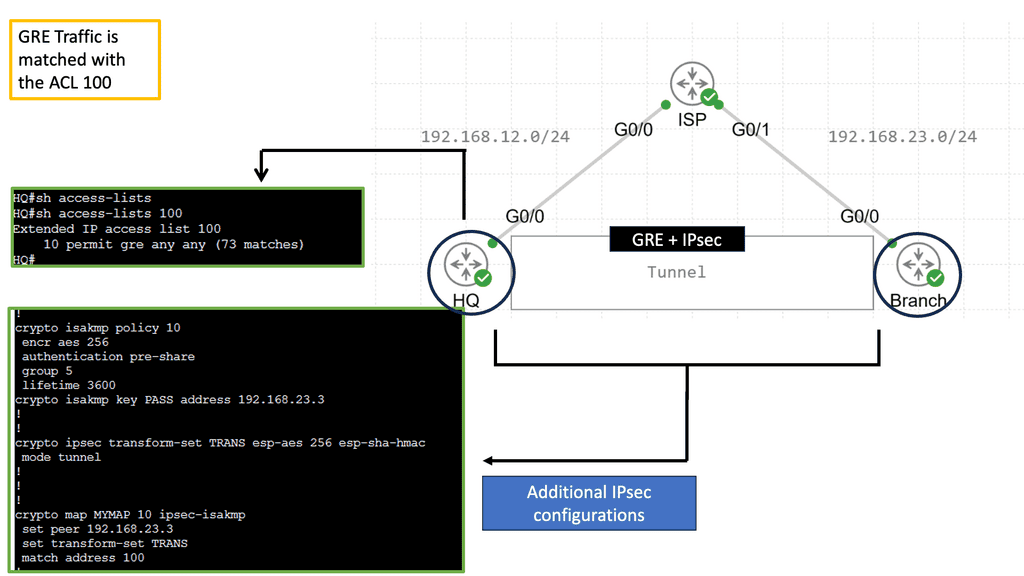
Consequently, constant tweaking at the remote ends will be required to attain the best performance for your application. With SD-WAN, we can bundle transports and perform link bonding to solve the last mile. However, this does not create any benefits for the middle mile bandwidth. MPLS will help you overcome the middle-mile problems, but you will likely pay a high price.

A: Required: How SASE solves this

The SASE cloud already has an optimized converged network and security platforms. Therefore, sites need to connect to the nearest SASE PoP. This way, the sites are placed on the global private backbone to take advantage of global route optimization, dynamic path selection, traffic optimization, and end-to-end encryption. The traffic can also be routed over MPLS, directly between sites (not through the SASE PoP), and from IPsec tunnels to third-party devices. The SASE architecture optimizes the last and middle-mile traffic flows.

B: Required: Optimization techniques:

The SASE global backbone uses several techniques to improve network performance, resulting in predictable, consistent latency and packet loss. The SASE cloud has complete control of each PoP and can employ optimizations. It uses proprietary routing algorithms that factor in latency, packet loss, and jitter. These routing algorithms favor performance over cost and select the optimal route for every network packet. This is compared to Internet routing, where metrics don’t consider what is best for the application or the type.

Example TCP Performance Parameters.

SASE Definition with Challenge 4: Cloud Agility

Cloud applications are becoming more critical to organizations, even more so than those hosted in private data centers. When delivering cloud resources, we must consider more than just providing connectivity. In the past, when we spoke about agility, we were concerned only with the addition of new on-premises sites.

However, now, this conversation needs to encompass the cloud. Delivering cloud applications is primarily about providing an application experience that is as responsive as on-premises. However, most SD-WANs have a low response rate for rapidly offering new public cloud infrastructure. MPLS is expensive, rigid, and not built for cloud access.

A: Required: How SASE solves this

SASE natively supports cloud data centers (IaaS) and applications (SaaS) without additional configuration, complexity, or point solutions, enabling built-in cloud connectivity. This further allows the rapid delivery of new public cloud infrastructure.
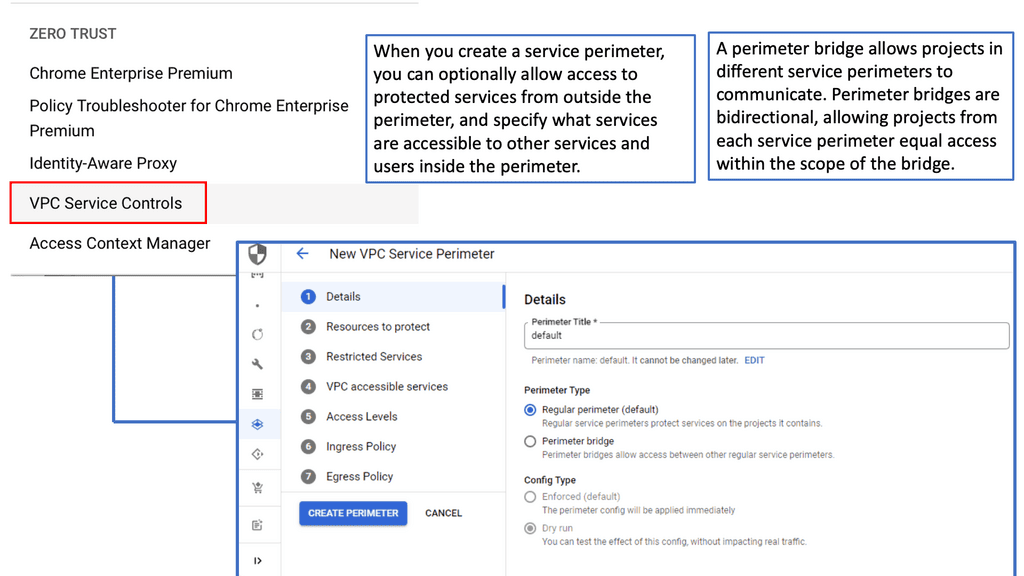
The SASE PoPs are collocated in the data centers and directly connected to the IXP of the leading IaaS providers, such as Amazon AWS, Microsoft Azure, and Google Cloud Platform. In addition, cloud applications are optimized through SASE’s ability to define the egress points.

This helps exit the cloud application traffic at the points closest to the customer’s application instance. The optimal global routing algorithms can determine the best path from anywhere to the customer’s cloud application instance. This provides optimal performance to the cloud applications regardless of the user’s location.

So, when we talk about performance to the cloud with SASE, the latency to the cloud is comparable to the optimized access provided by the cloud providers, such as AWS Direct Connect or Azure Express Route. So, authentically, SASE provides out-of-the-box cloud performance.

SASE Definition with Challenge 5: Security

The security landscape is constantly evolving. Therefore, network security solutions must develop to form a well-founded landscape. Ransomware and Malware will continue to be the primary security concerns from 2020 onward. Combating the various solutions designed with complex integration points scattered throughout the network domain is challenging for the entire organization.

Security must be part of any WAN transformation initiative. It must protect users and resources regardless of the underlying network, managed through a single-pane-of-glass. However, a bundle of non-integrated security products results in appliance sprawl that hinders your security posture instead of strengthening it. The security solution must defend against emerging threats like malware and ransomware. In addition, it must boost the ability to enforce corporate security policies on mobile users.

Finally, the security solution must also address the increasing cost of buying and managing security appliances and software.

**Security and encryption**

The complexity increases due to the disparate tools required to address the different threat vectors. For example, we have DLP that can be spread across the SWG, CASB, and DLP but with three other teams managing each. What about the impact of encrypted web traffic on the security infrastructure?

The issue is that most internet traffic is now encrypted, and attackers deliver the payloads, deliver command and control instructions, and exfiltrate data over encrypted protocols. Organizations cannot decrypt all network traffic for performance reasons and avoid looking at sensitive employee information. Also, there are issues with the scalability of encrypted traffic management solutions, which can also cause performance issues.

Example Technology: Sensitive Data Protection

Sensitive data protection

Example Technology: Security Backdoors

Backdoor access refers to a hidden method or vulnerability intentionally created within a system or software that allows unauthorized access or control. It is an alternative entry point that bypasses conventional security measures, often undetected.

Using Bash: Bash, short for “Bourne Again SHell,” is a widely used command-line interpreter in Unix-based systems. It provides powerful scripting capabilities, making it a favorite among system administrators and developers. However, this versatility also brings the potential for misuse. This section will explain what a Bash backdoor is and how it functions.

Note: In the following, I created a backdoor on a corporate machine to maintain persistence within the environment. I performed bash script and system configuration using cron jobs. You will then connect to the created backdoor. Here, we demonstrate how to use tools available on standard operating system installations to bypass an organization’s security controls.

Cron jobs, derived from the word “chronos,” meaning time in Greek, are scheduled tasks that run automatically in the background of your server. They follow a specific syntax, using fields to specify when and how often a task should be executed. You can create precise and reliable automated processes by grasping the structure and components of cron jobs.


First, the file called file is deleted with the rm command if it already exists. Next, a special pipe, a new communications channel, is called a file. Any information passed to the bash terminal, such as typed commands, is transmitted to a specific IP address and port using the pipe. The | indicates the point at which the output from one Linux command passes information to the following command. You can create a network connection to a specific machine using this single line, giving a user remote access.

First, errors when running the cron task are ignored and not printed on the screen. Then, the new cronjob is printed to the screen; in this example, the backdoor bash shell will run every minute. The output of the echoed command is then written to the cronfile with crontab. 

SASE Definition with Challenge 6: MPLS and SD-WAN

MPLS does not protect resources and users, certainly not those connected to the Internet. On the other hand, SD-WAN service offerings are not all created equal since many do not include firewall/security features for threat protection to protect all edges—mobile devices, sites, and cloud resources. This lack of integrated security complicates SD-WAN deployments and often leads to Malware getting past the perimeter unnoticed.

Challenge: The cost involved

Security solutions are expensive, and there is never a fixed price. Some security vendors may charge for usage models for which you don’t yet have the quantity. This makes the planning process extraordinarily problematic and complex. As the costs keep increasing, security professionals often trade off point-security solutions due to the associated costs. This is not an effective risk-management strategy.
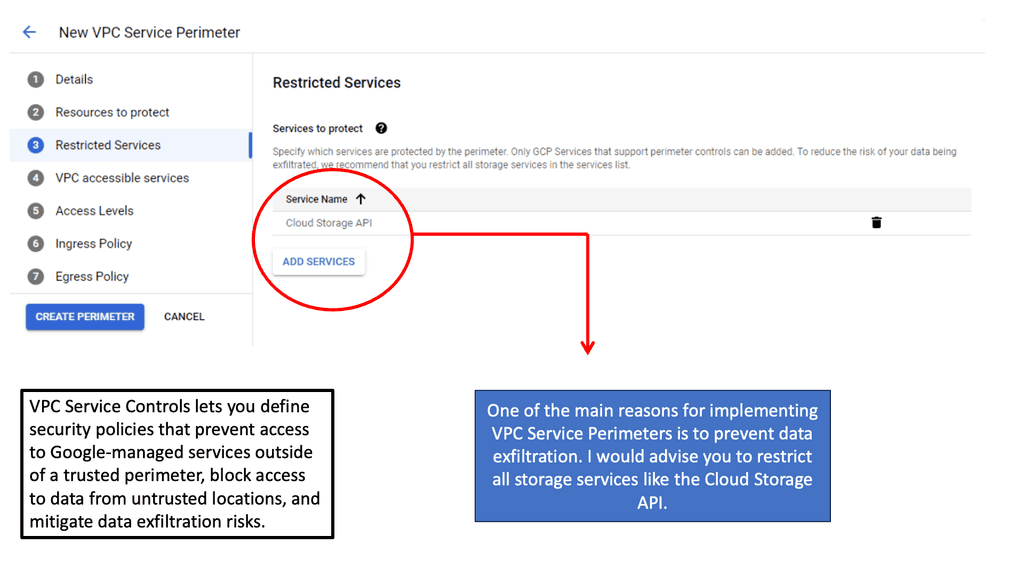
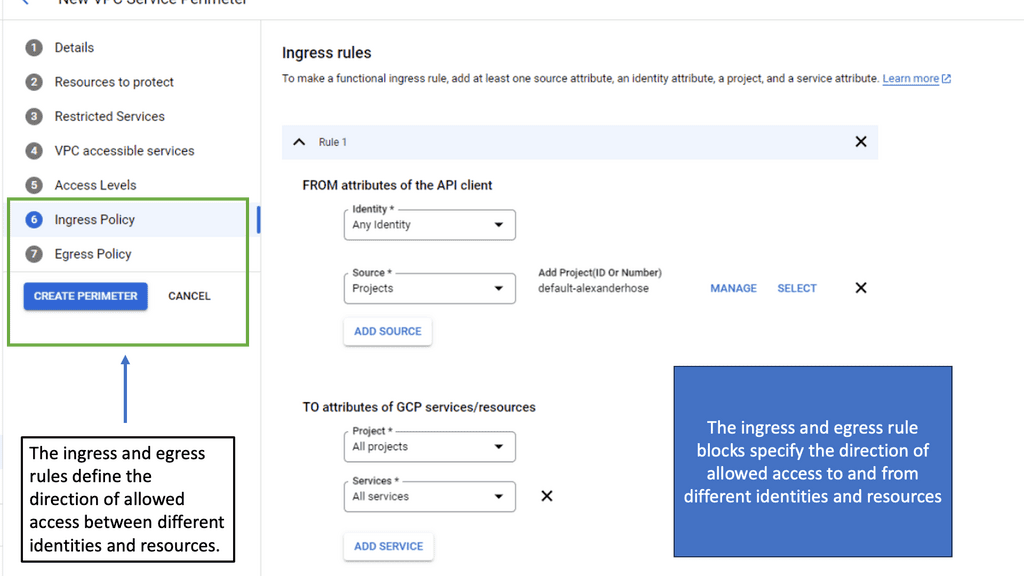
The security controls are also limited to mobile VPN solutions. More often than not, they are very coarse, forcing IT to open access to all the network resources. Protecting mobile users requires additional security tools like next-generation firewalls (NGFWs), so we have another point solution. In addition, mobile VPN solutions provide no last—or middle-mile optimization.

SASE Meaning: How SASE solves this

SASE converges a complete security stack into the network, allowing it to bring granular control to sites and mobile and cloud resources by enforcing the zero-trust principles for all edges. SASE provides anti-malware protection for both WAN and Internet traffic. In addition, for malware detection and prevention, SASE can offer signature and machine-based learning protection consisting of several integrated anti-malware engines.

For malware communication, SASE can stop the outbound traffic to C&C servers based on reputation feeds and network behavioral analysis. Mobile user traffic is fully protected by SASE’s advanced security services, including NGFW, secure web gateway (SWG), threat prevention, and managed threat detection and response. Furthermore, in the case of mobile, SASE mobile users can dynamically connect to the closest SASE PoP regardless of the location. Again, as discussed previously, the SASE cloud’s relevant optimizations are available for mobile users.

Rethink the WAN: The shift to the cloud, edge computing, and mobility offers new opportunities for IT professionals. Network professionals must rethink their WAN transformation approach to support these digital initiatives. WAN transformation is not just about replacing MPLS with SD-WAN. An all-encompassing solution is needed that provides the proper network performance and security level for enhanced site-to-site connectivity, security, mobile, and cloud.

Example Product: Cisco Umbrella

### What is Cisco Umbrella?

Cisco Umbrella acts as a first line of defense against internet-based threats by leveraging the cloud. It uses DNS (Domain Name System) to block malicious domains, IPs, and URLs before a connection can be established. By analyzing and learning from internet activity patterns, it can predict and prevent potential threats, ensuring that your network remains secure.

### Key Features of Cisco Umbrella

1. **DNS Layer Security**: Cisco Umbrella provides a protective shield at the DNS layer, stopping threats before they reach your network or endpoints. This means that harmful requests are blocked at the source, reducing the risk of malware infections.

2. **Secure Web Gateway**: The solution offers a secure web gateway that inspects web traffic and enforces security policies. It ensures that only safe and compliant traffic is allowed, providing an additional layer of security.

3. **Cloud-Delivered Firewall**: Cisco Umbrella includes a built-in firewall to block unwanted traffic, adding another layer of protection. This firewall can be managed from the cloud, simplifying the process of maintaining network security.

4. **Threat Intelligence**: With real-time threat intelligence updates from Cisco Talos, one of the world’s largest commercial threat intelligence teams, Cisco Umbrella ensures that your defenses are always up to date against the latest threats.

### Benefits of Using Cisco Umbrella

1. **Simplified Security Management**: Being cloud-based, Cisco Umbrella is easy to deploy and manage. There’s no need for complex hardware or software installations, reducing the burden on IT teams.

2. **Improved Visibility**: Cisco Umbrella provides comprehensive insights into internet activity across all devices and locations. This visibility helps in identifying and responding to potential threats swiftly.

3. **Enhanced User Experience**: By blocking malicious content at the DNS layer, users experience faster internet speed and reduced latency, leading to a smoother browsing experience.

4. **Scalability**: Whether you are a small business or a large enterprise, Cisco Umbrella can scale according to your needs. Its cloud-native architecture ensures that it can handle an increasing number of users and devices without compromising on performance.

Summary: SASE Definition

Secure Access Service Edge • Widget 3

SASE Security Decision Explorer

Follow a request from the user through identity and device verification, policy evaluation and security controls before the application access decision is made.
REQUEST User Alice Requests application IDENTITY Verify Identity User / role / MFA DEVICE Device Context Managed / posture POLICY ENGINE Access Decision Evaluate context against policy ALLOW ZTNA application access SWG web security CASB cloud control FWaaS firewall service RESOURCE Application SaaS / Private Resource ZERO TRUST DECISION Identity → Device Context → Policy → Security Control → Application ACCESS ALLOWED
SECURITY DECISION

Access Decision

SASE applies security controls around the user and application rather than assuming that network location automatically means trust.

Key Idea Verify the user, evaluate the device and context, apply policy, then enforce the appropriate access decision.
Current Decision
ALLOW
1. Verify Identity and device context are evaluated before access is granted. Authentication alone does not automatically establish trust.
2. Apply Policy Policy can consider identity, device posture, application, location and other contextual information.
3. Enforce ZTNA, SWG, CASB and FWaaS can provide the appropriate security enforcement for the requested application or traffic.

With the ever-evolving landscape of technology and the increasing demand for secure and efficient networks, a new paradigm has emerged in the realm of network security – SASE, which stands for Secure Access Service Edge. In this blog post, we delved into the definition of SASE, its key components, and its transformative impact on network security.

Understanding SASE

SASE, pronounced “sassy,” is a comprehensive framework that combines network security and wide area networking (WAN) capabilities into a single cloud-based service model. It aims to provide users with secure access to applications and data, regardless of their location or the devices they use. By converging networking and security functions, SASE simplifies the network architecture and enhances overall performance.

The Key Components of SASE

To fully grasp the essence of SASE, it is essential to explore its core components. These include:

1. Secure Web Gateway (SWG): The SWG component of SASE ensures safe web browsing by inspecting and filtering web traffic, protecting users from malicious websites, and enforcing internet usage policies.

2. Cloud Access Security Broker (CASB): CASB provides visibility and control over data as it moves between the organization’s network and multiple cloud platforms. It safeguards against cloud-specific threats and helps enforce data loss prevention policies.

3. Firewall-as-a-Service (FWaaS): FWaaS offers scalable and flexible firewall protection, eliminating the need for traditional hardware-based firewalls. It enforces security policies and controls access to applications and data, regardless of their location.

4. Zero Trust Network Access (ZTNA): ZTNA ensures that users and devices are continuously authenticated and authorized before accessing resources. It replaces traditional VPNs with more granular and context-aware access policies, reducing the risk of unauthorized access.

The Benefits of SASE

SASE brings numerous advantages to organizations seeking enhanced network security and performance:

1. Simplified Architecture: By consolidating various network and security functions, SASE eliminates the need for multiple-point solutions, reducing complexity and management overhead.

2. Enhanced Security: With its comprehensive approach, SASE provides robust protection against emerging threats, ensuring data confidentiality and integrity across the network.

3. Improved User Experience: SASE enables secure access to applications and data from any location, offering a seamless user experience without compromising security.

Conclusion:

In conclusion, SASE represents a paradigm shift in network security, revolutionizing how organizations approach their network architecture. By converging security and networking functions, SASE provides a comprehensive and scalable solution that addresses the evolving challenges of today’s digital landscape. Embracing SASE empowers organizations to navigate the complexities of network security and embrace a future-ready approach.