Cisco Secure Workload

Cisco Umbrella CASB

Network Insight · Engineering Guide

Cisco Umbrella CASB: Cloud Visibility, Data Protection and Zero Trust Investigation

Cloud applications have changed where users work, where data is stored and where security decisions must be made. A modern Cloud Access Security Broker (CASB) approach is therefore not simply about blocking applications. It is about discovering cloud activity, understanding identity and data context, applying proportionate controls, and investigating what actually happened.

Discover

Identify sanctioned and unsanctioned SaaS activity and build visibility into the real cloud environment.

Decide

Combine identity, application, device, data and requested activity before making a policy decision.

Investigate

Correlate cloud, identity, DNS, web and security evidence to distinguish signals from confirmed incidents.

Engineering path Cloud Discovery → Context → Enforcement → Investigation
Network Insight · Interactive Architecture

Cisco Umbrella CASB Architecture Explorer

Explore how cloud application discovery, identity context, data protection and security policy fit together. Select any component to examine its engineering role.

Select an architecture component

Identity & policy Visibility & data Risk & response
01

Cloud Application Visibility: Discovering the Real SaaS Environment

Before a security team can protect cloud applications, it needs to understand what applications are actually being used. SaaS adoption rarely follows the approved application catalogue. Employees may introduce new services, connect third-party applications through OAuth, or move business data between platforms without the security team having complete visibility.

What CASB visibility needs to establish

  • Which cloud applications are being accessed?
  • Which applications are sanctioned and which are unknown?
  • Which users, devices and identities are involved?
  • What type of activity is taking place?
  • What data could be exposed or transferred?
  • How much risk does the application introduce?
Engineering principle Discovery comes before enforcement. A security control cannot reliably protect a cloud environment that it cannot see.

Cloud Application Visibility: Discovering the Real SaaS Environment

Cloud application security starts with visibility. Organisations may have an approved catalogue of SaaS services, but real-world usage is usually much broader. Users can introduce applications, connect third-party services through OAuth, and move business information between cloud platforms without those activities appearing in a traditional application inventory.

What the security team needs to discover

CASB visibility should establish which applications are being used, who is using them, what devices are involved, what activity is taking place and whether sensitive information may be entering or leaving the organisation.

SaaS application
User identity
Device context
Cloud activity
Data movement
Application risk
Why discovery matters

An unknown application is not automatically a security incident. It is a visibility signal that requires context. The security team needs to understand the application, its users, its data and its business purpose before deciding whether enforcement is appropriate.

CASB LAB 01 · CLOUD DISCOVERY

SaaS Discovery Explorer

Explore a simplified cloud environment and determine which applications require attention based on usage, approval status and risk.

Discovered SaaS Environment 6 applications
Microsoft 365 Low
Approved collaboration platform
Salesforce Low
Approved business application
Canva Medium
Unapproved SaaS usage detected
Dropbox Medium
External file-sharing activity
Unknown AI Tool High
Potential sensitive-data destination
GitHub Low
Approved development platform
Application Inspector
Application Microsoft 365
Approval Yes
Observed users 184
Risk Low
Engineering readout: Select an application to inspect its cloud-risk context.
02

Identity, Application and Data Context: Turning Cloud Activity Into Policy

Application identity alone is not enough to make a useful security decision. The same SaaS application may be appropriate for one user, device or dataset and unacceptable for another. CASB policy therefore combines multiple dimensions of context before determining what should happen to a cloud request.

Identity Who is making the request?
Device Is the endpoint trusted and healthy?
Application Is the SaaS service approved and appropriate?
Data What information is being accessed or moved?
Action What is the user attempting to do?
Policy principle

The strongest CASB decisions are contextual decisions: identity + device + application + data + activity. This allows security teams to apply controls proportionately instead of treating every cloud interaction as equally risky.

Identity, Application and Data Context: Turning Cloud Activity Into Policy

Once cloud activity has been discovered, the next challenge is deciding what that activity means. A CASB policy should not simply ask whether a user is accessing a particular SaaS application. It should evaluate the identity, device, application, data and requested action together.

Identity Who is making the request and what privileges do they have?
Device Is the endpoint trusted, managed and in an acceptable state?
Application Is the cloud service approved and appropriate for the organisation?
Data Does the activity involve sensitive or regulated information?
Action Is the user viewing, downloading, uploading or sharing data?
Context changes the decision

The same SaaS application can represent very different levels of risk depending on who is using it, what device they are using and what information they are attempting to move.

From signal to policy

Identity, application risk, data classification and activity context provide the evidence required to move from simple visibility toward a defensible security policy.

Network Insight · Interactive Policy Lab

CASB SaaS Access & Data Protection Engine

Change the identity, application, data sensitivity and requested action. Run the scenario to see how a sample CASB policy evaluates the available context and selects a response.

1. Configure the scenario

Application categories are illustrative policy inputs, not live reputation data.
The path affects which responses this example considers technically available.

2. Policy evaluation

Ready to evaluate

Awaiting scenario

Choose the scenario inputs, then run the policy engine to generate a decision and its explanation.

Decision reasoning
  • The engine evaluates the selected user, application, data and activity.
  • The available enforcement path limits the actions that can be taken.
Recommended next step
Run the scenario to see the recommended response.
Policy logic is deliberately simplified for learning. Real deployments require product-specific capabilities, identity signals, application support, licensing and validated organisational rules.
CASB POLICY LAB

CASB Policy Decision Engine

Evaluate cloud activity using identity, device posture, application risk, data sensitivity and requested action — rather than treating every SaaS request as equal.

Policy Inputs Context → Risk → Decision
Policy evaluation path
Identity → Device → SaaS → Data → Action → Policy
03

CASB Enforcement: DLP, SASE and Remote Browser Isolation

Visibility and policy decisions only become useful when they can drive an appropriate control. Modern cloud security can combine inline inspection, API-based controls, Data Loss Prevention (DLP), SASE enforcement and Remote Browser Isolation (RBI). The engineering challenge is choosing the right control for the evidence and the risk.

I
Inline CASB Inspect activity while the user is actively accessing a cloud service.
A
API CASB Inspect cloud-hosted data and activity through application integrations.
D
DLP Identify sensitive information and control inappropriate data movement.
R
RBI Isolate risky web content so the endpoint has less direct exposure.
Engineering principle: enforcement should be proportional to risk. Blocking, restricting, inspecting or isolating are different control responses and should be selected according to identity, application, data and activity context.

CASB Enforcement: DLP, SASE and Remote Browser Isolation

Visibility and policy decisions become operational security controls when they can trigger an appropriate enforcement mechanism. Modern cloud security architectures can combine inline CASB controls, API-based inspection, Data Loss Prevention and Remote Browser Isolation, often as part of a broader SASE architecture.

IN
Inline CASB

Inspect and control cloud activity while traffic or sessions are actively being used.

API
API CASB

Analyse data and activity already stored within connected SaaS platforms.

DLP
Data Loss Prevention

Identify sensitive information and apply controls to inappropriate data movement.

RBI
Remote Browser Isolation

Separate risky web content from the endpoint to reduce direct exposure.

Engineering principle

Enforcement should be proportional to evidence and risk. A mature cloud security architecture does not automatically block every anomaly; it selects the control that best matches the identity, application, data and activity involved.

Network Insight · Incident Investigation Lab

Shadow IT & Data Exposure Investigator

Act as the security analyst. Review a simulated SaaS security incident, examine the evidence and select a response supported by what the evidence actually establishes.

Investigation briefing A cloud application or SaaS activity has triggered an alert. Determine what is known, what remains uncertain and which containment or remediation action is justified.

1. Select an incident

2. Review the evidence

Incident ID: NI-CASB-104 · Simulated evidence · Times are illustrative

09:14:02
New SaaS destination observed

DNS and web gateway telemetry show connections to a service not present in the approved application catalogue.

Discovery signal
09:14:18
Repeated user activity

Several requests are associated with the same source identity, where identity mapping is available.

Activity pattern
09:16:40
Content exposure not verified

No SaaS audit record or API evidence has yet confirmed that sensitive files were uploaded.

Evidence gap
What is the most defensible initial response?

3. Analyst findings

Investigation not submitted

Select an incident, review its evidence and choose the response that best fits the facts. You will receive feedback explaining the evidence and limitations.

Analyst objective: separate a detection signal from a confirmed policy violation or data exposure.
Investigation checklist
STEP 1
Establish scope

Identify the user, application, activity, relevant time window and available data sources.

STEP 2
Corroborate evidence

Compare network records with SaaS audit events, identity logs and API evidence where available.

STEP 3
Apply proportionate response

Choose a supported control, preserve evidence and verify that remediation worked.

CLOUD PROTECTION CONTROL PLANE

Where Should the Control Live?

CASB is not a single enforcement point. Select a protection mechanism and inspect where it operates across the user request, cloud activity, stored data and endpoint exposure.

Inline CASB

Inline CASB provides visibility and policy enforcement while the user is actively accessing a cloud application.

Primary role
REAL-TIME
Control Placement Map Click a mechanism to compare coverage
User Request
Policy decision during active cloud access.
ACTIVE
Cloud Activity
Visibility into SaaS transactions and user actions.
CONTEXT
Stored Cloud Data
Inspection of data already residing in SaaS platforms.
LIMITED
Endpoint Exposure
Protection of the endpoint from risky web content.
LIMITED
Primary control point Supporting visibility
Engineering Readout Inline CASB is strongest when the organisation needs to evaluate and enforce policy during an active cloud session. It is about controlling the transaction as it happens.
Educational model: these mechanisms can overlap in real architectures. The important engineering question is where visibility is obtained, where policy is evaluated and where enforcement can actually occur.
04

Cloud Security Investigation: From Alert to Defensible Response

A cloud security alert is not automatically a confirmed incident. Effective investigation requires analysts to correlate the original signal with identity, SaaS activity, DNS and web telemetry, endpoint context and application evidence. The objective is to establish what happened, determine the confidence of the finding and select a defensible response.

01 · DETECT
Capture the signal Start with the alert, anomaly or suspicious cloud activity.
02 · CORRELATE
Build context Connect identity, application, DNS, endpoint and data evidence.
03 · VALIDATE
Test the hypothesis Separate supporting evidence from assumptions and missing data.
04 · RESPOND
Choose the action Contain, monitor, remediate or escalate according to confidence.
Shadow IT

An unknown SaaS application becomes more significant when combined with sensitive data movement, unusual identity activity or unexpected OAuth permissions.

Data Exposure

A suspected exposure should be investigated through the actual data classification, recipient, activity and available audit evidence rather than the alert alone.

Cloud Security Investigation: From Alert to Defensible Response

Security analytics becomes valuable when individual alerts can be connected to a broader evidence chain. A suspicious SaaS application, unusual OAuth permission or possible data exposure should therefore be investigated across identity, application, DNS, web, endpoint and audit evidence before an operational decision is made.

01 · DETECT
Capture the signal

Start with the alert, anomaly or suspicious cloud activity that triggered the investigation.

02 · CORRELATE
Build the evidence chain

Connect identity, SaaS, DNS, endpoint, data and audit information.

03 · VALIDATE
Test the finding

Determine what the evidence proves, what it suggests and what remains unknown.

04 · RESPOND
Choose the action

Contain, monitor, remediate or escalate according to confidence and business impact.

Shadow IT investigation

An unknown SaaS application becomes more significant when combined with unusual authentication, sensitive data movement, risky OAuth permissions or other supporting evidence.

Defensible response

The objective is not simply to react to an alert. It is to establish a sufficiently supported finding and select a response that matches the available evidence.

SECURITY INVESTIGATION LAB

Shadow IT Investigation Lab

Move from an alert to a defensible conclusion. Select an incident, collect the available evidence, correlate the signals and decide whether the activity represents a genuine security concern.

Unapproved SaaS Application

A previously unknown cloud application has appeared in enterprise traffic. Determine whether this is simply unsanctioned software or a genuine security concern.

NOT INVESTIGATED
Evidence Inspector 0 / 4 collected
Identity Telemetry Pending
Who performed the activity?
Awaiting collection
SaaS Activity Pending
What application activity occurred?
Awaiting collection
Data Evidence Pending
What information was involved?
Awaiting collection
Network / DNS Pending
What infrastructure or destination was involved?
Awaiting collection
Investigation readout
Begin by selecting an incident and collecting evidence. An alert alone is not enough to establish a security event.
Confidence
0%
Analyst finding No finding submitted. Collect evidence before deciding whether the alert represents a confirmed security concern.
Educational simulation: the evidence model is intentionally simplified. In a production investigation, analysts would combine identity, application, DNS/web, endpoint, DLP and SaaS audit evidence with organisational policy and incident-response procedures.
tion
```
☕
Support Network Insight
Help support independent engineering guides, interactive networking tools, and future learning labs.
Support Network Insight ```
Cyber data and information security idea. Yellow padlock and key and blue keyboard. Computer, information safety, confidentiality concept

CASB Tools

CASB Tools

In today's digital landscape, cloud-based technologies have become essential for organizations of all sizes. However, with the convenience and flexibility of the cloud comes the need for robust security measures. Cloud Access Security Broker (CASB) tools have emerged as a vital solution for safeguarding sensitive data and ensuring regulatory compliance. In this blog post, we will explore the significance of CASB tools and how they can help organizations secure their cloud environment effectively.

CASB tools act as a security intermediary between cloud service providers and end-users, offering visibility, control, and protection for cloud-based applications and data. These tools enable organizations to monitor and manage cloud usage, detect potential threats, and enforce security policies. By providing a centralized platform, CASB tools empower businesses to gain granular insights into their cloud environment and take proactive measures to mitigate risks.

1. User and Entity Behavior Analytics (UEBA): CASB tools employ advanced analytics to detect anomalous user behavior, identifying potential insider threats or compromised accounts.

2. Data Loss Prevention (DLP): With DLP capabilities, CASB tools monitor data movement within the cloud environment, preventing unauthorized access, sharing, or leakage of sensitive information.

3. Encryption and Tokenization: CASB tools offer encryption and tokenization techniques to protect data both at rest and in transit, ensuring that even if data is compromised, it remains unreadable and unusable.

4. Access Control and Identity Management: CASB tools integrate with Identity and Access Management (IAM) systems, allowing organizations to enforce multi-factor authentication, role-based access control, and ensure compliance with security policies.

1. Enhanced Visibility: CASB tools provide deep visibility into cloud usage, allowing organizations to identify potential risks, shadow IT, and ensure compliance with data protection regulations.

2. Improved Cloud Security: By monitoring user activities, enforcing security policies, and detecting potential threats in real-time, CASB tools significantly enhance cloud security posture.

3. Compliance and Governance: CASB tools assist organizations in meeting regulatory compliance requirements, such as GDPR or HIPAA, by providing data protection controls, encryption, and audit capabilities.

4. Incident Response and Forensics: In the event of a security incident, CASB tools enable quick incident response and forensic

CASB tools have become indispensable for organizations seeking to secure their cloud environment effectively. By offering comprehensive visibility, control, and protection capabilities, these tools enable businesses to embrace the advantages of the cloud while mitigating potential risks. As cloud adoption continues to grow, investing in CASB tools is a strategic move to ensure data security, regulatory compliance, and peace of mind.

Cloud Access Security Broker • Interactive Lab 01

CASB Visibility & Shadow IT Investigation Lab

Investigate cloud-service usage through the lens of a CASB. Identify whether an application is sanctioned, discover shadow IT, and determine the appropriate visibility and control decision.

Investigation Controls
CASB Visibility Path
User / Device Corporate identity
→
CASB Visibility + policy enforcement
→
Cloud Service Sanctioned application
Investigation Evidence
Application Status Sanctioned
Visibility Known Service
User Context Managed Corporate User
Observed Activity Browse Application
CASB Assessment
Cloud Risk Low
Shadow IT Not Detected
Policy Action Allow & Monitor
Visibility Visible
[CASB] Visibility investigation engine ready.
[CASB] Select an application, user context and activity.
[CASB] The broker evaluates cloud usage against policy.
Engineering Takeaway

CASB visibility is not simply about allowing or blocking cloud services. The objective is to understand which applications are being used, by whom, from what context, and what activity is taking place. This visibility can expose shadow IT and provide the evidence required to apply appropriate cloud-access and data-protection policies.

Highlights: CASB Tools

**Key Functions of CASB Tools**

CASB tools are multifaceted, offering a range of functions that help organizations secure their cloud environments. These tools primarily focus on four core areas: Visibility, Compliance, Data Security, and Threat Protection. Visibility allows organizations to gain insights into which cloud services are being accessed and by whom. Compliance ensures that cloud operations meet industry standards and regulations. Data Security involves data loss prevention (DLP) and encryption, while Threat Protection focuses on identifying and mitigating potential threats in real-time.

**Why Your Business Needs a CASB Solution**

The necessity of CASB tools for businesses cannot be overstated. As more companies migrate to cloud-based applications and services, the potential for data breaches and compliance violations increases. CASB tools provide comprehensive security coverage, allowing organizations to confidently leverage cloud technology without compromising on security. By offering granular control over cloud usage and detailed monitoring capabilities, businesses can protect sensitive information and uphold their reputation in the industry.

**Choosing the Right CASB Tool for Your Organization**

Selecting the appropriate CASB solution for your organization can be a daunting task given the myriad of options available. It’s essential to evaluate your specific security needs and business objectives. Consider factors such as ease of integration, scalability, user experience, and cost-effectiveness. Furthermore, check if the CASB supports the cloud services your business uses and offers robust reporting and analytics features. Consulting with security experts can also provide valuable insights into making the best choice for your company.

Cloud Security Components

a) CASB, a critical cloud security component, acts as a gatekeeper between your organization and your cloud services. It provides visibility and control over data stored in the cloud, ensuring compliance, preventing threats, and enabling secure access for your users. By monitoring user activities, CASB helps identify and mitigate risks associated with cloud usage.

b) CASB offers a wide range of features that enhance the security of your cloud environment. These include real-time cloud activity monitoring, user behavior analytics, data loss prevention, encryption, and access controls. With CASB, you gain better visibility into cloud usage patterns, identify potential vulnerabilities, and enforce security policies to protect your data.

c) One of CASB’s primary functions is to secure cloud applications. Whether you use popular platforms like Office 365, Salesforce, or AWS, CASB provides granular control over user access and activities. It helps prevent unauthorized access, ensures compliance with regulatory requirements, and safeguards against data leakage.

CASB Tools Enforcing Continuous Identity and Access Validation

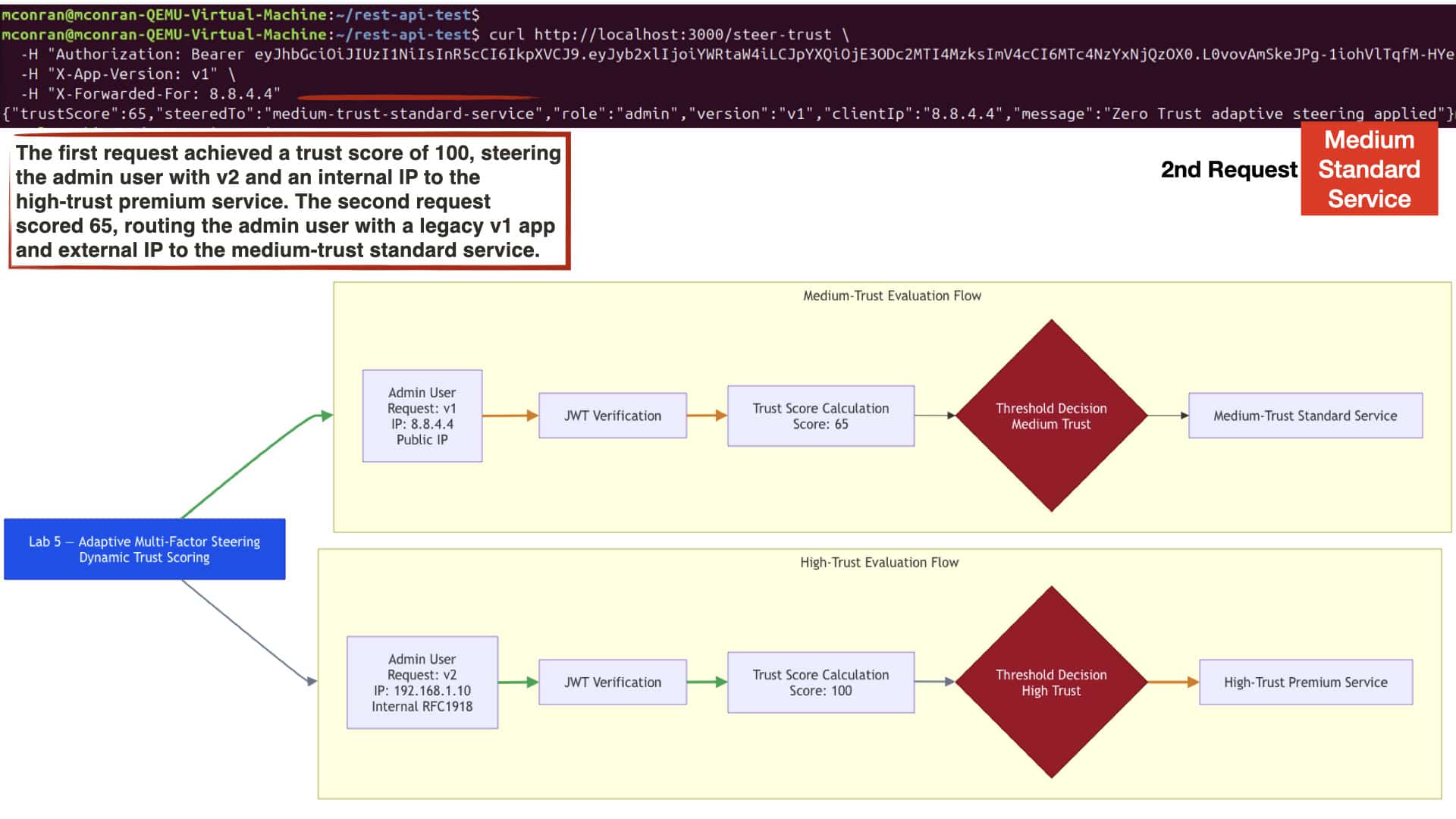
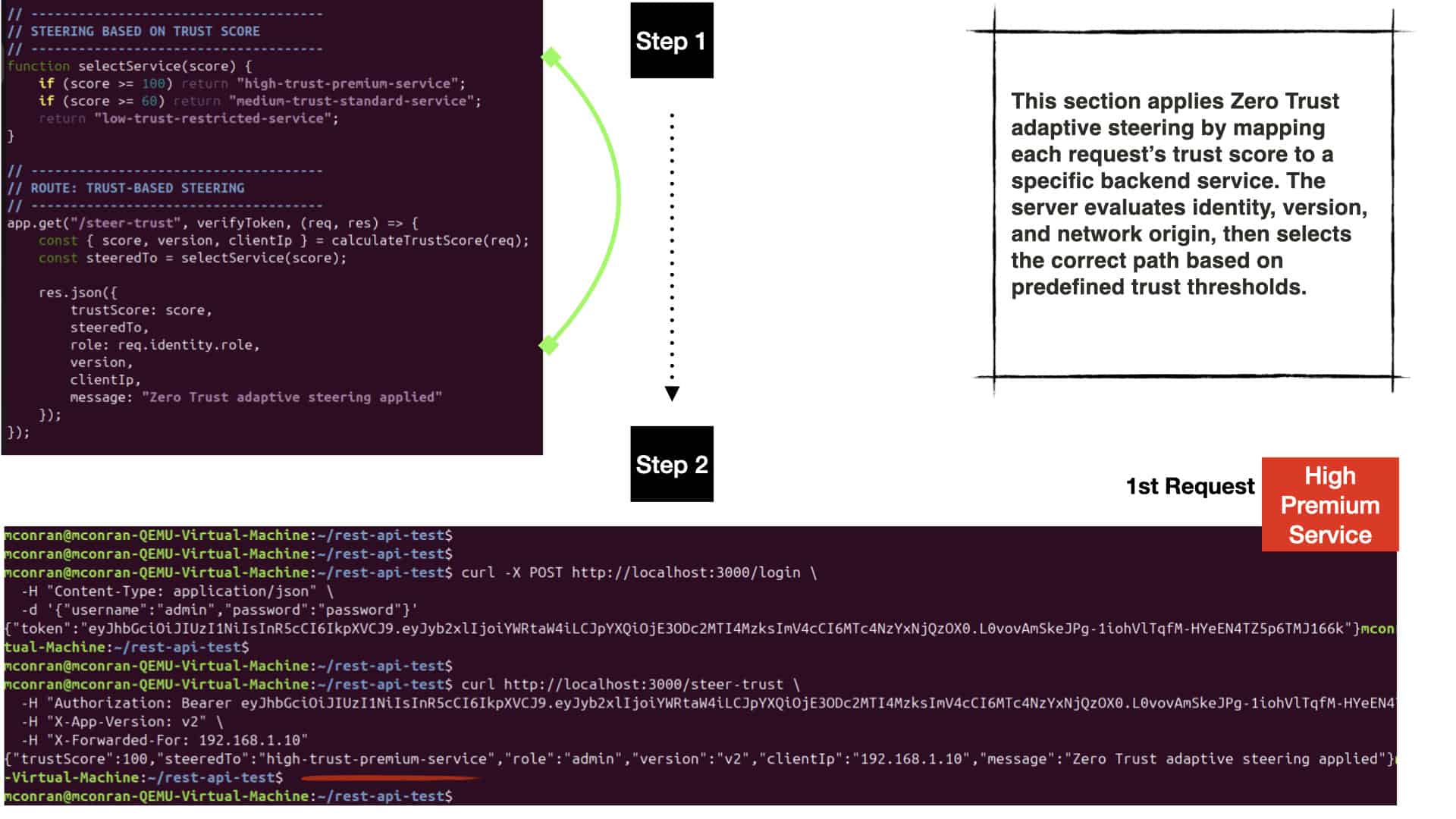
This lab demonstrates how CASB tools apply continuous identity and access validation by evaluating every request against dynamic trust conditions. Instead of relying on static authentication, the trust engine calculates a score based on identity strength, application version, and network origin. This mirrors how CASB solutions enforce real‑time policy controls across cloud applications, ensuring that identity and context are continuously verified before granting access.

Trust Evaluation

The trust engine combines multiple contextual signals—user role, application posture, and IP source—to generate a weighted trust score. This reflects the behavior of CASB tools, which rely on layered identity, device, and network attributes to enforce granular access policies. By classifying requests into high‑trust, medium‑trust, or low‑trust categories, the system mirrors CASB‑driven access control, ensuring that cloud resources are only accessible when identity and context meet defined security thresholds.

Once the trust score is computed, the steering engine selects the correct backend service based on identity‑driven trust thresholds. High‑trust identities are routed to premium services, medium‑trust identities to standard services, and low‑trust identities to restricted paths. This adaptive routing aligns with CASB tools, which dynamically segment access to cloud applications based on verified identity posture, preventing over‑privileged access and enforcing continuous policy compliance.

Trust Management

CASB Core Features:

1. Visibility and Control: CASB tools offer comprehensive visibility into cloud applications and services being used within an organization. They provide detailed insights into user activities, data transfers, and application dependencies, allowing businesses to monitor and manage their cloud environment effectively. With this information, organizations can create and enforce access policies, ensuring that only authorized users and devices can access critical data and applications.

2. Data Loss Prevention: CASB tools help prevent data leakage by monitoring and controlling data movement within the cloud. They employ advanced techniques such as encryption, tokenization, and data classification to protect sensitive information from unauthorized access. Additionally, CASB tools enable businesses to set up policies that detect and prevent data exfiltration, ensuring compliance with industry regulations.

3. Threat Protection: CASB tools are vital in identifying and mitigating cloud-based threats. They leverage machine learning algorithms and behavioral analytics to detect anomalous user behavior, potential data breaches, and malware infiltration. By continuously monitoring cloud activities, CASB tools can quickly detect and respond to security incidents, minimizing the impact of potential violations.

4. Compliance and Governance: Maintaining compliance with industry regulations is a top priority for organizations across various sectors. CASB tools provide the necessary controls and monitoring capabilities to help businesses meet compliance requirements. They assist in data governance, ensuring data is stored, accessed, and transmitted securely according to applicable regulations.

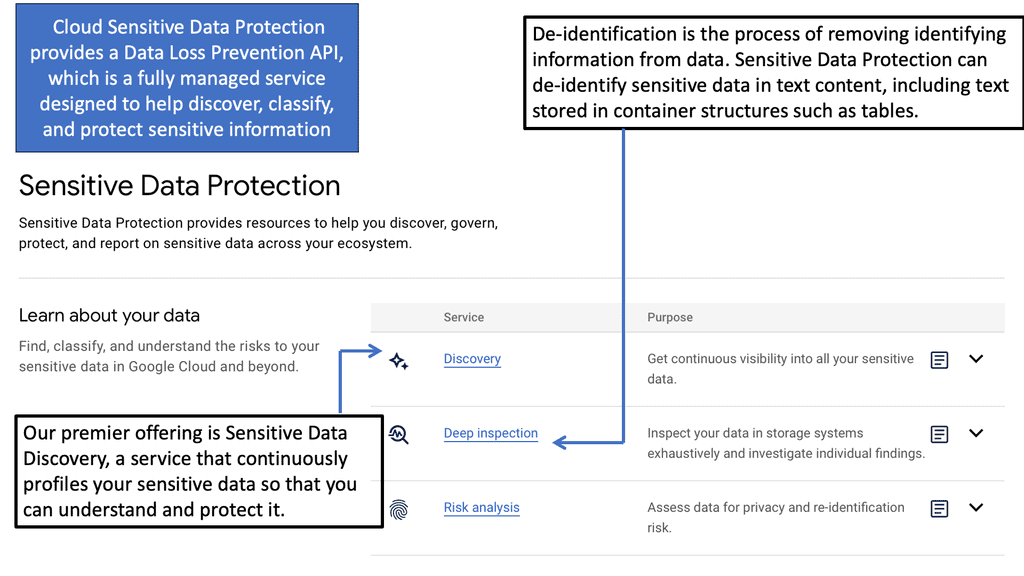
Example Security Technology: Sensitive Data Protection

**Understanding Google Cloud’s Security Framework**

Google Cloud offers a comprehensive security framework designed to protect data at every level. This framework includes encryption, identity and access management, and network security tools that work in tandem to create a secure environment. By encrypting data both in transit and at rest, Google Cloud ensures that your information remains confidential and inaccessible to unauthorized users. Additionally, their identity and access management services provide granular control over who can access specific data, further minimizing the risk of data breaches.

**The Role of Machine Learning in Data Protection**

One of the standout features of Google Cloud’s security offerings is the integration of machine learning technologies. These advanced tools help detect and respond to threats in real-time, allowing for proactive data protection measures. By analyzing patterns and behaviors, machine learning algorithms can identify potential vulnerabilities and suggest solutions before a breach occurs. This predictive approach to data security is a game-changer, providing businesses with the peace of mind that their sensitive data is continuously monitored and protected.

Sensitive data protection

Understanding CASB Tools

CASB tools, short for Cloud Access Security Broker tools, act as a crucial intermediary between your organization and cloud service providers. Their primary objective is to ensure the security and compliance of data and applications when accessing cloud services. By enforcing security policies, monitoring cloud activities, and providing real-time threat detection, CASB tools offer a comprehensive security framework for your cloud environment. CASB tools come equipped with a wide array of features designed to tackle various security challenges in the cloud. These include:

1. User and Entity Behavior Analytics (UEBA): Leveraging machine learning algorithms, CASB tools analyze user behavior patterns to detect anomalies and identify potential threats or unauthorized access attempts.

2. Data Loss Prevention (DLP): CASB tools employ advanced DLP mechanisms to prevent sensitive data from being leaked or mishandled. They monitor data transfers, apply encryption, and enforce policies to protect data.

3. Shadow IT Discovery: CASB tools provide visibility into unauthorized cloud applications and services used within an organization. This helps IT administrators gain control over data sharing and mitigate potential risks.

Implementing CASB tools offers numerous benefits to organizations of all sizes. Some notable advantages include:

1. Enhanced Security: CASB tools provide a unified security framework that extends visibility and control over cloud services, ensuring consistent security policies and protecting against data breaches and cyber threats.

2. Compliance and Governance: CASB tools assist organizations in meeting regulatory requirements by monitoring and enforcing compliance policies across cloud applications and services.

3. Improved Productivity: By offering secure access to cloud platforms and preventing unauthorized activities, CASB tools enable employees to collaborate seamlessly and utilize cloud services without compromising security.

**CASB Selection**

When selecting a CASB tool, it is essential to consider its compatibility with your existing cloud infrastructure. Integration capabilities with popular cloud service providers, such as AWS, Azure, or Google Cloud, are crucial for seamless deployment and management. Additionally, the CASB solution’s scalability and ease of deployment are factors to consider to ensure minimal disruption to your existing cloud environment.

Secure cloud-based applications and services with Cloud Access Security Brokers (CASB). These solutions, typically deployed between cloud service consumers and providers, allow organizations to enforce security policies and gain visibility into cloud usage.

1. Visibility

Both managed and unmanaged cloud services require visibility and control. Instead of allowing or blocking all cloud services, cloud brokerage should enable IT to say “yes” to valuable services while controlling access to their activities. For users on unmanaged devices, this could mean offering Web-only email access instead of a sanctioned suite like Microsoft 365. A “no sharing outside the company” policy could also be enforced across an unsanctioned service category.

Security is the primary focus of cloud access security brokers, but they can also help you understand cloud spending. With a CASB, you can discover all cloud services in use, report on your cloud spend, and uncover redundancies in functionality and license costs. In addition to protecting your business and finances, a CASB can provide valuable information.

2. Compliance

Moving data and systems to the cloud requires organizations to consider compliance. If these compliance standards are ignored, data breaches can be costly and dangerous, as they ensure the safety of personal and corporate data.

If you are a healthcare organization concerned about HIPAA or HITECH compliance, a retail company concerned about PCI compliance, or a financial services organization concerned about FFIEC and FINRA compliance, cloud access security brokers can help ensure compliance. Through a CASB, you can keep your company in compliance with industry-specific data regulations and avoid costly data breaches.

3. Data Security

Accuracy can be achieved by using highly sophisticated cloud DLP detection mechanisms like document fingerprinting and reducing the detection surface area (user, location, activity, etc.). A cloud access security broker (CASB) should provide IT with the option to move suspected violations to their on-premises systems for further analysis when sensitive content is discovered in the cloud or on its way there.

CASBs can act as gatekeepers and facilitate the detection and prevention of malicious activity before it escalates. They can carry out more profound research on threat observations. CASBs are IT and business practices experts and take a skilled approach to enhancing an organization’s security.

4. Threat Protection

Organizations should ensure their employees are not introducing or propagating cloud malware and threats by using cloud storage services and their associated sync clients and services. An employee trying to share or upload an infected file should be able to scan and remediate threats in real-time across internal and external networks. In addition, this means detecting and preventing unauthorized access to cloud services and data, which can assist in identifying compromised accounts.

CASBs can protect organizations from cloud threats and malware. Your company must avoid threats that combine prioritized static and dynamic malware analysis for advanced threat intelligence. Proper threat protection can help protect you from threats that originate from or are propagated through cloud services.

**Network Security Components**

Recently, when I spoke to Sorell Slaymaker, we agreed that every technology has its own time and place. Often, a specific product set is forcefully molded to perform all tasks. This carries along with its problems. For example, no matter how modified the Next-Gen firewall is, it cannot provide total security. As you know, we need other products for implementing network security, such as a proxy or a cloud access security broker (CASB API) to work alongside the Next-Gen firewall and zero trust technologies, such as single packet authorization to complete the whole picture.

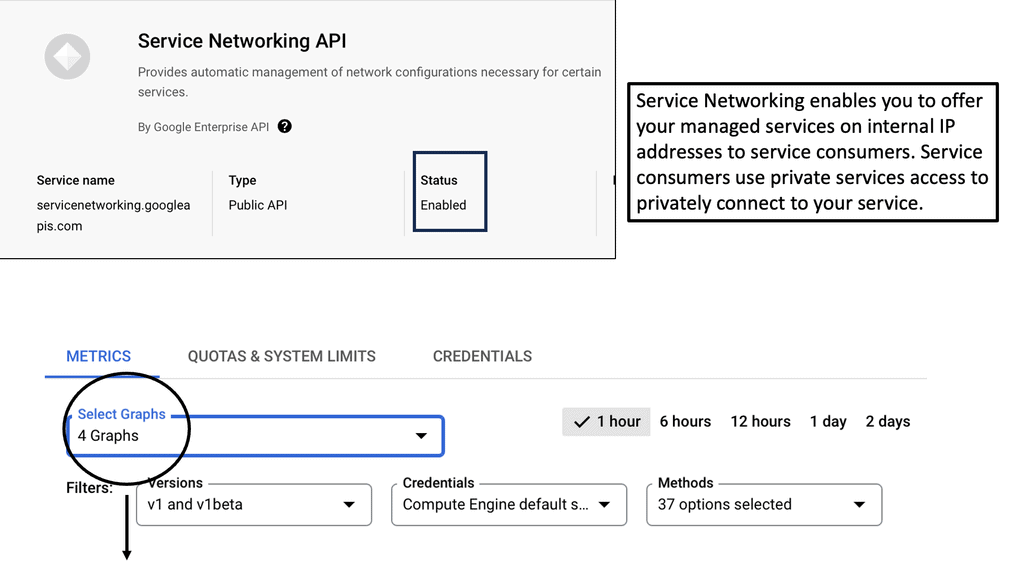
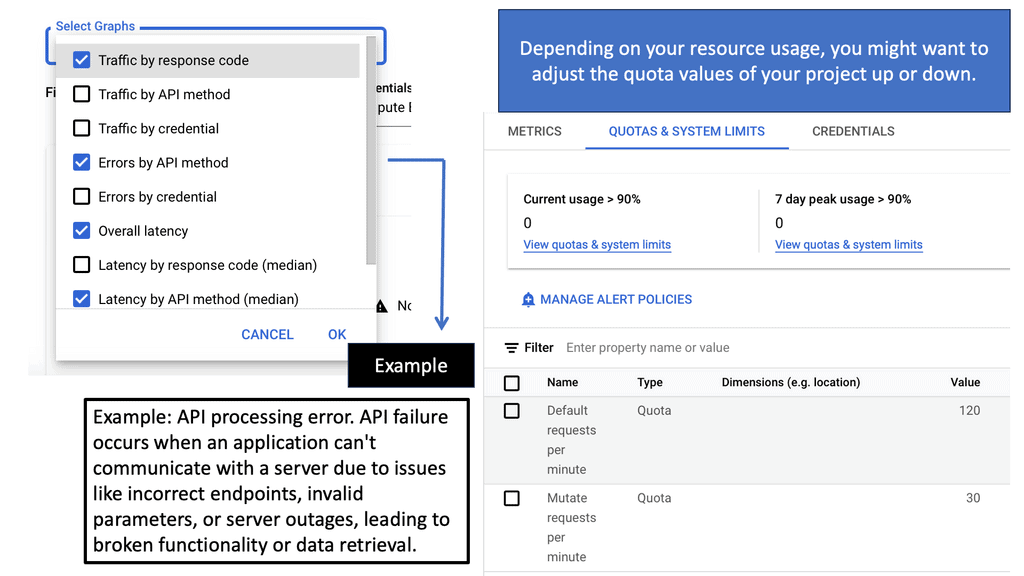
Example API Technology: Service Networking API

### Key Features of Google Cloud’s Service Networking APIs

Google Cloud’s Service Networking APIs provide a suite of powerful features designed to simplify the management of network services. One of the standout features is the ability to create private connections between services, ensuring secure and efficient communication. Additionally, they support automated IP address management, which reduces the risk of IP conflicts and simplifies network configuration. These features, combined with Google’s global infrastructure, provide a scalable and reliable solution for any organization looking to enhance its networking capabilities.

### Benefits of Using Service Networking APIs

The benefits of utilizing Service Networking APIs on Google Cloud are numerous. Firstly, they provide enhanced security by allowing private communications between services without exposing them to the public internet. This is crucial for businesses that handle sensitive data and require stringent security measures. Secondly, the APIs facilitate seamless scalability, allowing businesses to grow their network infrastructure effortlessly as their needs evolve. Lastly, they offer cost efficiency by optimizing network resource usage, leading to potential savings on infrastructure expenses.

Service Networking API


Cloud Access Security Broker • Interactive Lab 02

CASB Data Protection & DLP Investigation Lab

Investigate how a CASB can identify sensitive data movement and apply data-protection policy before information is uploaded, shared or transferred to a cloud service.

Investigation Controls
Data Protection Path
Data Source User / Corporate Data
→
CASB / DLP Classify + inspect + enforce
→
Cloud Destination Approved Enterprise SaaS
Forensic Evidence
Data Classification Public
Detection No Sensitive Data
Destination Approved
Policy Requirement Standard Monitoring
DLP Assessment
Data Risk Low
Policy Result Allow
Protection Monitor
Recommended Control Standard CASB Policy
[CASB-DLP] Data protection engine ready.
[CASB-DLP] Select the data classification and activity.
[CASB-DLP] The CASB will inspect the data flow against policy.
Engineering Takeaway

CASB data protection is concerned with what data is moving, where it is going, and whether that movement complies with policy. DLP can classify sensitive information and support controls such as monitoring, blocking, redaction or tokenization. Encryption alone does not provide the same governance over data movement.

CASB Tools

A cloud access security broker (CASB) allows you to move to the cloud safely. It protects your cloud users, data, and apps that can enable identity security. With a CASB, you can more quickly combat data breaches while meeting compliance regulations.

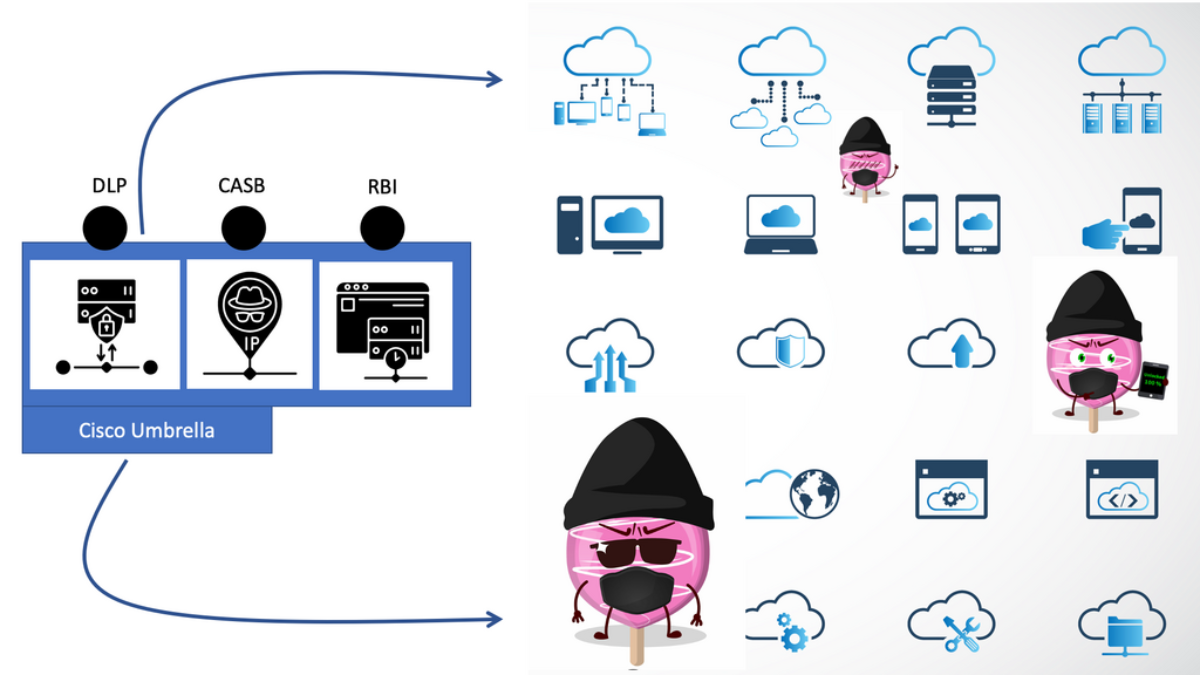
For example, Cisco has a CASB in its SASE Umbrella solution that exposes shadow IT by enabling the detection and reporting of cloud applications across your organization. For discovered apps, you can view details on the risk level and block or control usage to manage cloud adoption better and reduce risk.

Introducing CASB API Security 

Network security components are essential for safeguarding business data. As most data exchange is commonplace in business, APIs are also widely leveraged. An application programming interface (API) is a standard way of exchanging data between systems, typically over an HTTP/S connection. An API call is a predefined way of obtaining access to specific types of information kept in the data fields.

However, with the acceleration of API communication in the digital world, API security and CASB API mark a critical moment as data is being passed everywhere. The rapid growth of API communication has resulted in many teams being unprepared. Although performing API integrations is easy, along with that comes the challenging part of ensuring proper authentication, authorization, and accounting (AAA).

When you initiate an API, there is a potential to open up calls to over 200 data fields. Certain external partners may need access to some, while others may require access to all.

That means a clear and concise understanding of data patterns, and access is critical for data loss prevention. Essentially, bad actors are more sophisticated than ever, and simply understanding data authorization is not enough to guard the castle of your data. A lack of data security can cause massive business management and financial losses.

Identity‑Driven Traffic Steering Through the Lens of CASB Tools

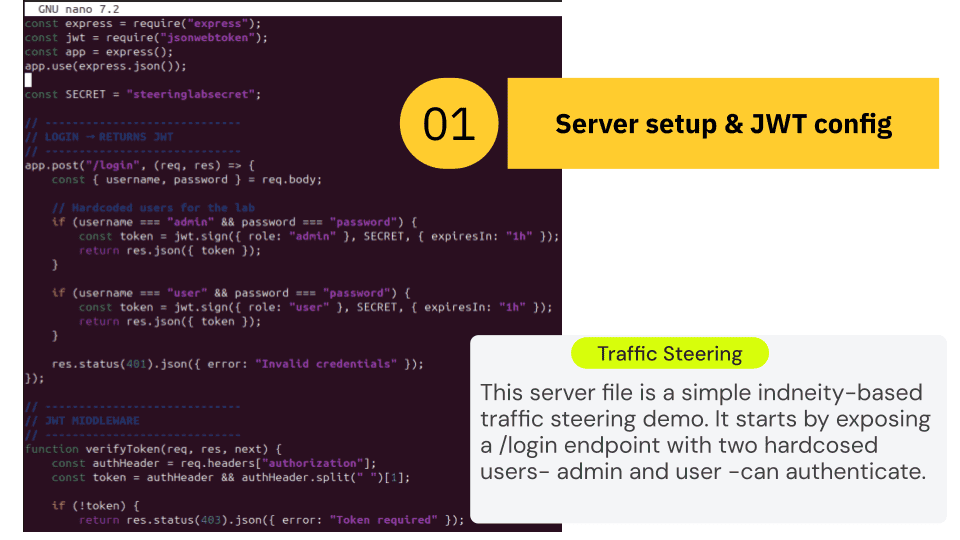
In a cloud‑first environment, CASB tools play a critical role in enforcing identity‑centric access controls across SaaS, private applications, and cloud services. The lab we built mirrors this concept at the application layer. When a user logs in, the server issues a signed JWT token that represents their identity and role. This token becomes the user’s cloud identity credential, similar to how CASB tools evaluate identity signals before granting access to cloud applications. Instead of trusting the network or device, the application trusts the identity embedded in the token—exactly the same trust model CASBs enforce when brokering secure access between users and cloud services.

Traffic Steering CASB Tools

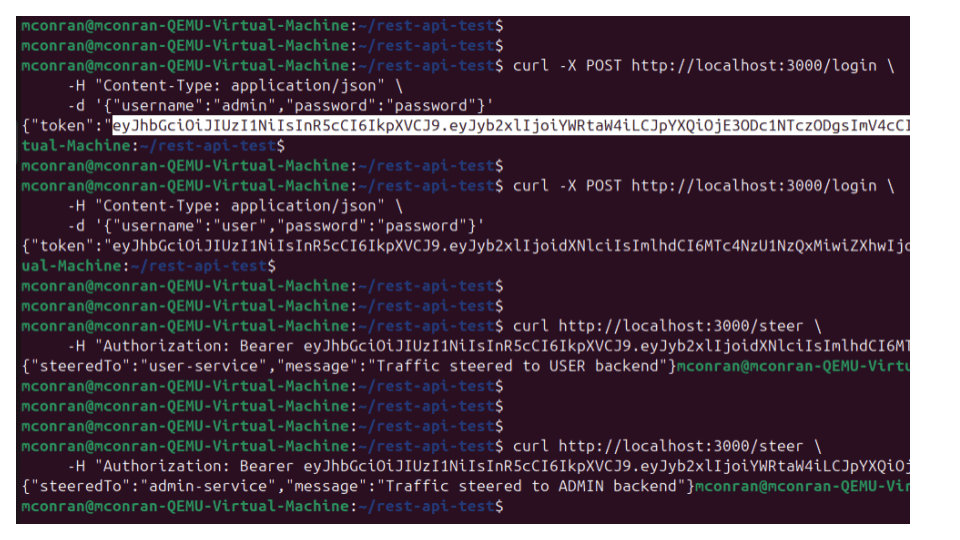
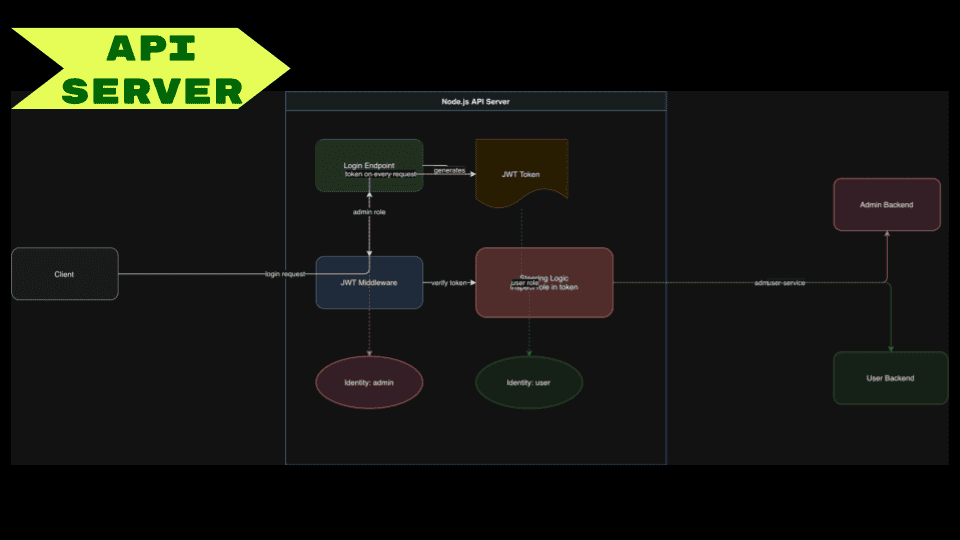
CASB tools operate by continuously validating identity and applying policy before allowing a user to reach a cloud resource. Our lab demonstrates this workflow in a simplified form. After authentication, every request carries the JWT token, which the server verifies through the middleware. This verification step is analogous to CASB identity checks, where the broker confirms the user’s identity, session validity, and role before allowing access. Once verified, the steering logic inspects the role inside the token and routes the request to the appropriate backend service. Admin identities are steered to the admin‑service, while standard users are steered to the user‑service. This is the same principle CASB tools use when enforcing role‑based access to SaaS applications or cloud workloads.

API Security

The traffic flow in the diagram aligns closely with how CASB tools broker access. The client authenticates and receives a token representing the user’s identity. Every request includes this identity, allowing the JWT middleware to act like a CASB policy engine—verifying the token, checking the role, and enforcing access rules. The steering logic then routes traffic to the correct backend service based on identity, just as a CASB would route or block access to cloud applications depending on user role, risk level, or compliance posture. The diagram shows this clearly: identity enters the system at login, is validated at the policy layer, and ultimately determines which service the user is allowed to reach.

Node API Server

CASB Tools: The challenge

Many enterprise security groups struggle to control shadow IT. One example is managing all Amazon Web Services (AWS) accounts, where AWS employs tools like Macie for API management. However, these tools work well only for AWS accounts for which Macie is turned on. Enterprises can have hundreds of test and development accounts with a high risk of data leakage, of which the security teams are unaware.

Also, containers and microservices often use transport layer security (TLS) connections to establish secure connectivity, but this falls short in several ways. Examining the world of API security poses the biggest challenge that needs to be solved in the years to come. So what’s the solution?

CASB Tools and CASB API: The Way Forward

Let’s face it! The digital economy is run by APIs, which permit the exchange of data that needs to be managed. API security tools have become a top priority with the acceleration of API communication. We don’t want private, confidential, and regulated data to leave that is not supposed to go, and we need to account for data that does go. If you don’t have something in the middle and encrypt just the connections, data can flow in and out without any governance and compliance.

API Security Tools

Ideally, a turnkey product that manages API security in real-time independent of the platform—in the cloud, hybrid, or on-premise—is the next technological evolution of the API security tool market. Authentically, having an API platform across the entire environment and enforcing real-time security with analytics empowers administrators to control data movements and access. Currently, API security tools fall into three different types of markets.

  1. Cloud Access Security Brokers: The CASB API security is between an enterprise and the cloud-hosted services, such as O365, SFDC, ADP, or another enterprise
  2. API Management Platforms: They focus on creating, publishing, and protecting an API. Development teams that create APIs consumed internally and externally rely on these tools as they write applications. You can check out the Royal Cyber blog to learn about API management platforms like IMB API Connect, MuleSoft, Apigee API, and MS Azure API.
  3. Proxy Management focuses on decrypting all enterprise traffic, scanning, and reporting anomalies. Different solutions are typically used for various types of traffic, such as web and email. Chat is an example.

Cloud Access Security Brokers

The rise of CASB occurred due to inadequacies of the traditional WAF, Web Security Gateway, and Next-Gen Firewalls product ranges. The challenge with these conventional products is that they work more as a service than at the data level.

They operate at the HTTP/S layer, usually not classifying and parsing the data. Their protection target is different from that of a CASB. Let’s understand it more closely. If you parse the data, you can classify it. Then, you have rules to define the policy, access, and the ability to carry out analytics. As the CASB solutions mature, they will become more automated.

They can automatically discover API, map, classify, and learn intelligently. The CASBs provide a central location for policy and governance. They sit as a boundary between the entities. They are backed by the prerequisite to decrypt the traffic, TLS, or IPSec. After decrypting, they read, parse, and then re-encrypt the traffic to send it on its way.

Tokenization

When you are in the middle, you need to decrypt the traffic and then parse it to examine and classify all the data. Once it is classified, if there are specific susceptible data, be it private, confidential, or regulated, you can tokenize or redact it at a field and file level. Many organizations previously created a TLS or IPsec connection between themselves and the cloud provider or third-party network.

However, they didn’t have strict governance or compliance capabilities to control and track the data going in and out of the organization. TLS or IPsec is the only point-to-point encryption; the traffic is decrypted once you reach the end location. As a result, sensitive data is then available, which could be in an unsecured network.

Additional security controls are needed so that the data has an extra level of encryption when the connections are complete. TLS or IPSec is for the data in motion, and tokenization is for the data at rest. We have several ways to secure data, and tokenization is one of them. Others include encryption with either provider-managed keys or customer BYOK.

We also have different application-layer encryption. Tokenization substitutes the sensitive data element with a non-sensitive equivalent, a token. As a result, the third party needs additional credentials to see that data.

However, when you send the data out to a 3rd party, you add another layer of encryption by putting in a token instead of a specific number like the social security number. Redact means that the data is not allowed to leave the enterprise.

CASB API Security 

For API security, AAA is at an API layer. This differs from the well-known AAA model used for traditional network access control (NAC). Typically, you allow IP addresses and port numbers in the network world. In an API world, we are at the server and service layer.

– Data Loss Prevention (DLP) is a common add-on feature for CSBs. Once you parse and classify the data, you can govern it. Here, the primary concern is what data can be left, who can access it, and when. DLP is an entire market, whereas the CASB will be specific to specific APIs.

– It would be best if you often had a different DLP solution, for example, to scan your Word documents. Some vendors bundle DLP and CASB. We see this with the Cisco Umbrella, where the CASB and DLP engines are on the same platform.

– Presently, the next-generation CASBs are becoming more application-specific. They now have the specific capability for Office 365 and SalesForce. The market constantly evolves; it will integrate with metadata management over time.

Example IDS Technology: Suricate 

API Management Platforms

API Management platforms are used by DevOps teams when they are creating, publishing, and protecting their APIs. DevOps creates an API that is consumed internally and externally to enable their application to rely on these tools. In an enterprise, had everyone been using an effective API management tool, you wouldn’t need a CASB. One of the main reasons for introducing CASBs is that you have a lot of development and test environments that lack good security tools. As a result, you need the 3rd tool to ensure governance and compliance.

Finally, Proxy Management

A proxy monitors all the traffic going in and out of the organization. A standard proxy keeps a tab on the traffic moving internally to the site. A reverse proxy is the opposite, i.e., an external organization looking for internal access to systems. A proxy operates at Layer 5 and Layer 6. It controls and logs what the site users are doing but does not go into layer 7, where all the critical data is.

Closing Points on CASB Tools

The adoption of cloud computing has surged in recent years, providing organizations with scalable and cost-effective solutions. However, this shift has also introduced new security challenges. Traditional security measures often fall short when it comes to protecting data in the cloud. This has led to an increased demand for specialized security solutions like CASB tools, which address the unique threats posed by cloud environments.

CASB tools offer a comprehensive set of features designed to enhance cloud security. These include visibility into cloud usage, data loss prevention, threat protection, and access control. By providing granular control over data and user activities, CASB tools help organizations enforce security policies and prevent unauthorized access. Additionally, they offer real-time monitoring and analytics to detect and respond to potential threats swiftly.

Implementing CASB tools requires careful planning and execution. Organizations should start by identifying their specific security needs and selecting a CASB solution that aligns with their goals. It’s essential to integrate CASB tools seamlessly with existing security infrastructure and cloud services. Furthermore, continuous monitoring and regular updates are crucial to maintaining effective protection against evolving threats.

Organizations across various industries have experienced significant benefits from deploying CASB tools. These include improved compliance with regulatory standards, enhanced data protection, and reduced risk of data breaches. By gaining visibility into cloud activities and securing sensitive data, businesses can confidently embrace cloud technologies without compromising security.

Cloud Access Security Broker • Interactive Lab 03

CASB Identity & API Policy Lab

Investigate how identity, role, application context and policy can influence access to cloud applications and API services. The goal is to make the access decision based on identity and context rather than simply trusting the network.

Policy Investigation
Identity-Driven Access Path
Identity Administrator
→
CASB Policy Validate + evaluate + steer
→
Cloud Service Standard Cloud Service
Policy Evidence
Identity Administrator
Role Admin Role
Context Trusted Managed Context
Resource Standard Cloud Service
Access Assessment
Identity Trust High
Policy Decision Allow
Service Path Standard Service
Control Identity Verified
[CASB-ID] Identity policy engine ready.
[CASB-ID] Select identity, role, resource and context.
[CASB-ID] Access will be evaluated using identity and policy.
Engineering Takeaway

Identity-driven CASB policy moves the access decision beyond simple network location. The broker can validate identity and session context, evaluate the requested resource and role, and then allow, restrict or steer the request to an appropriate service. Strong authentication and authorization remain essential to the model.